Teaching Ecosystems? We Have Just What You Need
Get our free ecosystems brochure template plus our six video collections!
If you teach grades 3–8 science, ecosystems are a central part of your curriculum. If you could use a hand making your instruction more meaningful for your students or are just looking to round out an already amazing unit, then we have some amazing free resources that you're going to want. Bonus: it's all free!
Why Teach Ecosystems?
Teaching ecosystems helps students see how every living thing is connected. From the tiniest insect to the tallest tree, ecosystems are full of fascinating relationships that spark curiosity and wonder. Exploring ecosystems encourages students to think critically, ask questions, and make connections between science and their everyday lives. Plus, these lessons naturally tie into big ideas like conservation, problem-solving, and even teamwork, since ecosystems thrive through balance and cooperation. By diving into ecosystems, you’re laying a strong foundation for scientific thinking while inspiring kids to care about the amazing planet they call home.
Our Ecosystems Collections
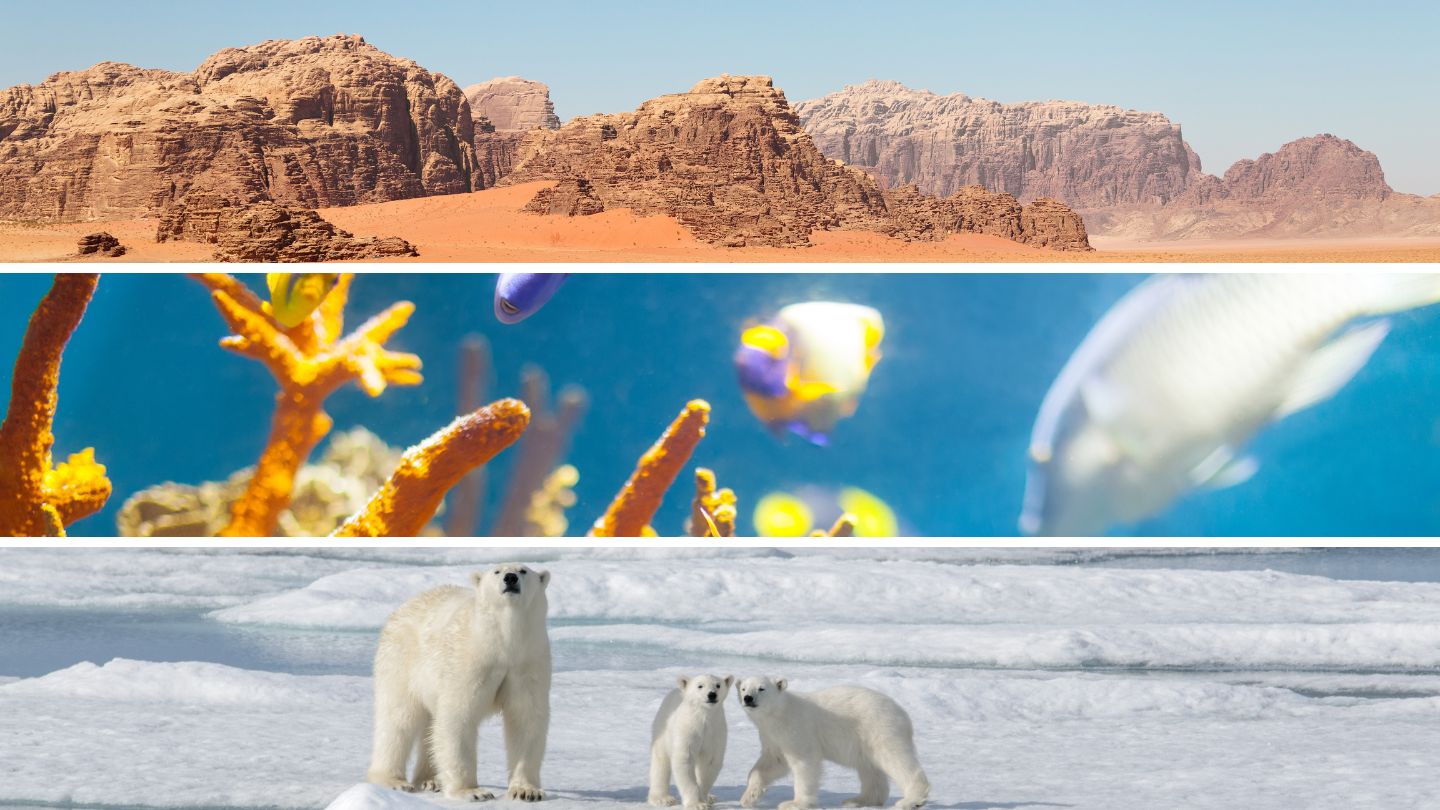
For each of six ecosystems (grasslands, desert, coral reef, tropical rainforest, mountain, and polar), we have:
- Iconic BBC Videos: Share the clips on this page to introduce the location, plants, animals, and climate of each ecosystem. Brought to you by world-class BBC Programs like Planet Earth, Blue Planet, Frozen Planet, and Seven Worlds, One Planet.
- Free Printable: Use the brochure template to help students pull it all together in an ecosystem report with facts they’ve learned (and a little extra research).
Featured Ecosystems
Grasslands: Take your students on a romp through the grasslands! From the African savanna to the Great Plains of North America grasslands are nature’s wide-open playground.
Desert: Guide your students on a journey through the desert ecosystem! From the sweeping sands of the Namib and Kalahari in southern Africa, to the dry heart of Australia’s Outback, and the rocky cold of the Gobi, deserts come in many forms.
Coral Reef: Bring your students on an underwater adventure into the coral reef ecosystem! Whether you're exploring the vast beauty of the Great Barrier Reef in Australia or diving into the rich, biodiverse waters of Indonesia, coral reefs are some of the most vibrant and important ecosystems on Earth.
Tropical Rainforest: Guide your students on a hike through the tropical rainforest ecosystem! From the Amazon in South America to the jungles of Southeast Asia, rainforests are full of unique and amazing species.
Mountain: Take your students on a climb through the mountain ecosystem! From the towering Himalayas to the snowy Rockies, mountain ecosystems change as you climb, starting with green forests down low and ending with bare, windswept summits at the top.
Polar: Bring your students on an icy exploration of the polar ecosystem! The Arctic and Antarctica may look frozen and empty at first glance, but they’re full of life perfectly adapted to the cold.
Download the free bundle of six ecosystems brochure templates here!
Create your free account to save resources, create video playlists, and get free printables!
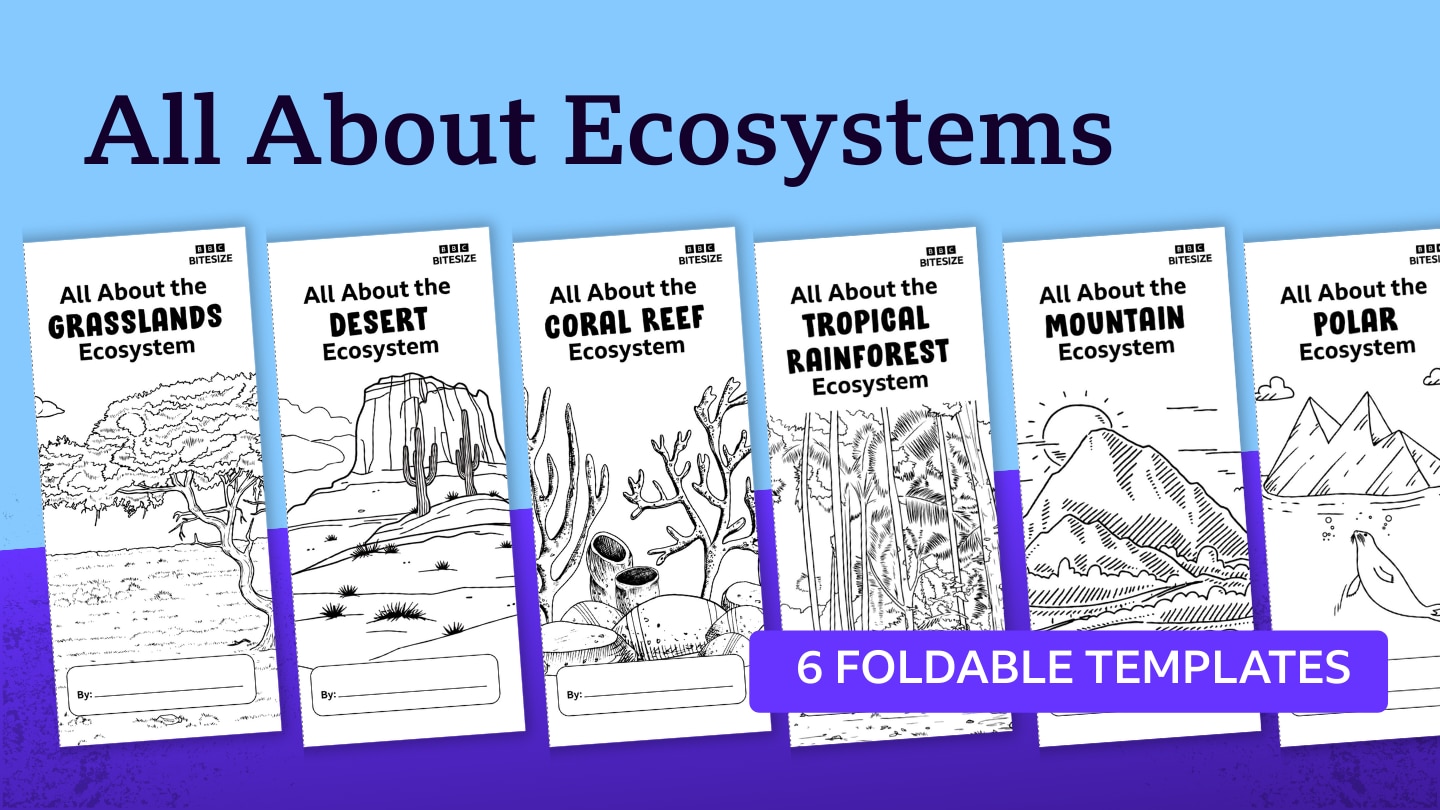
Every living thing is connected — this collection helps students see how. It covers six ecosystems: grasslands, desert, coral reef, tropical rainforest, mountain, and polar, each with its own video and matching report template.
After watching BBC video clips about an ecosystem, have students dig deeper with their own research and build a brochure covering:
- Location of the ecosystem on a world map
- Adjectives that describe the ecosystem
- Three animals that live there
- Three plants that grow there
- The climate
- Why the ecosystem matters
- Their favorite fun facts
Students summarize in their own words, which means they're practicing a real skill: pulling information from multiple sources and deciding what's worth keeping. Use one report template explore all six ecosystems back-to-back as a full unit.
More Like This