
The United States didn’t become a nation overnight. It took decades of protest, argument and compromise, and a lot of disagreement about what kind of country it should be. This playlist follows that story through nine turning points. It starts with the political traditions of the Haudenosaunee (Iroquois) Confederacy and a British tax on printed paper that pushed the colonies toward revolt. From there it moves through the Declaration of Independence, a first attempt at national government that didn’t hold, and the hard-won Constitution that replaced it. It ends with the young republic’s first real tests: George Washington’s presidency, the split into rival political parties, and an armed uprising over a tax on whiskey.
Each video runs a few minutes and covers one turning point, so the series can be watched start to finish or one video at a time.
Every video comes with printable discussion questions, vocabulary, a writing prompt, and classroom activities, all available from the video page. The questions ask students to think about what moved the colonies from protest to independence, why the Articles of Confederation failed, and why the founders’ arguments over federal power didn’t end once the Constitution was signed.
Teachers and Parents: The videos run in chronological order, starting with Indigenous political traditions and ending with the first major challenge to federal authority. Ways to use them:
- Unit introduction: Play the full series to open a unit on the founding for students aged 11–18.
- Lesson starter: Assign The Stamp Act before a lesson on taxation and representation, or the Constitution videos before a class debate on compromise.
- Compare and contrast: Pair The Articles of Confederation with A Constitution Created Through Compromise and have students list what changed and why.
- Then and now: Use The First Political Parties in America to start a discussion on how party divisions began and what they look like today.
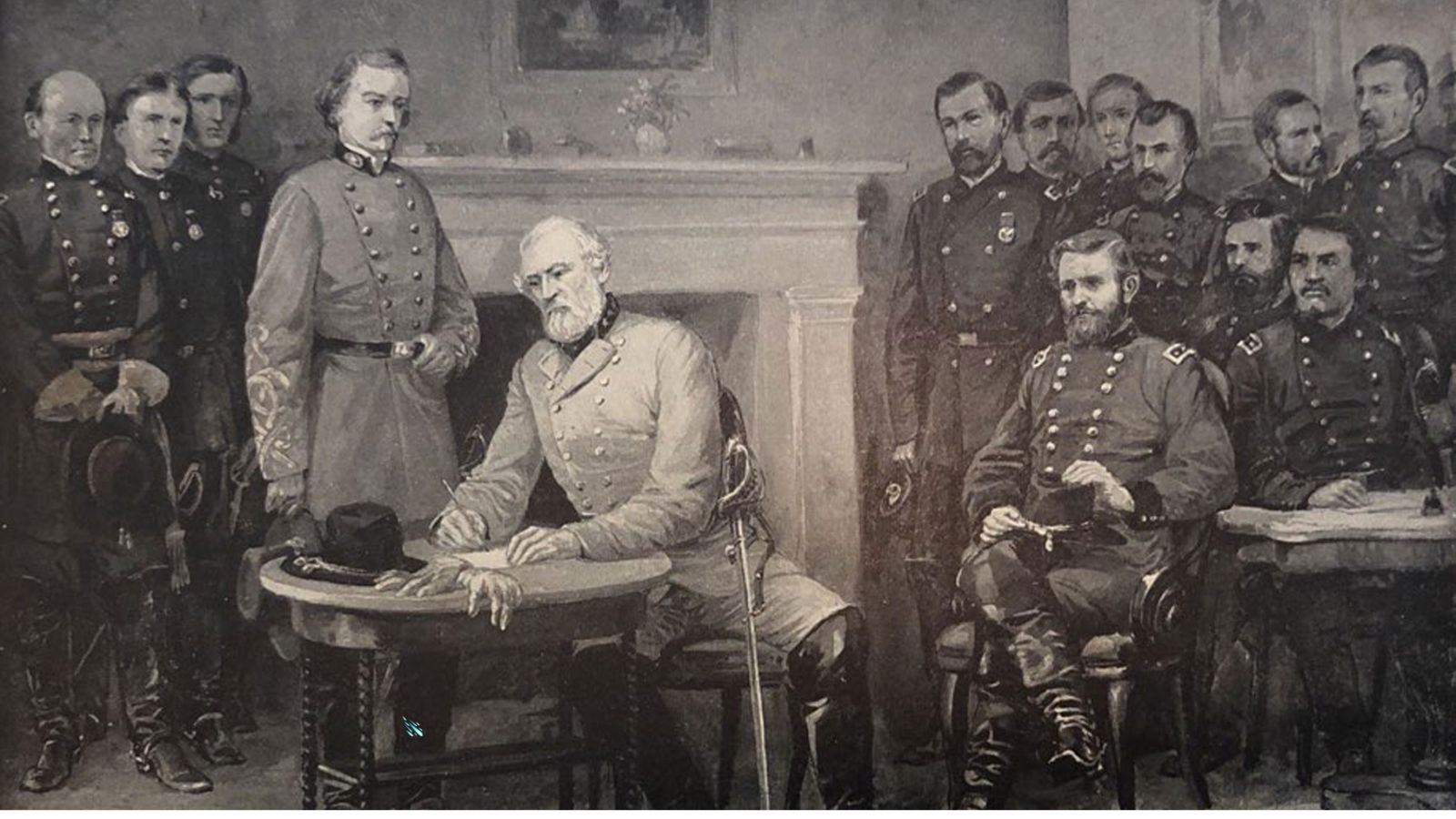
When Lincoln issued the Emancipation Proclamation in 1863, the war to preserve the Union also became a war against slavery. How much Lincoln meant it that way is still debated, and this playlist takes up that question directly. It also covers the new technology that changed how armies fought, the medical crisis in which disease killed twice as many soldiers as combat, the turning-point battles of 1863, and Sherman’s campaign through Georgia. The second half follows the country through Reconstruction: lenient early policies gave way to Radical Reconstruction and constitutional amendments that abolished slavery and guaranteed citizenship and voting rights. It then traces how those gains were rolled back as white Southern Democrats regained power and federal troops withdrew in 1877.
Each video comes with discussion questions, vocabulary, a writing prompt, and classroom activities — all printable from the video page. Questions include why the Emancipation Proclamation didn’t free all enslaved people, why historians call the Civil War the first modern war, and whether Lincoln believed in racial equality.
Teachers and Parents: The playlist picks up where The Road to War leaves off, so together the two playlists cover the full unit for ages 11–18. Videos 1 and 2 work as a pair: a straightforward account of the Emancipation Proclamation followed by historian Lucy Worsley’s case that Lincoln’s main goal was saving the Union. That sets up a strong source-comparison or debate lesson. Lincoln’s Legacy extends the discussion through Frederick Douglass’s reassessment of Lincoln. It contains discriminatory language, so preview it before assigning. The last three videos form a short Reconstruction sequence: The Three Phases of Reconstruction gives the overview, and the next two focus on Black Americans' political gains and the deal that ended federal enforcement, a natural lead-in to Jim Crow and the Civil Rights Movement. Use the "Share With Students" feature to assign videos directly or "Add to Playlist" to build your own sequence.

By 1860, the United States had been arguing over slavery for decades. This playlist follows that argument as it hardened into war. It covers the people who resisted slavery, the court case that denied Black Americans citizenship, a raid that pushed the country closer to the edge, and the election that led seven states to secede before Lincoln took office. Each video runs a few minutes and focuses on a single turning point, so the series can be watched start to finish or one video at a time.
Each video comes with discussion questions, vocabulary, a writing prompt ,and classroom activities — all printable from the video page. Questions include why Southern states seceded after Lincoln’s election and how the Civil War split families in border states.
Teachers and Parents: The videos are in chronological order and work as a full unit introduction for students 11–18. They can also be assigned individually to set up a specific lesson. The opening video, from BBC’s American History’s Biggest Fibs With Lucy Worsley, puts slavery at the center of the conflict and gives students a framework for the rest of the list. The Kentucky video closes the list and leads into the companion playlist, The Civil War and Its Aftermath, which runs from the Emancipation Proclamation through the end of Reconstruction. Use the "Share With Students" feature to assign videos directly or "Add to Playlist" to build your own sequence.
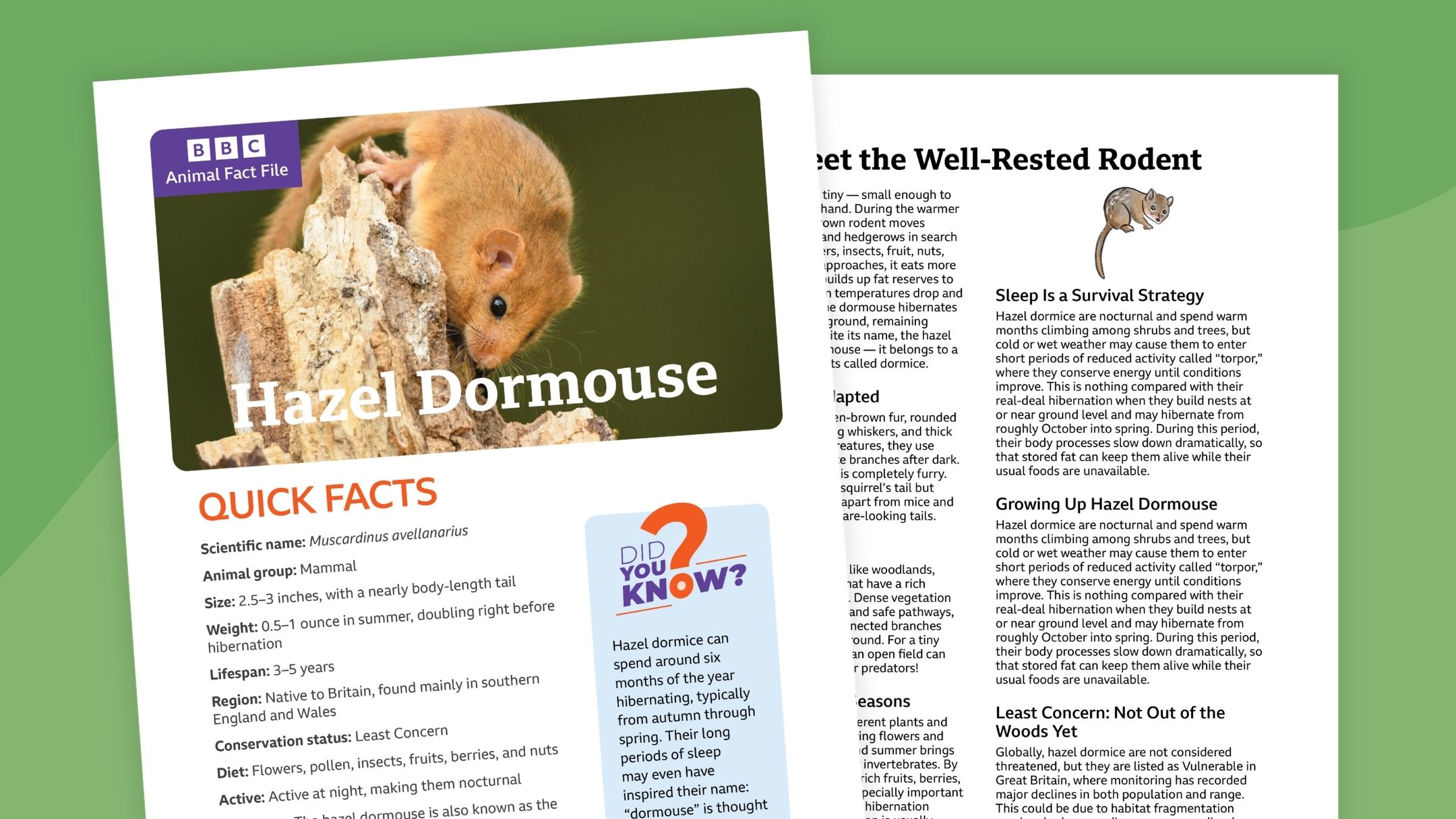
Could you sleep for six months and still have plenty of energy when you wake up? The hazel dormouse does just that, spending much of the colder part of the year in hibernation.
This tiny golden-brown rodent spends the warmer months climbing through trees and hedgerows, eating flowers, insects, berries, and nuts before preparing for winter. Discover how a dormouse’s furry tail and large eyes help it navigate after dark, why autumn is a race to build up energy reserves, and how its long winter sleep helps it survive when food is scarce. You'll also find out why these little climbers need connected woodlands and hedgerows to thrive.
Teachers and parents, you can use this fact file to:
- Introduce an animal, wildlife, or life science unit
- Support nonfiction reading and vocabulary practice
- Explore animal adaptations, behaviors, and habitats
- Compare animals and the ecosystems they live in
- Practice finding and organizing information from nonfiction texts
- Prepare students for animal research projects or presentations (use our animal report templates!)
- Connect science learning to conservation and environmental issues
- Pair with videos, articles, or other informational texts (see Related Resources below)
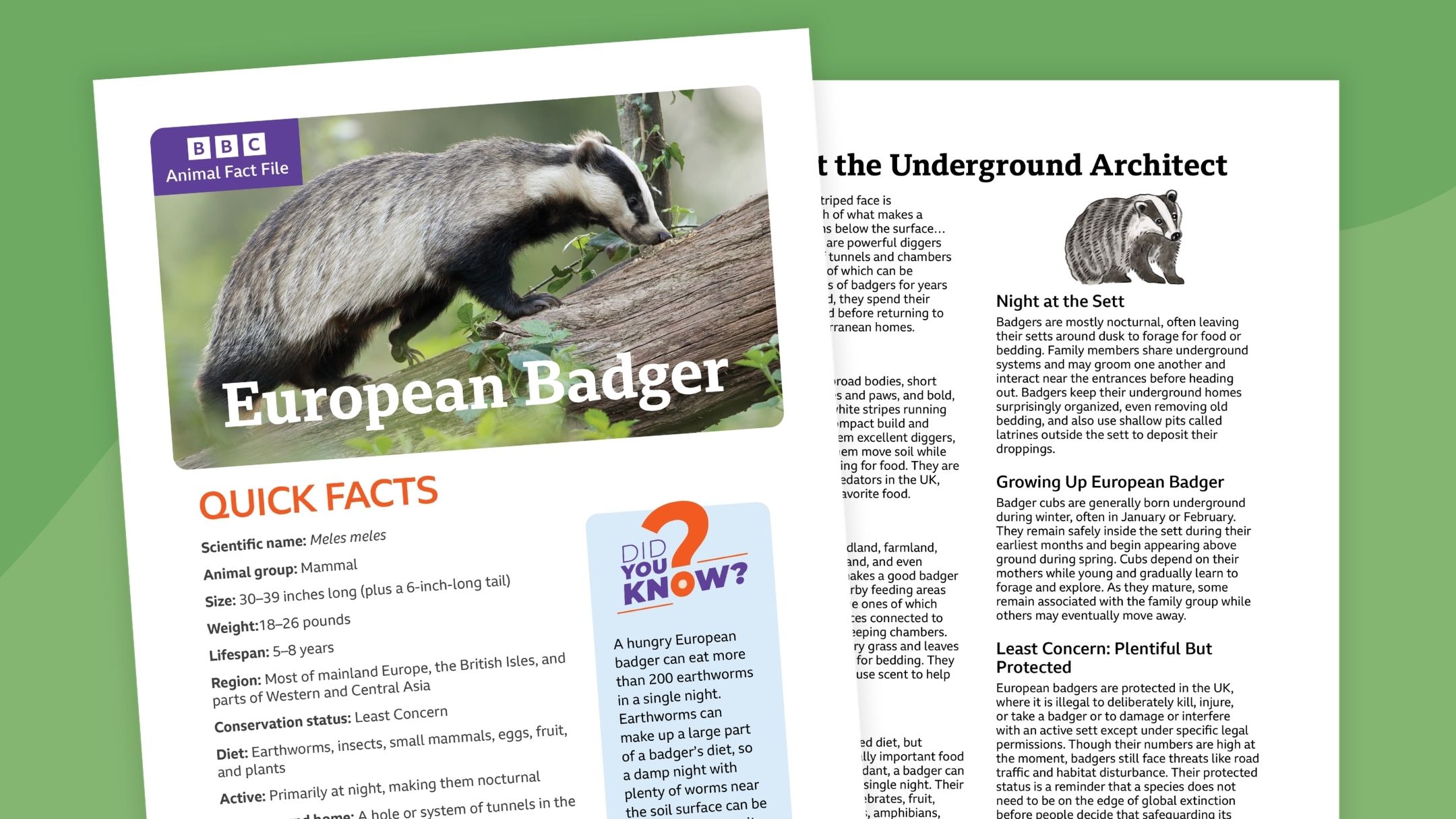
How many earthworms could a hungry badger eat in one night? More than 200 — and that’s just one of the surprising things about this underground-dwelling mammal.
Meet the European badger, a powerful digger that spends its days below ground and its nights exploring above it. Take a look inside a badger’s sett, discover how its strong claws and keen sense of smell help it find food, and find out why earthworms are such an important part of its diet. You'll also learn how badger families live together, raise their cubs, and keep their underground homes in order.
Teachers and parents, you can use this fact file to:
- Introduce an animal, wildlife, or life science unit
- Support nonfiction reading and vocabulary practice
- Explore animal adaptations, behaviors, and habitats
- Compare animals and the ecosystems they live in
- Practice finding and organizing information from nonfiction texts
- Prepare students for animal research projects or presentations (use our animal report templates!)
- Connect science learning to conservation and environmental issues
- Pair with videos, articles, or other informational texts (see Related Resources below)
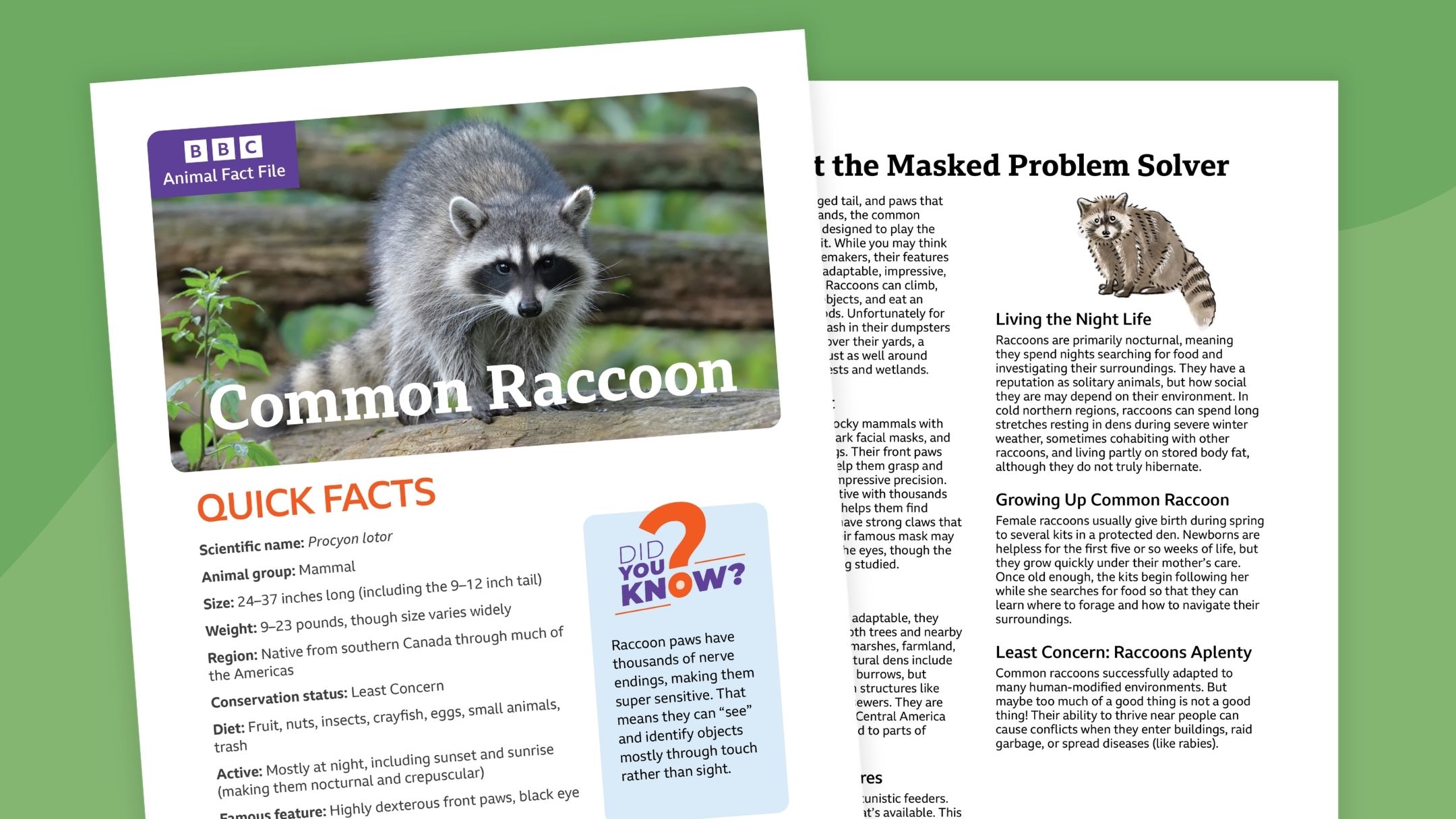
How can an animal identify what it’s holding without even looking at it? For the common raccoon, the answer is all in its paws.
Raccoons are equipped with remarkably sensitive front paws that help them explore, handle food, and investigate their surroundings. Find out how these dexterous mammals use touch, climbing skills, and an anything-goes diet to thrive in forests, wetlands, and neighborhoods. You'll also discover why raccoons sometimes seem to “wash” their food, where they sleep during the day, and how their adaptability can create both opportunities and challenges when they live near people.
Teachers and parents, you can use this fact file to:
- Introduce an animal, wildlife, or life science unit
- Support nonfiction reading and vocabulary practice
- Explore animal adaptations, behaviors, and habitats
- Compare animals and the ecosystems they live in
- Practice finding and organizing information from nonfiction texts
- Prepare students for animal research projects or presentations (use our animal report templates!)
- Connect science learning to conservation and environmental issues
- Pair with videos, articles, or other informational texts (see Related Resources below)
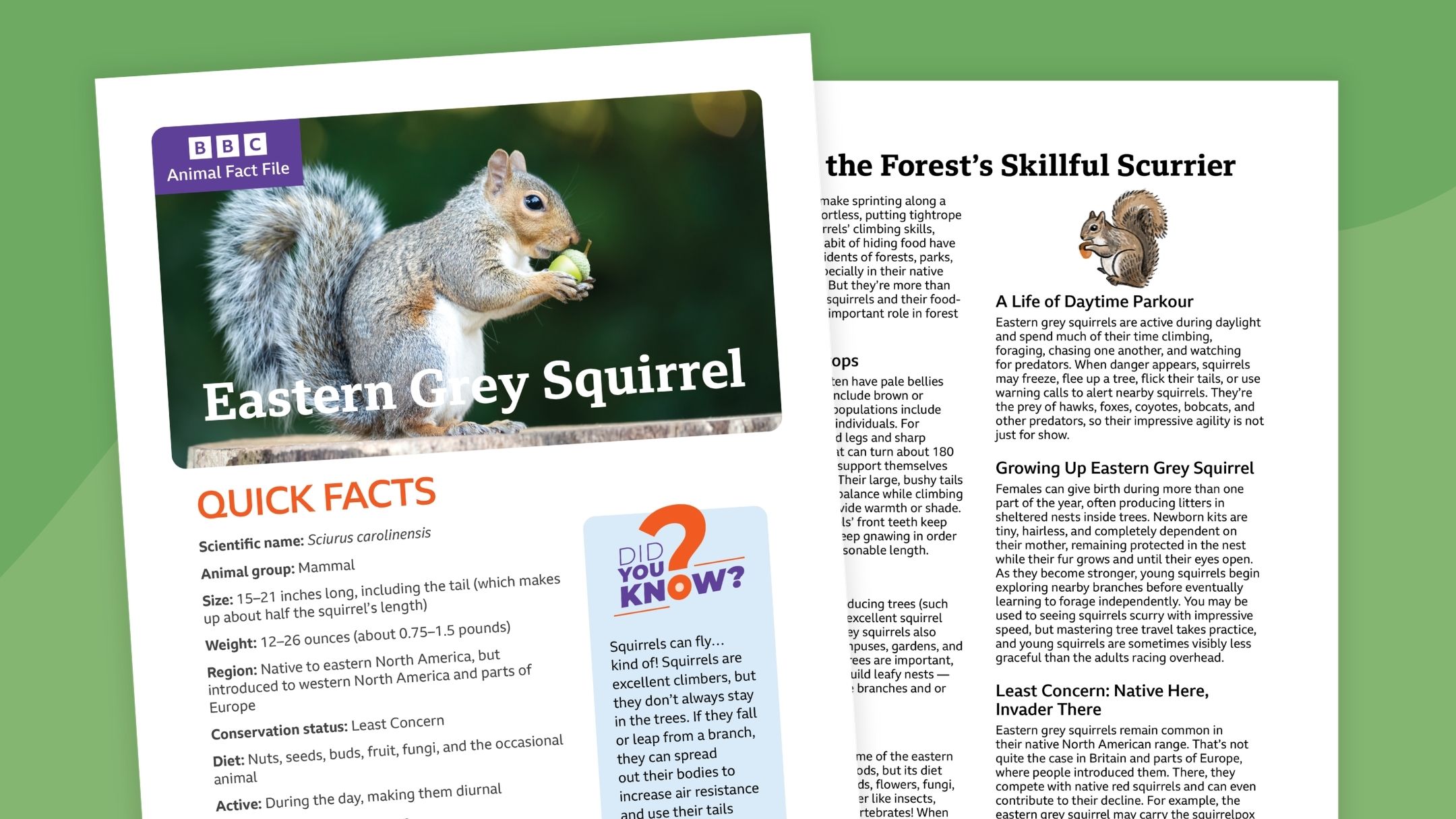
Can a squirrel really fly? Not exactly — but it can leap, fall, and glide through the air with surprising control.
Eastern grey squirrels may be familiar sights in parks and backyards, but there’s a lot going on behind those quick paws and bushy tails. Explore the climbing skills that help them navigate the treetops, the clever way they stash food for later, and the surprising role those forgotten nuts can play in growing new trees. You'll also discover how squirrels communicate, raise their young, and adapt to life in both forests and human neighborhoods.
Teachers and parents, you can use this fact file to:
- Introduce an animal, wildlife, or life science unit
- Support nonfiction reading and vocabulary practice
- Explore animal adaptations, behaviors, and habitats
- Compare animals and the ecosystems they live in
- Practice finding and organizing information from nonfiction texts
- Prepare students for animal research projects or presentations (use our animal report templates!)
- Connect science learning to conservation and environmental issues
- Pair with videos, articles, or other informational texts (see Related Resources below)
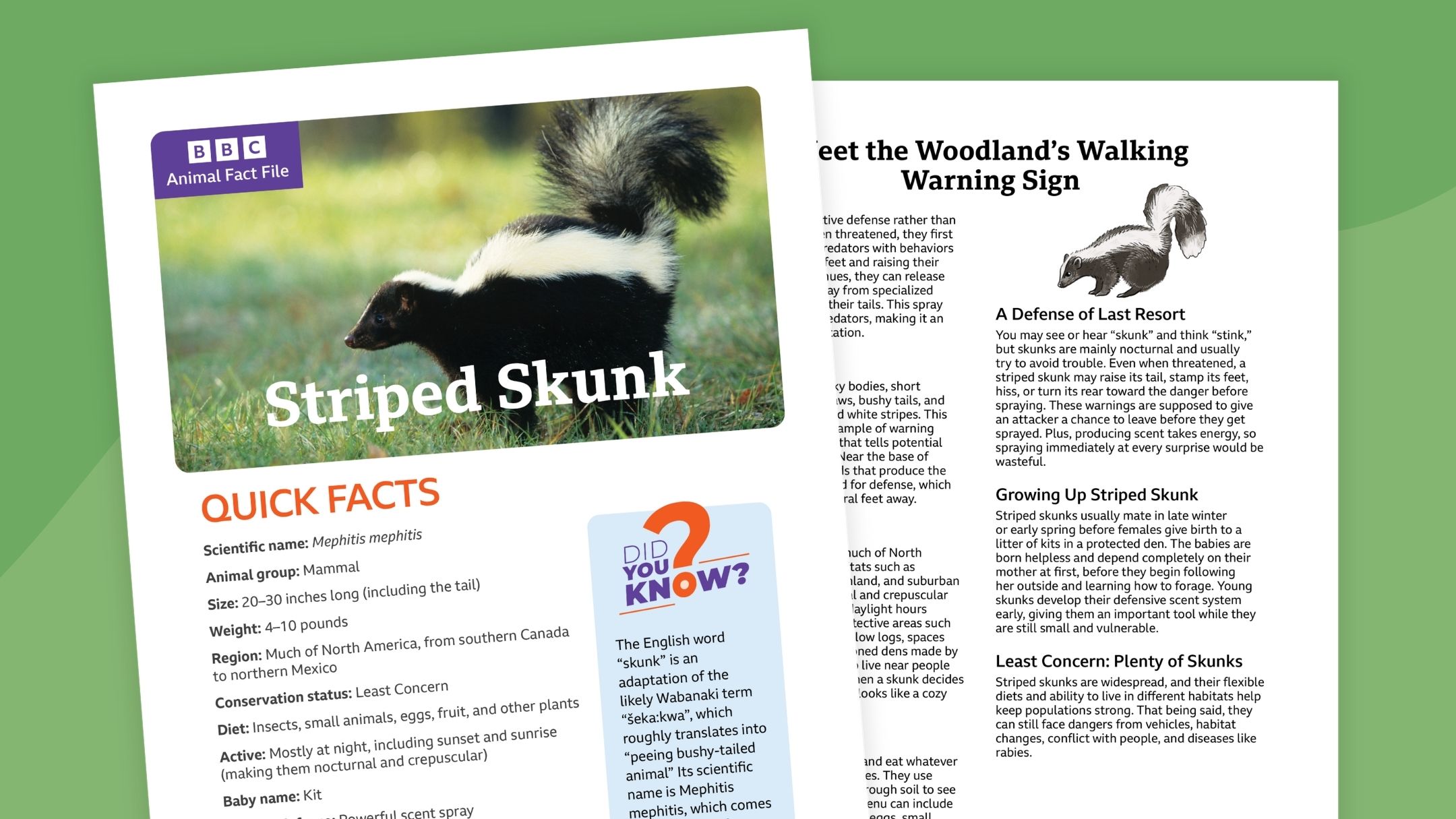
What animal can warn an attacker with stomps, raised fur, and a lifted tail before turning its rear end into a surprisingly powerful defense?
Meet the striped skunk, a small mammal with a big reputation. Find out how its bold black-and-white markings serve as a warning, why spraying is actually a last resort, and how its sharp claws help it dig up dinner. You'll also discover where skunks make their homes, what they eat, and how these mostly nighttime animals manage to live surprisingly close to people.
Teachers and parents, you can use this fact file to:
- Introduce an animal, wildlife, or life science unit
- Support nonfiction reading and vocabulary practice
- Explore animal adaptations, behaviors, and habitats
- Compare animals and the ecosystems they live in
- Practice finding and organizing information from nonfiction texts
- Prepare students for animal research projects or presentations (use our animal report templates!)
- Connect science learning to conservation and environmental issues
- Pair with videos, articles, or other informational texts (see Related Resources below)
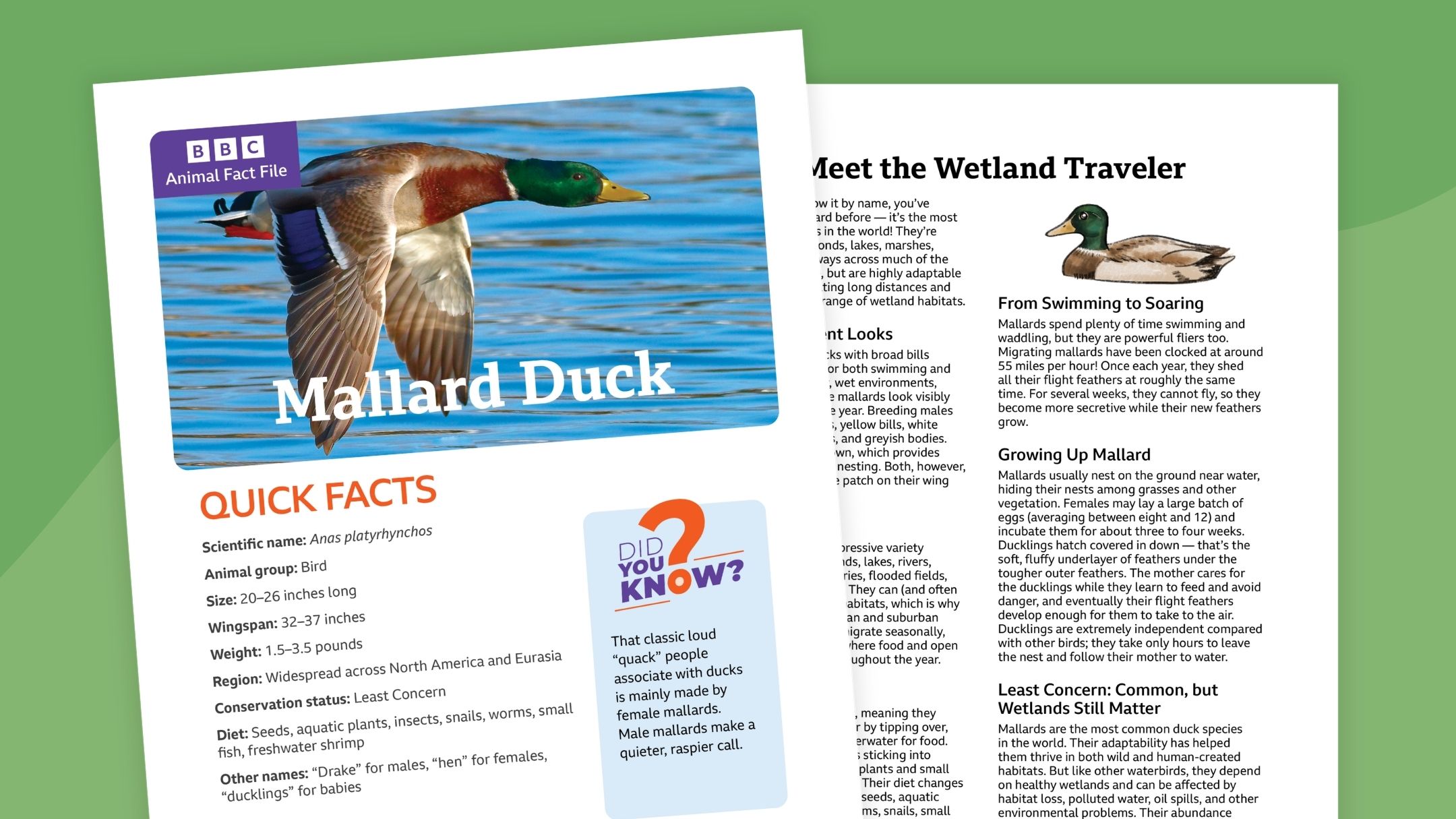
Which duck makes the classic “quack” you hear at ponds and parks? Surprisingly, it’s usually the female mallard!
Meet one of the world’s most widespread and adaptable ducks. Explore how mallards move between water, land, and sky, from tipping upside down to feed underwater to flying at speeds of around 55 miles per hour. You'll also discover why males and females look so different, how ducklings become independent within hours of hatching, and why healthy wetlands matter even to a species that seems to be everywhere.
Teachers and parents, you can use this fact file to:
- Introduce an animal, wildlife, or life science unit
- Support nonfiction reading and vocabulary practice
- Explore animal adaptations, behaviors, and habitats
- Compare animals and the ecosystems they live in
- Practice finding and organizing information from nonfiction texts
- Prepare students for animal research projects or presentations (use our animal report templates!)
- Connect science learning to conservation and environmental issues
- Pair with videos, articles, or other informational texts (see Related Resources below)
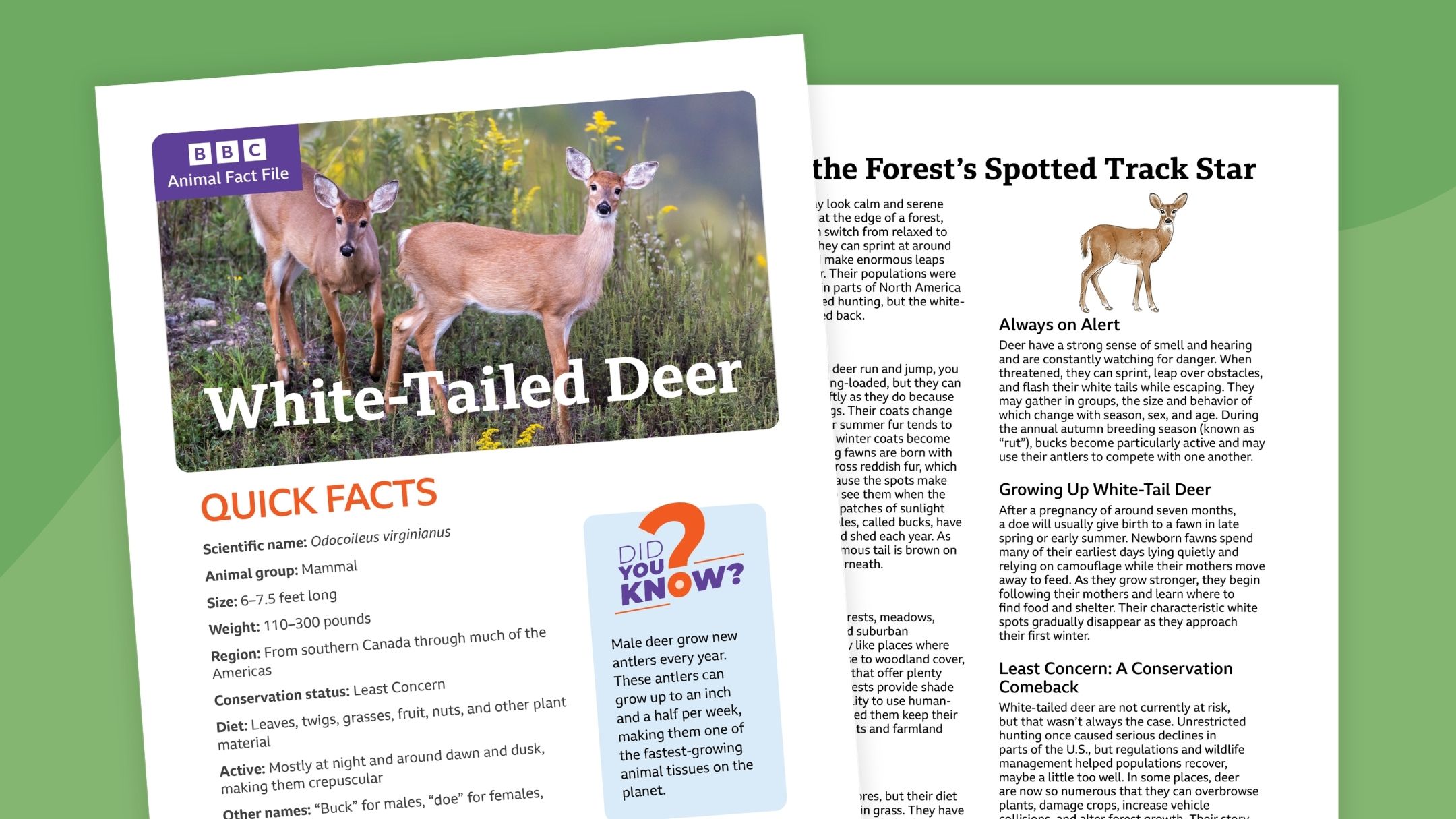
What animal can grow a brand-new set of antlers every year — and grow them faster than you might think?
White-tailed deer are built for life on the move. Explore how their powerful legs help them sprint and leap, how their senses keep them alert to danger, and how their bodies change with the seasons. You'll also discover what fawns do to stay safe, why bucks grow and shed their antlers, and how deer populations have changed over time.
Teachers and parents, you can use this fact file to:
- Introduce an animal, wildlife, or life science unit
- Support nonfiction reading and vocabulary practice
- Explore animal adaptations, behaviors, and habitats
- Compare animals and the ecosystems they live in
- Practice finding and organizing information from nonfiction texts
- Prepare students for animal research projects or presentations (use our animal report templates!)
- Connect science learning to conservation and environmental issues
- Pair with videos, articles, or other informational texts (see Related Resources below)
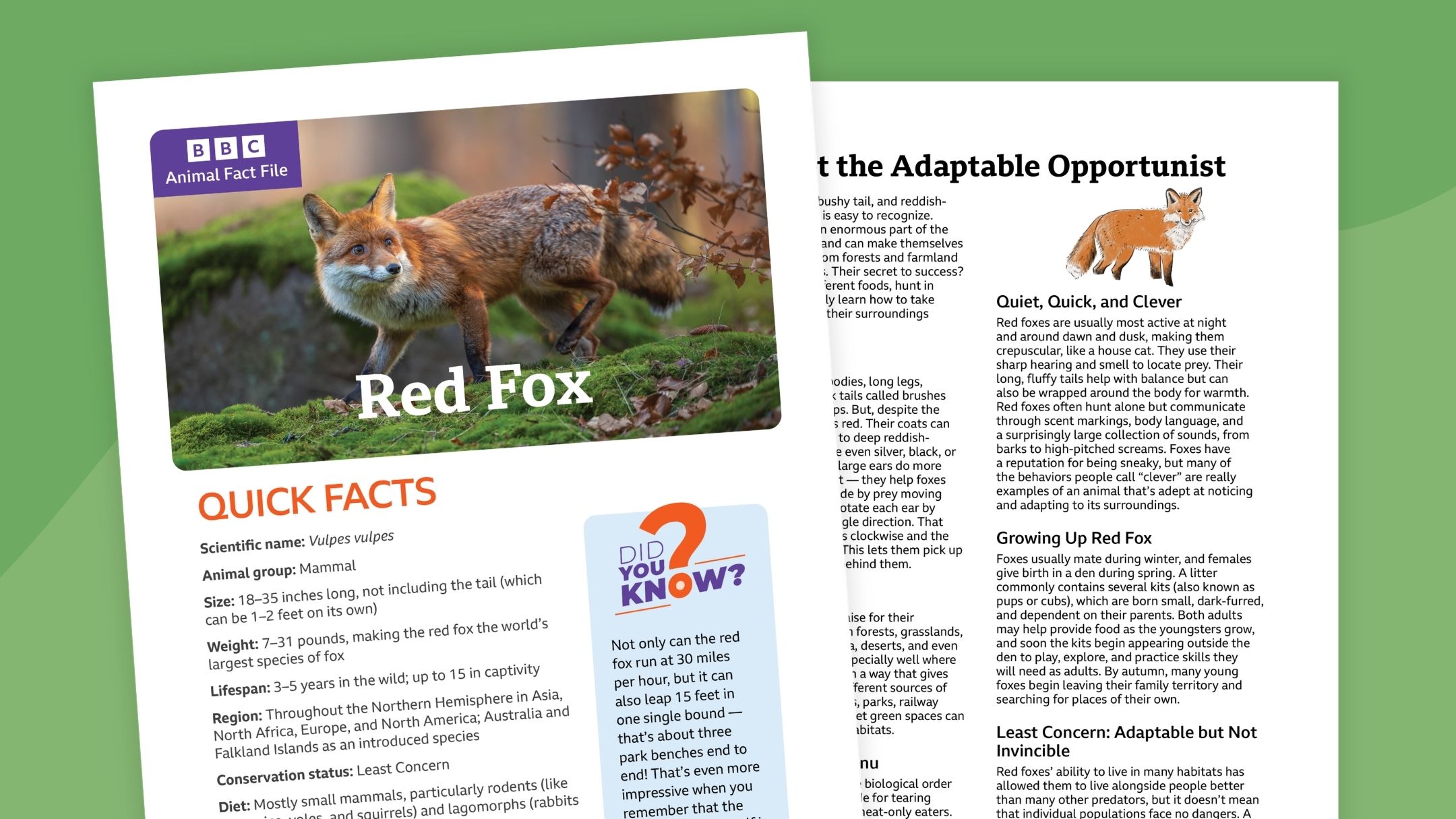
What animal can run 30 miles per hour, leap 15 feet in a single bound, and make itself at home in forests, deserts, farmland, and even cities?
Red foxes are masters of adapting to their surroundings. Explore how their sharp senses, flexible diet, and varied hunting strategies help them find food and survive in habitats all over the world. You'll also discover how foxes communicate, raise their young, and navigate life alongside people — and why being adaptable doesn't make them invincible.
Teachers and parents, you can use this fact file to:
- Introduce an animal, wildlife, or life science unit
- Support nonfiction reading and vocabulary practice
- Explore animal adaptations, behaviors, and habitats
- Compare animals and the ecosystems they live in
- Practice finding and organizing information from nonfiction texts
- Prepare students for animal research projects or presentations (use our animal report templates!)
- Connect science learning to conservation and environmental issues
- Pair with videos, articles, or other informational texts (see Related Resources below)
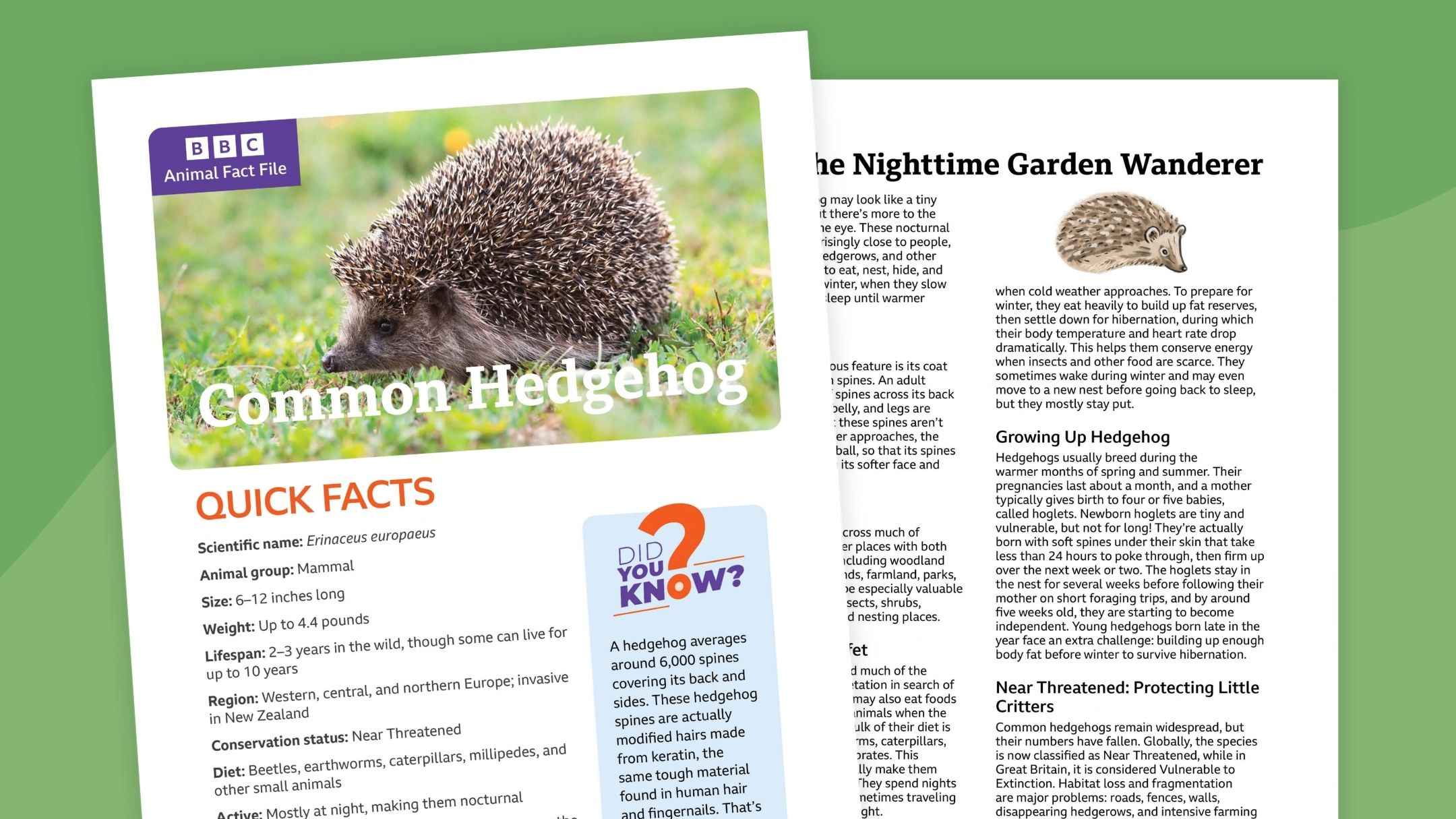
What animal looks like a tiny walking pincushion, sleeps through much of the day, and can roam more than a mile in a single night? Meet the common hedgehog!
From its prickly defenses to its nighttime adventures, the common hedgehog has plenty of tricks for making its way through the wild. Find out what life is like for a hedgehog after dark, what it eats, where it makes its home, and how it prepares for the cold months ahead. You'll also get a closer look at hoglets, hibernation, and the challenges these small mammals face as their habitats change.
Teachers and parents, you can use this fact file to:
- Introduce an animal, wildlife, or life science unit
- Support nonfiction reading and vocabulary practice
- Explore animal adaptations, behaviors, and habitats
- Compare animals and the ecosystems they live in
- Practice finding and organizing information from nonfiction texts
- Prepare students for animal research projects or presentations (use our animal report templates!)
- Connect science learning to conservation and environmental issues
- Pair with videos, articles, or other informational texts (see Related Resources below)
The United States didn’t become a nation overnight. It took decades of protest, argument and compromise, and a lot of disagreement about what kind of country it should be. This playlist follows that story through nine turning points. It starts with the political traditions of the Haudenosaunee (Iroquois) Confederacy and a British tax on printed paper that pushed the colonies toward revolt. From there it moves through the Declaration of Independence, a first attempt at national government that didn’t hold, and the hard-won Constitution that replaced it. It ends with the young republic’s first real tests: George Washington’s presidency, the split into rival political parties, and an armed uprising over a tax on whiskey.
Each video runs a few minutes and covers one turning point, so the series can be watched start to finish or one video at a time.
Every video comes with printable discussion questions, vocabulary, a writing prompt, and classroom activities, all available from the video page. The questions ask students to think about what moved the colonies from protest to independence, why the Articles of Confederation failed, and why the founders’ arguments over federal power didn’t end once the Constitution was signed.
Teachers and Parents: The videos run in chronological order, starting with Indigenous political traditions and ending with the first major challenge to federal authority. Ways to use them:
- Unit introduction: Play the full series to open a unit on the founding for students aged 11–18.
- Lesson starter: Assign The Stamp Act before a lesson on taxation and representation, or the Constitution videos before a class debate on compromise.
- Compare and contrast: Pair The Articles of Confederation with A Constitution Created Through Compromise and have students list what changed and why.
- Then and now: Use The First Political Parties in America to start a discussion on how party divisions began and what they look like today.
When Lincoln issued the Emancipation Proclamation in 1863, the war to preserve the Union also became a war against slavery. How much Lincoln meant it that way is still debated, and this playlist takes up that question directly. It also covers the new technology that changed how armies fought, the medical crisis in which disease killed twice as many soldiers as combat, the turning-point battles of 1863, and Sherman’s campaign through Georgia. The second half follows the country through Reconstruction: lenient early policies gave way to Radical Reconstruction and constitutional amendments that abolished slavery and guaranteed citizenship and voting rights. It then traces how those gains were rolled back as white Southern Democrats regained power and federal troops withdrew in 1877.
Each video comes with discussion questions, vocabulary, a writing prompt, and classroom activities — all printable from the video page. Questions include why the Emancipation Proclamation didn’t free all enslaved people, why historians call the Civil War the first modern war, and whether Lincoln believed in racial equality.
Teachers and Parents: The playlist picks up where The Road to War leaves off, so together the two playlists cover the full unit for ages 11–18. Videos 1 and 2 work as a pair: a straightforward account of the Emancipation Proclamation followed by historian Lucy Worsley’s case that Lincoln’s main goal was saving the Union. That sets up a strong source-comparison or debate lesson. Lincoln’s Legacy extends the discussion through Frederick Douglass’s reassessment of Lincoln. It contains discriminatory language, so preview it before assigning. The last three videos form a short Reconstruction sequence: The Three Phases of Reconstruction gives the overview, and the next two focus on Black Americans' political gains and the deal that ended federal enforcement, a natural lead-in to Jim Crow and the Civil Rights Movement. Use the "Share With Students" feature to assign videos directly or "Add to Playlist" to build your own sequence.
By 1860, the United States had been arguing over slavery for decades. This playlist follows that argument as it hardened into war. It covers the people who resisted slavery, the court case that denied Black Americans citizenship, a raid that pushed the country closer to the edge, and the election that led seven states to secede before Lincoln took office. Each video runs a few minutes and focuses on a single turning point, so the series can be watched start to finish or one video at a time.
Each video comes with discussion questions, vocabulary, a writing prompt ,and classroom activities — all printable from the video page. Questions include why Southern states seceded after Lincoln’s election and how the Civil War split families in border states.
Teachers and Parents: The videos are in chronological order and work as a full unit introduction for students 11–18. They can also be assigned individually to set up a specific lesson. The opening video, from BBC’s American History’s Biggest Fibs With Lucy Worsley, puts slavery at the center of the conflict and gives students a framework for the rest of the list. The Kentucky video closes the list and leads into the companion playlist, The Civil War and Its Aftermath, which runs from the Emancipation Proclamation through the end of Reconstruction. Use the "Share With Students" feature to assign videos directly or "Add to Playlist" to build your own sequence.
Could you sleep for six months and still have plenty of energy when you wake up? The hazel dormouse does just that, spending much of the colder part of the year in hibernation.
This tiny golden-brown rodent spends the warmer months climbing through trees and hedgerows, eating flowers, insects, berries, and nuts before preparing for winter. Discover how a dormouse’s furry tail and large eyes help it navigate after dark, why autumn is a race to build up energy reserves, and how its long winter sleep helps it survive when food is scarce. You'll also find out why these little climbers need connected woodlands and hedgerows to thrive.
Teachers and parents, you can use this fact file to:
- Introduce an animal, wildlife, or life science unit
- Support nonfiction reading and vocabulary practice
- Explore animal adaptations, behaviors, and habitats
- Compare animals and the ecosystems they live in
- Practice finding and organizing information from nonfiction texts
- Prepare students for animal research projects or presentations (use our animal report templates!)
- Connect science learning to conservation and environmental issues
- Pair with videos, articles, or other informational texts (see Related Resources below)
How many earthworms could a hungry badger eat in one night? More than 200 — and that’s just one of the surprising things about this underground-dwelling mammal.
Meet the European badger, a powerful digger that spends its days below ground and its nights exploring above it. Take a look inside a badger’s sett, discover how its strong claws and keen sense of smell help it find food, and find out why earthworms are such an important part of its diet. You'll also learn how badger families live together, raise their cubs, and keep their underground homes in order.
Teachers and parents, you can use this fact file to:
- Introduce an animal, wildlife, or life science unit
- Support nonfiction reading and vocabulary practice
- Explore animal adaptations, behaviors, and habitats
- Compare animals and the ecosystems they live in
- Practice finding and organizing information from nonfiction texts
- Prepare students for animal research projects or presentations (use our animal report templates!)
- Connect science learning to conservation and environmental issues
- Pair with videos, articles, or other informational texts (see Related Resources below)
How can an animal identify what it’s holding without even looking at it? For the common raccoon, the answer is all in its paws.
Raccoons are equipped with remarkably sensitive front paws that help them explore, handle food, and investigate their surroundings. Find out how these dexterous mammals use touch, climbing skills, and an anything-goes diet to thrive in forests, wetlands, and neighborhoods. You'll also discover why raccoons sometimes seem to “wash” their food, where they sleep during the day, and how their adaptability can create both opportunities and challenges when they live near people.
Teachers and parents, you can use this fact file to:
- Introduce an animal, wildlife, or life science unit
- Support nonfiction reading and vocabulary practice
- Explore animal adaptations, behaviors, and habitats
- Compare animals and the ecosystems they live in
- Practice finding and organizing information from nonfiction texts
- Prepare students for animal research projects or presentations (use our animal report templates!)
- Connect science learning to conservation and environmental issues
- Pair with videos, articles, or other informational texts (see Related Resources below)
Can a squirrel really fly? Not exactly — but it can leap, fall, and glide through the air with surprising control.
Eastern grey squirrels may be familiar sights in parks and backyards, but there’s a lot going on behind those quick paws and bushy tails. Explore the climbing skills that help them navigate the treetops, the clever way they stash food for later, and the surprising role those forgotten nuts can play in growing new trees. You'll also discover how squirrels communicate, raise their young, and adapt to life in both forests and human neighborhoods.
Teachers and parents, you can use this fact file to:
- Introduce an animal, wildlife, or life science unit
- Support nonfiction reading and vocabulary practice
- Explore animal adaptations, behaviors, and habitats
- Compare animals and the ecosystems they live in
- Practice finding and organizing information from nonfiction texts
- Prepare students for animal research projects or presentations (use our animal report templates!)
- Connect science learning to conservation and environmental issues
- Pair with videos, articles, or other informational texts (see Related Resources below)
What animal can warn an attacker with stomps, raised fur, and a lifted tail before turning its rear end into a surprisingly powerful defense?
Meet the striped skunk, a small mammal with a big reputation. Find out how its bold black-and-white markings serve as a warning, why spraying is actually a last resort, and how its sharp claws help it dig up dinner. You'll also discover where skunks make their homes, what they eat, and how these mostly nighttime animals manage to live surprisingly close to people.
Teachers and parents, you can use this fact file to:
- Introduce an animal, wildlife, or life science unit
- Support nonfiction reading and vocabulary practice
- Explore animal adaptations, behaviors, and habitats
- Compare animals and the ecosystems they live in
- Practice finding and organizing information from nonfiction texts
- Prepare students for animal research projects or presentations (use our animal report templates!)
- Connect science learning to conservation and environmental issues
- Pair with videos, articles, or other informational texts (see Related Resources below)
Which duck makes the classic “quack” you hear at ponds and parks? Surprisingly, it’s usually the female mallard!
Meet one of the world’s most widespread and adaptable ducks. Explore how mallards move between water, land, and sky, from tipping upside down to feed underwater to flying at speeds of around 55 miles per hour. You'll also discover why males and females look so different, how ducklings become independent within hours of hatching, and why healthy wetlands matter even to a species that seems to be everywhere.
Teachers and parents, you can use this fact file to:
- Introduce an animal, wildlife, or life science unit
- Support nonfiction reading and vocabulary practice
- Explore animal adaptations, behaviors, and habitats
- Compare animals and the ecosystems they live in
- Practice finding and organizing information from nonfiction texts
- Prepare students for animal research projects or presentations (use our animal report templates!)
- Connect science learning to conservation and environmental issues
- Pair with videos, articles, or other informational texts (see Related Resources below)
What animal can grow a brand-new set of antlers every year — and grow them faster than you might think?
White-tailed deer are built for life on the move. Explore how their powerful legs help them sprint and leap, how their senses keep them alert to danger, and how their bodies change with the seasons. You'll also discover what fawns do to stay safe, why bucks grow and shed their antlers, and how deer populations have changed over time.
Teachers and parents, you can use this fact file to:
- Introduce an animal, wildlife, or life science unit
- Support nonfiction reading and vocabulary practice
- Explore animal adaptations, behaviors, and habitats
- Compare animals and the ecosystems they live in
- Practice finding and organizing information from nonfiction texts
- Prepare students for animal research projects or presentations (use our animal report templates!)
- Connect science learning to conservation and environmental issues
- Pair with videos, articles, or other informational texts (see Related Resources below)
What animal can run 30 miles per hour, leap 15 feet in a single bound, and make itself at home in forests, deserts, farmland, and even cities?
Red foxes are masters of adapting to their surroundings. Explore how their sharp senses, flexible diet, and varied hunting strategies help them find food and survive in habitats all over the world. You'll also discover how foxes communicate, raise their young, and navigate life alongside people — and why being adaptable doesn't make them invincible.
Teachers and parents, you can use this fact file to:
- Introduce an animal, wildlife, or life science unit
- Support nonfiction reading and vocabulary practice
- Explore animal adaptations, behaviors, and habitats
- Compare animals and the ecosystems they live in
- Practice finding and organizing information from nonfiction texts
- Prepare students for animal research projects or presentations (use our animal report templates!)
- Connect science learning to conservation and environmental issues
- Pair with videos, articles, or other informational texts (see Related Resources below)
What animal looks like a tiny walking pincushion, sleeps through much of the day, and can roam more than a mile in a single night? Meet the common hedgehog!
From its prickly defenses to its nighttime adventures, the common hedgehog has plenty of tricks for making its way through the wild. Find out what life is like for a hedgehog after dark, what it eats, where it makes its home, and how it prepares for the cold months ahead. You'll also get a closer look at hoglets, hibernation, and the challenges these small mammals face as their habitats change.
Teachers and parents, you can use this fact file to:
- Introduce an animal, wildlife, or life science unit
- Support nonfiction reading and vocabulary practice
- Explore animal adaptations, behaviors, and habitats
- Compare animals and the ecosystems they live in
- Practice finding and organizing information from nonfiction texts
- Prepare students for animal research projects or presentations (use our animal report templates!)
- Connect science learning to conservation and environmental issues
- Pair with videos, articles, or other informational texts (see Related Resources below)