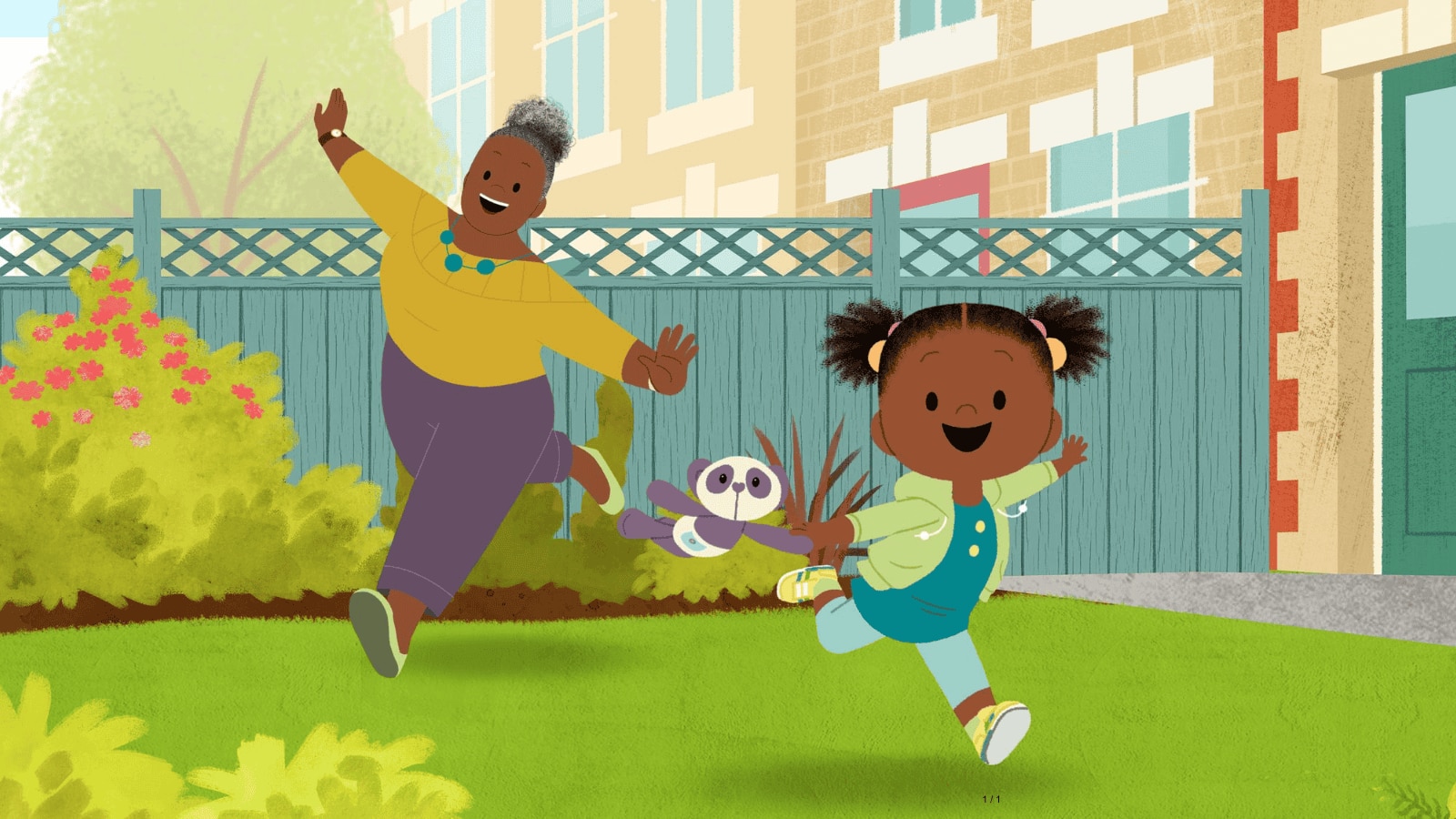
Introducing your new favorite duo! JoJo & Gran Gran is a BBC children's animated television series that follows an inquisitive and cheerful 4-and-a-half-year-old girl and her loving grandmother, who always has something new to teach her. Young learners will love learning alongside the diverse cast of characters as they get to know their community and explore the natural world around them.
This is quick and easy seasonal content — perfect for an intro to a life science (plants, trees, flowers) or social studies (holidays!) lesson. Or watch the video and then try what JoJo and Gran Gran did, whether it's making a fruit crumble or writing a poem.

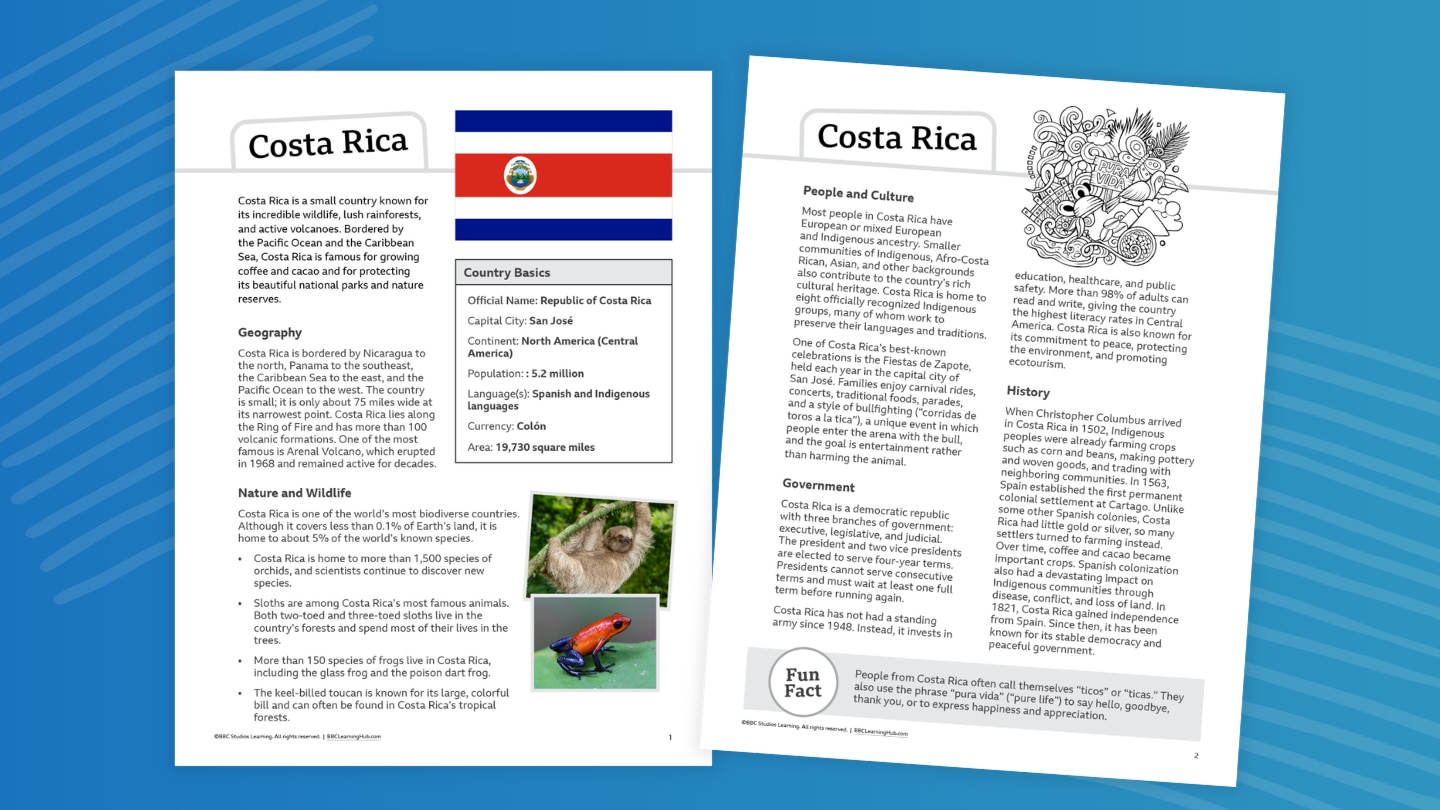
What small country is home to an astonishing variety of plants and animals, hundreds of volcanoes, and tropical forests stretching from coast to coast? Meet Costa Rica, a Central American country known for its incredible biodiversity and commitment to protecting nature.
From sloths and glass frogs to colorful toucans and thousands of orchids, Costa Rica is packed with wildlife. Discover how Indigenous peoples and Spanish colonization shaped the country, learn about its government and culture, and explore traditions such as the Fiestas de Zapote and "pura vida." You’ll also find out why Costa Rica has become a leader in protecting forests, wildlife, and other natural resources.
Teachers and parents, you can use this fact file to:
- Introduce a geography or social studies unit
- Support nonfiction reading practice
- Compare countries and cultures
- Complete map and research activities
- Prepare students for projects or presentations (use our country report template!)
- Pair with videos, articles, or other informational texts (see Related Resources below)
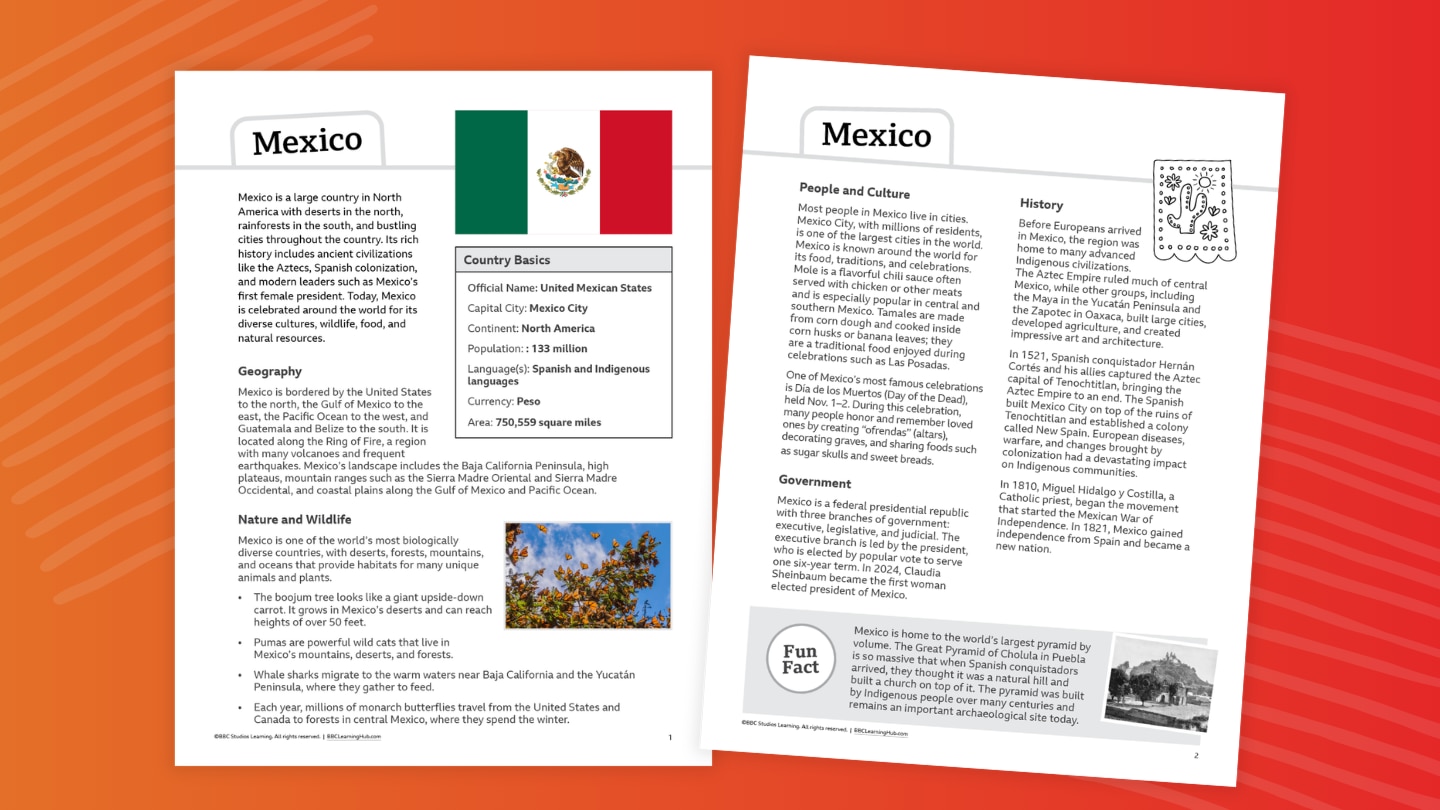
What country is home to ancient pyramids, colorful monarch butterflies, towering volcanoes, and one of the world’s most famous celebrations? Meet Mexico, a country where ancient civilizations, diverse landscapes, and vibrant traditions come together.
From the Aztec and Maya to pumas and whale sharks, Mexico has a remarkable story to tell. Explore the civilizations that shaped the country, discover how Mexico gained independence from Spain, and learn about its food, festivals, languages, government, and cities. You’ll also discover how deserts, mountains, jungles, and coastlines provide habitats for an amazing variety of plants and animals.
Teachers and parents, you can use this fact file to:
- Introduce a geography or social studies unit
- Support nonfiction reading practice
- Compare countries and cultures
- Complete map and research activities
- Prepare students for projects or presentations (use our country report template!)
- Pair with videos, articles, or other informational texts (see Related Resources below)
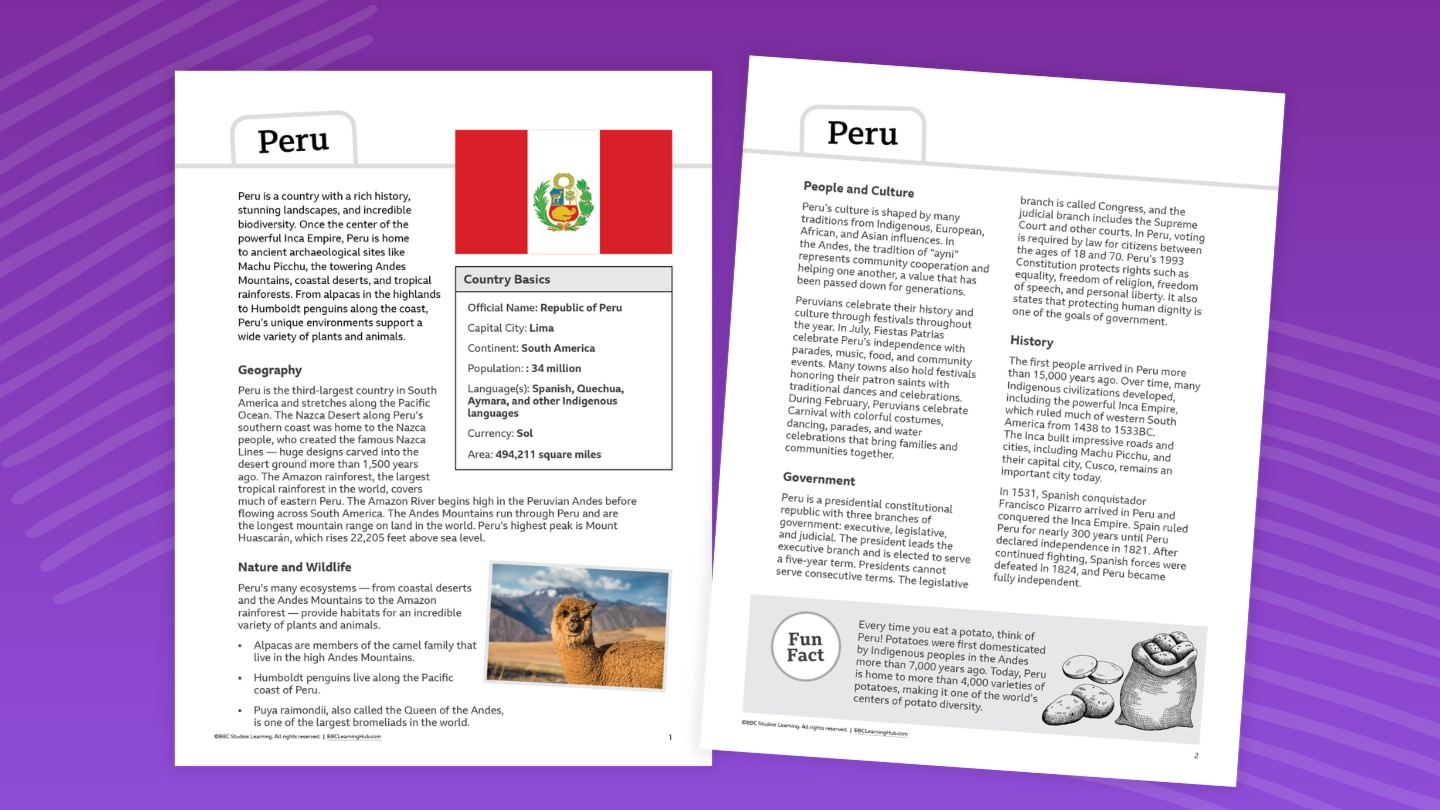
What country is home to the Inca Empire, the Andes Mountains, and more than 3,000 varieties of potatoes? Meet Peru, a country where ancient civilizations and incredible natural landscapes come together.
From Machu Picchu and the ancient city of Cusco to alpacas and the towering Puya Raimondi plant, Peru is full of remarkable discoveries. Explore the civilizations that flourished here, learn how Spanish colonization changed the country, and discover Peru’s languages, traditions, foods, and government. You’ll also travel from the Pacific coast to the high Andes and deep into the Amazon to see how geography shapes life in Peru.
Teachers and parents, you can use this fact file to:
- Introduce a geography or social studies unit
- Support nonfiction reading practice
- Compare countries and cultures
- Complete map and research activities
- Prepare students for projects or presentations (use our country report template!)
- Pair with videos, articles, or other informational texts (see Related Resources below)
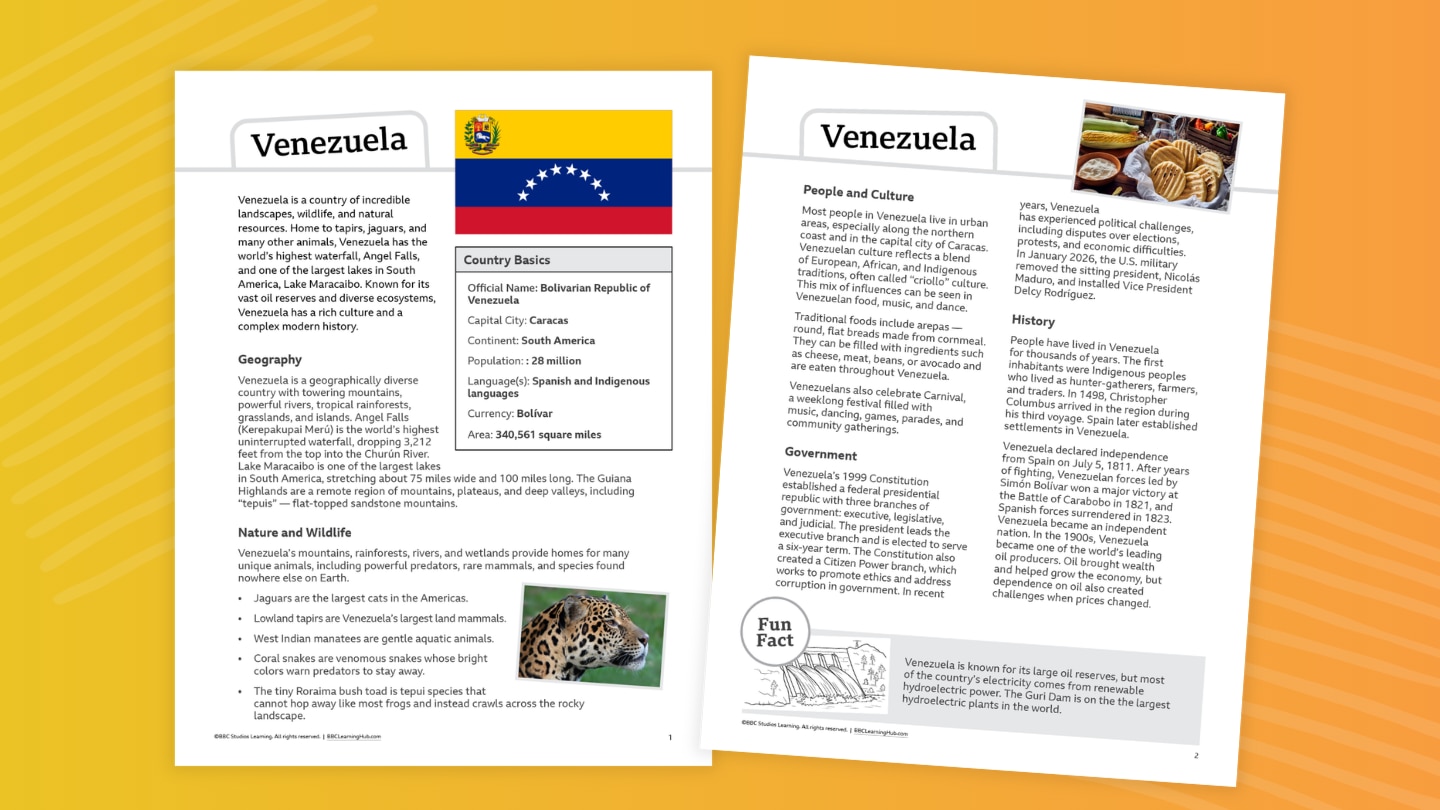
What country is home to the world’s highest waterfall, mysterious flat-topped mountains, and animals found nowhere else? Meet Venezuela, a country of spectacular landscapes and extraordinary biodiversity.
From Angel Falls and the tepuis to jaguars, tapirs, manatees, and the tiny Roraima bush toad, Venezuela is filled with natural wonders. Explore the Indigenous peoples and events that shaped the country’s history, learn about its government and oil-rich economy, and discover the foods, music, festivals, and traditions that make Venezuelan culture unique. You’ll also learn why Venezuela’s isolated tepuis are home to species that have adapted to life high above the surrounding landscape.
Teachers and parents, you can use this fact file to:
- Introduce a geography or social studies unit
- Support nonfiction reading practice
- Compare countries and cultures
- Complete map and research activities
- Prepare students for projects or presentations (use our country report template!)
- Pair with videos, articles, or other informational texts (see Related Resources below)
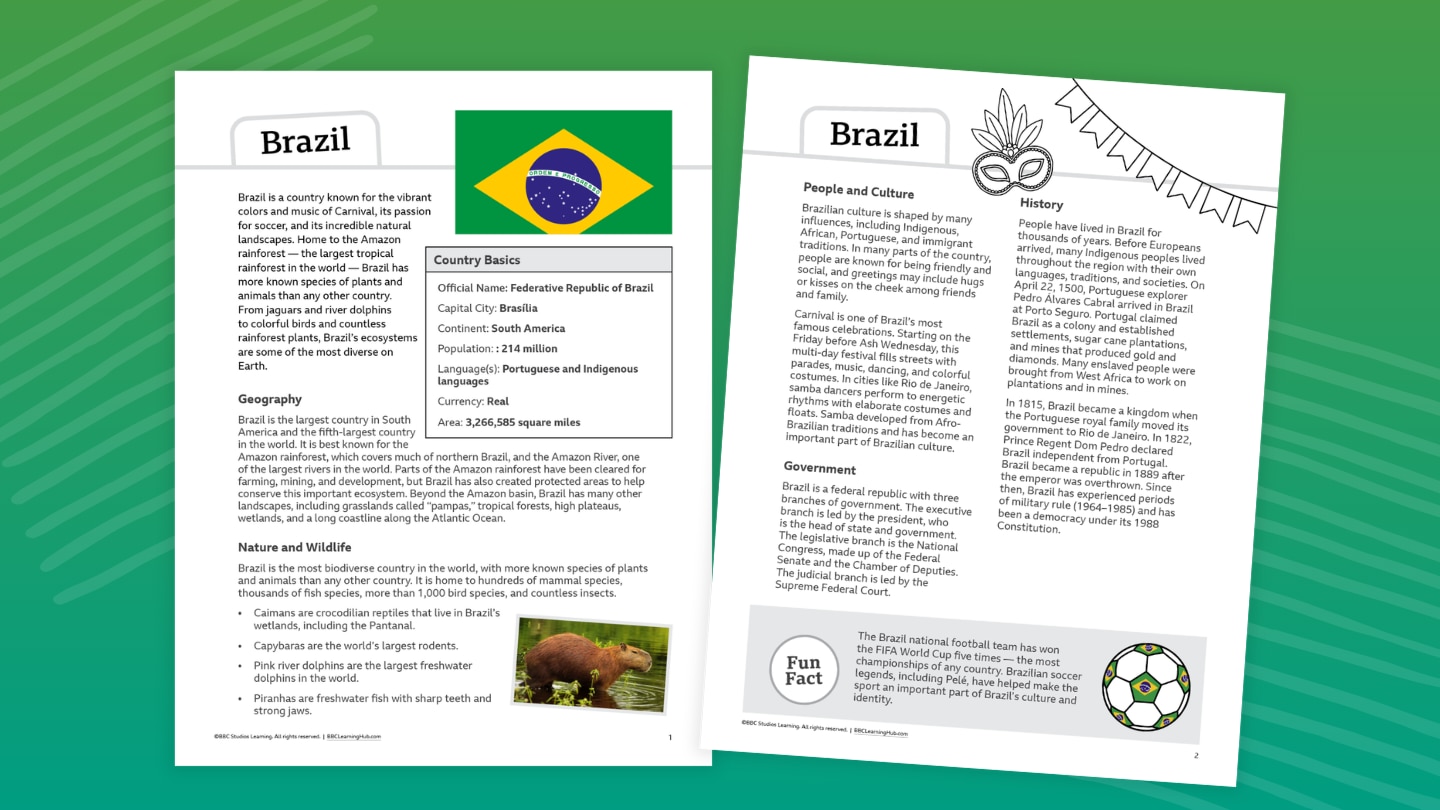
What country is home to the world’s largest tropical rainforest, the greatest biodiversity on Earth, and a culture famous for Carnival and soccer? Meet Brazil, the largest country in South America and a place where natural and cultural wonders stretch across an enormous landscape.
From capybaras and pink river dolphins to the mighty Amazon River and the wetlands of the Pantanal, Brazil is bursting with life. Explore the Indigenous, African, Portuguese, and immigrant influences that shaped Brazilian culture, learn about the country’s history and government, and discover the foods, music, and celebrations that bring people together. You’ll also explore Brazil’s incredible ecosystem.
Teachers and parents, you can use this fact file to:
- Introduce a geography or social studies unit
- Support nonfiction reading practice
- Compare countries and cultures
- Complete map and research activities
- Prepare students for projects or presentations (use our country report template!)
- Pair with videos, articles, or other informational texts (see Related Resources below)
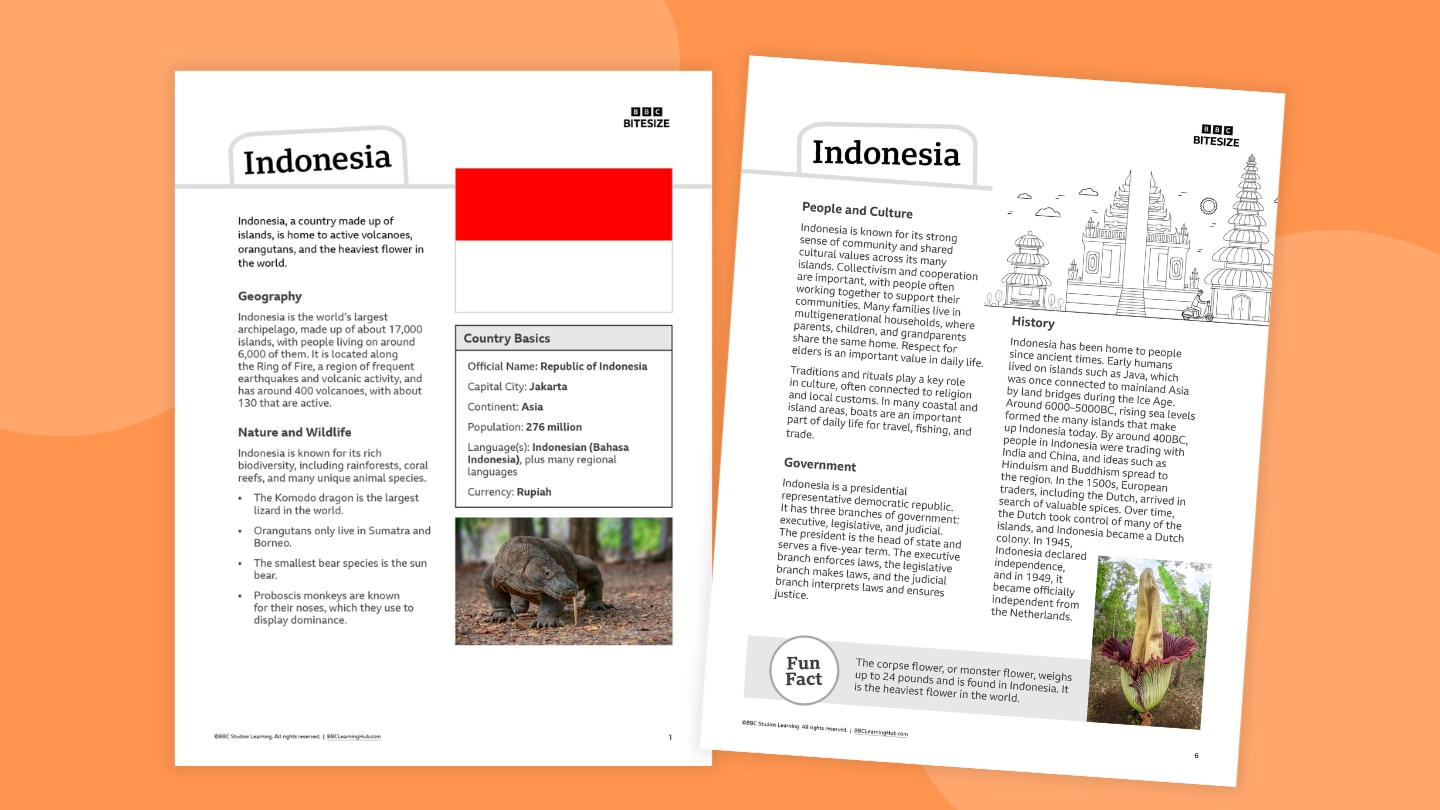
What country is made up of thousands of islands and sits along the Pacific Ring of Fire? Meet Indonesia, an island nation filled with volcanoes, rainforests, coral reefs, and some of the most unusual animals on Earth.
From Komodo dragons and orangutans to vibrant coral reefs and towering volcanoes, Indonesia’s islands are packed with natural wonders. Discover how the country’s geography has shaped the way people live, explore its history and government, and learn about its many languages, traditions, foods, and celebrations. You’ll also meet some of Indonesia’s incredible wildlife.
Teachers and parents, you can use this fact file to:
- Introduce a geography or social studies unit
- Support nonfiction reading practice
- Compare countries and cultures
- Complete map and research activities
- Prepare students for projects or presentations (use our country report template!)
- Pair with videos, articles, or other informational texts (see Related Resources below)
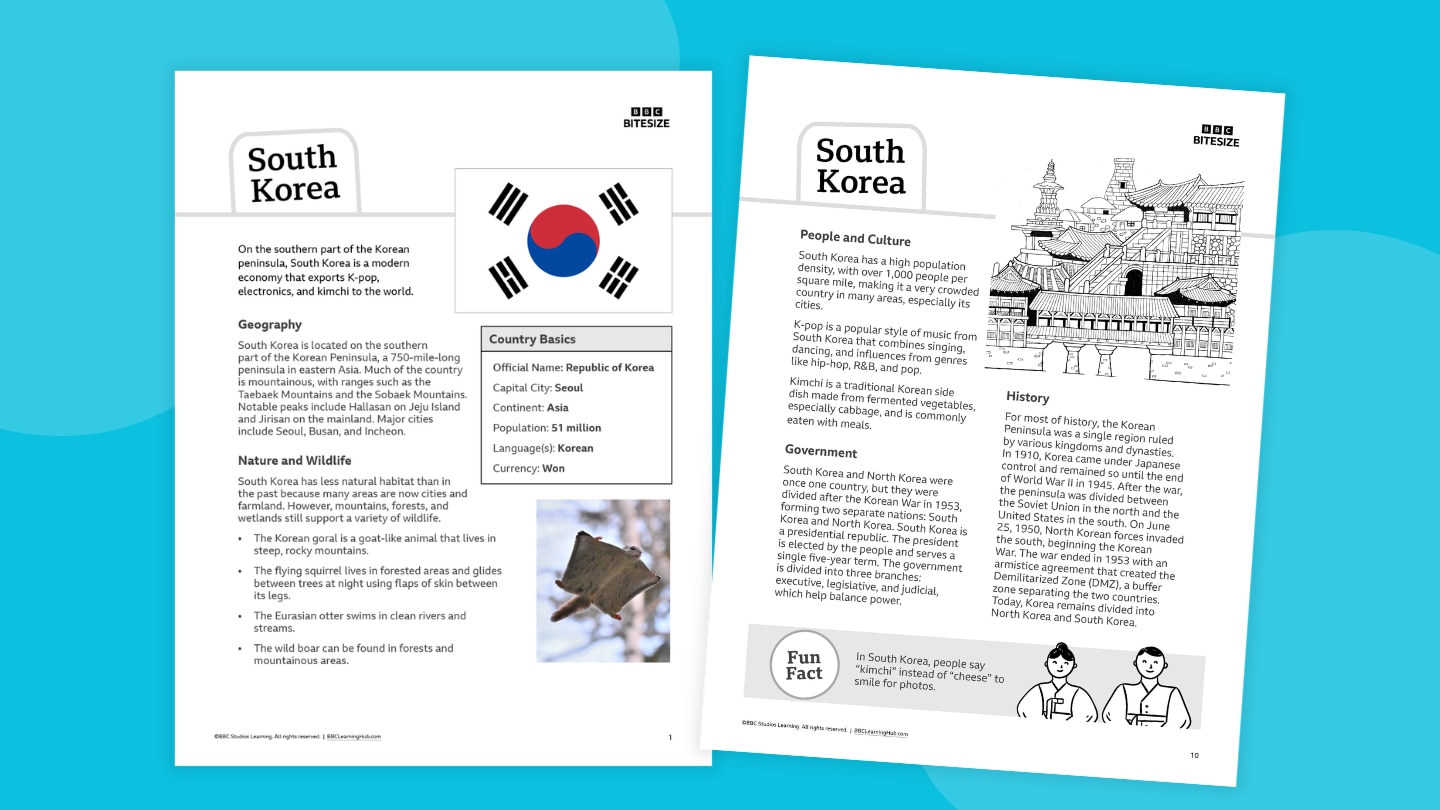
How did a small country on a mountainous peninsula become a global leader in technology, entertainment, and culture? Meet South Korea, a country where ancient traditions and modern innovation are woven together.
From the mountains and islands to the busy streets of Seoul, South Korea has much to explore. Learn how Korea’s history shaped the country it is today, discover the traditions and foods that bring people together, and explore South Korea’s government, economy, language, and culture. You’ll also meet native animals —including a flying squirrel — and discover how wildlife survives in a country where people and cities are never far away.
Teachers and parents, you can use this fact file to:
- Introduce a geography or social studies unit
- Support nonfiction reading practice
- Compare countries and cultures
- Complete map and research activities
- Prepare students for projects or presentations (use our country report template!)
- Pair with videos, articles, or other informational texts (see Related Resources below)
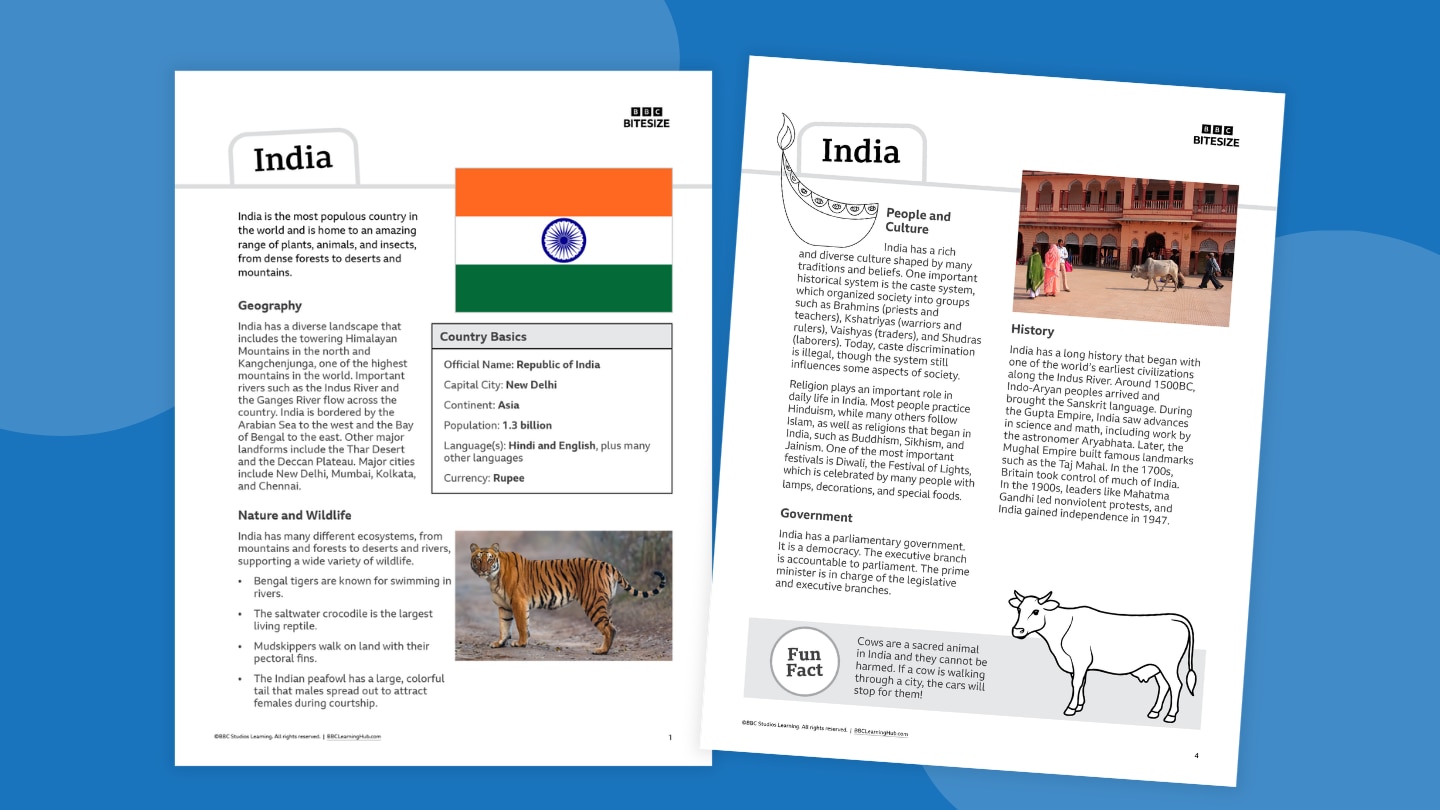
What country is home to more than a billion people, hundreds of languages, the Himalayan Mountains, and some of the world’s most iconic animals? Meet India, a country with an extraordinary mix of landscapes, cultures, religions, and traditions.
From Bengal tigers and colorful peafowl to the Taj Mahal and the mighty Himalayas, India is full of fascinating stories and discoveries. Explore the civilizations and empires that shaped its history, learn about Hinduism and other religions that began there, and discover the foods, festivals, languages, and traditions that make India unique. You’ll also explore the country’s incredible wildlife.
Teachers and parents, you can use this fact file to:
- Introduce a geography or social studies unit
- Support nonfiction reading practice
- Compare countries and cultures
- Complete map and research activities
- Prepare students for projects or presentations (use our country report template!)
- Pair with videos, articles, or other informational texts (see Related Resources below)
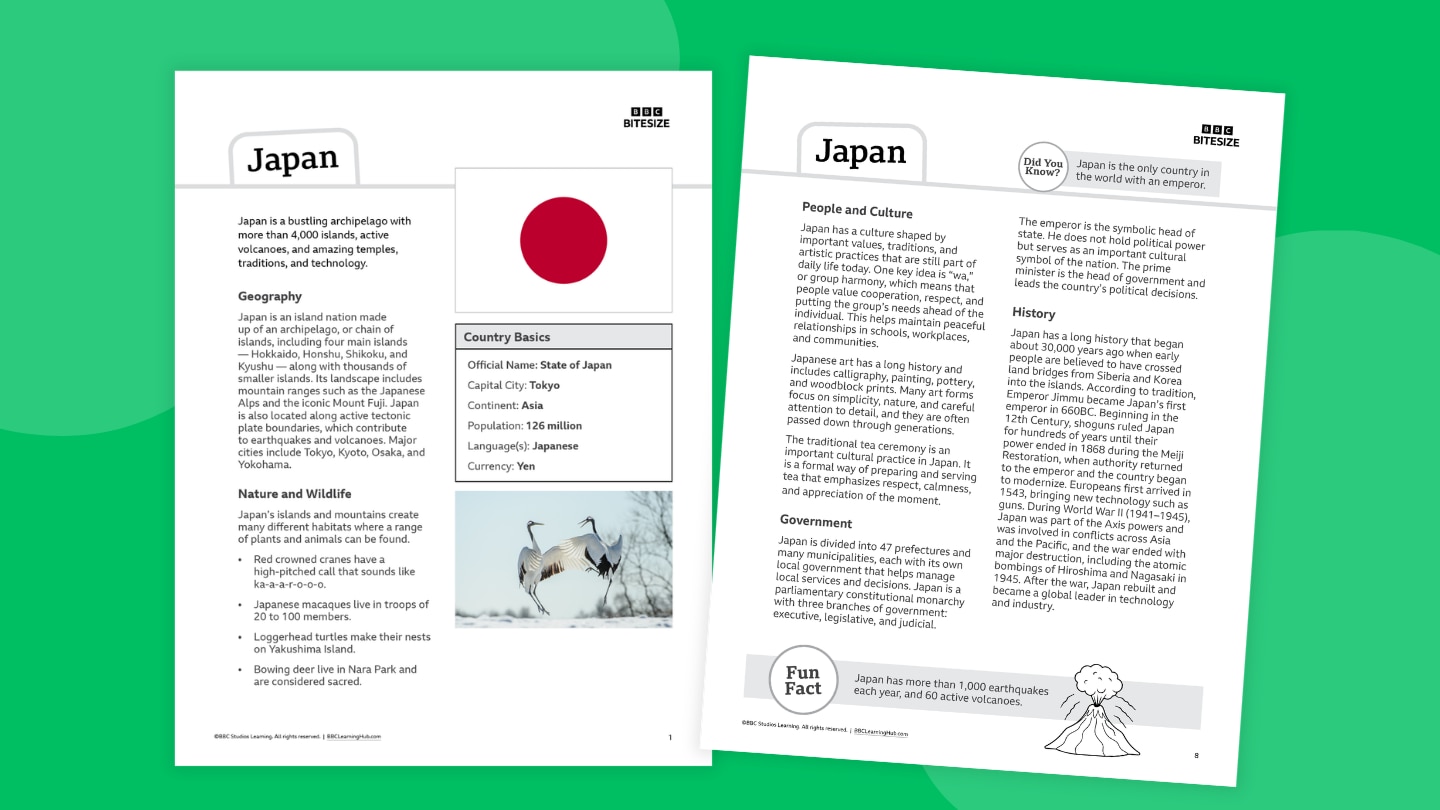
What island country is home to ancient temples, bustling cities, active volcanoes, and some of the world’s most unusual wildlife? Meet Japan, a country where centuries-old traditions and cutting-edge technology come together.
From Mount Fuji and the cherry blossoms to Japanese macaques and loggerhead turtles, Japan has an incredible variety of landscapes and living things. Discover how Japan’s islands and mountains have shaped its people and culture, explore key moments in its history, and learn about its government, language, food, and traditions. Along the way, you’ll uncover some surprising facts about this fascinating country.
Teachers and parents, you can use this fact file to:
- Introduce a geography or social studies unit
- Support nonfiction reading practice
- Compare countries and cultures
- Complete map and research activities
- Prepare students for projects or presentations (use our country report template!)
- Pair with videos, articles, or other informational texts (see Related Resources below)
Introducing your new favorite duo! JoJo & Gran Gran is a BBC children's animated television series that follows an inquisitive and cheerful 4-and-a-half-year-old girl and her loving grandmother, who always has something new to teach her. Young learners will love learning alongside the diverse cast of characters as they get to know their community and explore the natural world around them.
This is quick and easy seasonal content — perfect for an intro to a life science (plants, trees, flowers) or social studies (holidays!) lesson. Or watch the video and then try what JoJo and Gran Gran did, whether it's making a fruit crumble or writing a poem.
What small country is home to an astonishing variety of plants and animals, hundreds of volcanoes, and tropical forests stretching from coast to coast? Meet Costa Rica, a Central American country known for its incredible biodiversity and commitment to protecting nature.
From sloths and glass frogs to colorful toucans and thousands of orchids, Costa Rica is packed with wildlife. Discover how Indigenous peoples and Spanish colonization shaped the country, learn about its government and culture, and explore traditions such as the Fiestas de Zapote and "pura vida." You’ll also find out why Costa Rica has become a leader in protecting forests, wildlife, and other natural resources.
Teachers and parents, you can use this fact file to:
- Introduce a geography or social studies unit
- Support nonfiction reading practice
- Compare countries and cultures
- Complete map and research activities
- Prepare students for projects or presentations (use our country report template!)
- Pair with videos, articles, or other informational texts (see Related Resources below)
What country is home to ancient pyramids, colorful monarch butterflies, towering volcanoes, and one of the world’s most famous celebrations? Meet Mexico, a country where ancient civilizations, diverse landscapes, and vibrant traditions come together.
From the Aztec and Maya to pumas and whale sharks, Mexico has a remarkable story to tell. Explore the civilizations that shaped the country, discover how Mexico gained independence from Spain, and learn about its food, festivals, languages, government, and cities. You’ll also discover how deserts, mountains, jungles, and coastlines provide habitats for an amazing variety of plants and animals.
Teachers and parents, you can use this fact file to:
- Introduce a geography or social studies unit
- Support nonfiction reading practice
- Compare countries and cultures
- Complete map and research activities
- Prepare students for projects or presentations (use our country report template!)
- Pair with videos, articles, or other informational texts (see Related Resources below)
What country is home to the Inca Empire, the Andes Mountains, and more than 3,000 varieties of potatoes? Meet Peru, a country where ancient civilizations and incredible natural landscapes come together.
From Machu Picchu and the ancient city of Cusco to alpacas and the towering Puya Raimondi plant, Peru is full of remarkable discoveries. Explore the civilizations that flourished here, learn how Spanish colonization changed the country, and discover Peru’s languages, traditions, foods, and government. You’ll also travel from the Pacific coast to the high Andes and deep into the Amazon to see how geography shapes life in Peru.
Teachers and parents, you can use this fact file to:
- Introduce a geography or social studies unit
- Support nonfiction reading practice
- Compare countries and cultures
- Complete map and research activities
- Prepare students for projects or presentations (use our country report template!)
- Pair with videos, articles, or other informational texts (see Related Resources below)
What country is home to the world’s highest waterfall, mysterious flat-topped mountains, and animals found nowhere else? Meet Venezuela, a country of spectacular landscapes and extraordinary biodiversity.
From Angel Falls and the tepuis to jaguars, tapirs, manatees, and the tiny Roraima bush toad, Venezuela is filled with natural wonders. Explore the Indigenous peoples and events that shaped the country’s history, learn about its government and oil-rich economy, and discover the foods, music, festivals, and traditions that make Venezuelan culture unique. You’ll also learn why Venezuela’s isolated tepuis are home to species that have adapted to life high above the surrounding landscape.
Teachers and parents, you can use this fact file to:
- Introduce a geography or social studies unit
- Support nonfiction reading practice
- Compare countries and cultures
- Complete map and research activities
- Prepare students for projects or presentations (use our country report template!)
- Pair with videos, articles, or other informational texts (see Related Resources below)
What country is home to the world’s largest tropical rainforest, the greatest biodiversity on Earth, and a culture famous for Carnival and soccer? Meet Brazil, the largest country in South America and a place where natural and cultural wonders stretch across an enormous landscape.
From capybaras and pink river dolphins to the mighty Amazon River and the wetlands of the Pantanal, Brazil is bursting with life. Explore the Indigenous, African, Portuguese, and immigrant influences that shaped Brazilian culture, learn about the country’s history and government, and discover the foods, music, and celebrations that bring people together. You’ll also explore Brazil’s incredible ecosystem.
Teachers and parents, you can use this fact file to:
- Introduce a geography or social studies unit
- Support nonfiction reading practice
- Compare countries and cultures
- Complete map and research activities
- Prepare students for projects or presentations (use our country report template!)
- Pair with videos, articles, or other informational texts (see Related Resources below)
What country is made up of thousands of islands and sits along the Pacific Ring of Fire? Meet Indonesia, an island nation filled with volcanoes, rainforests, coral reefs, and some of the most unusual animals on Earth.
From Komodo dragons and orangutans to vibrant coral reefs and towering volcanoes, Indonesia’s islands are packed with natural wonders. Discover how the country’s geography has shaped the way people live, explore its history and government, and learn about its many languages, traditions, foods, and celebrations. You’ll also meet some of Indonesia’s incredible wildlife.
Teachers and parents, you can use this fact file to:
- Introduce a geography or social studies unit
- Support nonfiction reading practice
- Compare countries and cultures
- Complete map and research activities
- Prepare students for projects or presentations (use our country report template!)
- Pair with videos, articles, or other informational texts (see Related Resources below)
How did a small country on a mountainous peninsula become a global leader in technology, entertainment, and culture? Meet South Korea, a country where ancient traditions and modern innovation are woven together.
From the mountains and islands to the busy streets of Seoul, South Korea has much to explore. Learn how Korea’s history shaped the country it is today, discover the traditions and foods that bring people together, and explore South Korea’s government, economy, language, and culture. You’ll also meet native animals —including a flying squirrel — and discover how wildlife survives in a country where people and cities are never far away.
Teachers and parents, you can use this fact file to:
- Introduce a geography or social studies unit
- Support nonfiction reading practice
- Compare countries and cultures
- Complete map and research activities
- Prepare students for projects or presentations (use our country report template!)
- Pair with videos, articles, or other informational texts (see Related Resources below)
What country is home to more than a billion people, hundreds of languages, the Himalayan Mountains, and some of the world’s most iconic animals? Meet India, a country with an extraordinary mix of landscapes, cultures, religions, and traditions.
From Bengal tigers and colorful peafowl to the Taj Mahal and the mighty Himalayas, India is full of fascinating stories and discoveries. Explore the civilizations and empires that shaped its history, learn about Hinduism and other religions that began there, and discover the foods, festivals, languages, and traditions that make India unique. You’ll also explore the country’s incredible wildlife.
Teachers and parents, you can use this fact file to:
- Introduce a geography or social studies unit
- Support nonfiction reading practice
- Compare countries and cultures
- Complete map and research activities
- Prepare students for projects or presentations (use our country report template!)
- Pair with videos, articles, or other informational texts (see Related Resources below)
What island country is home to ancient temples, bustling cities, active volcanoes, and some of the world’s most unusual wildlife? Meet Japan, a country where centuries-old traditions and cutting-edge technology come together.
From Mount Fuji and the cherry blossoms to Japanese macaques and loggerhead turtles, Japan has an incredible variety of landscapes and living things. Discover how Japan’s islands and mountains have shaped its people and culture, explore key moments in its history, and learn about its government, language, food, and traditions. Along the way, you’ll uncover some surprising facts about this fascinating country.
Teachers and parents, you can use this fact file to:
- Introduce a geography or social studies unit
- Support nonfiction reading practice
- Compare countries and cultures
- Complete map and research activities
- Prepare students for projects or presentations (use our country report template!)
- Pair with videos, articles, or other informational texts (see Related Resources below)