To help your students dive deeper into the video content, we created this bundle of video response worksheets. We designed these worksheets to be used with any video and to keep students focused as they watch and enhance comprehension and retention. (Please note that some worksheet types are better fits for certain content and grade levels). Assign students the same one, mix them up, or let them choose!
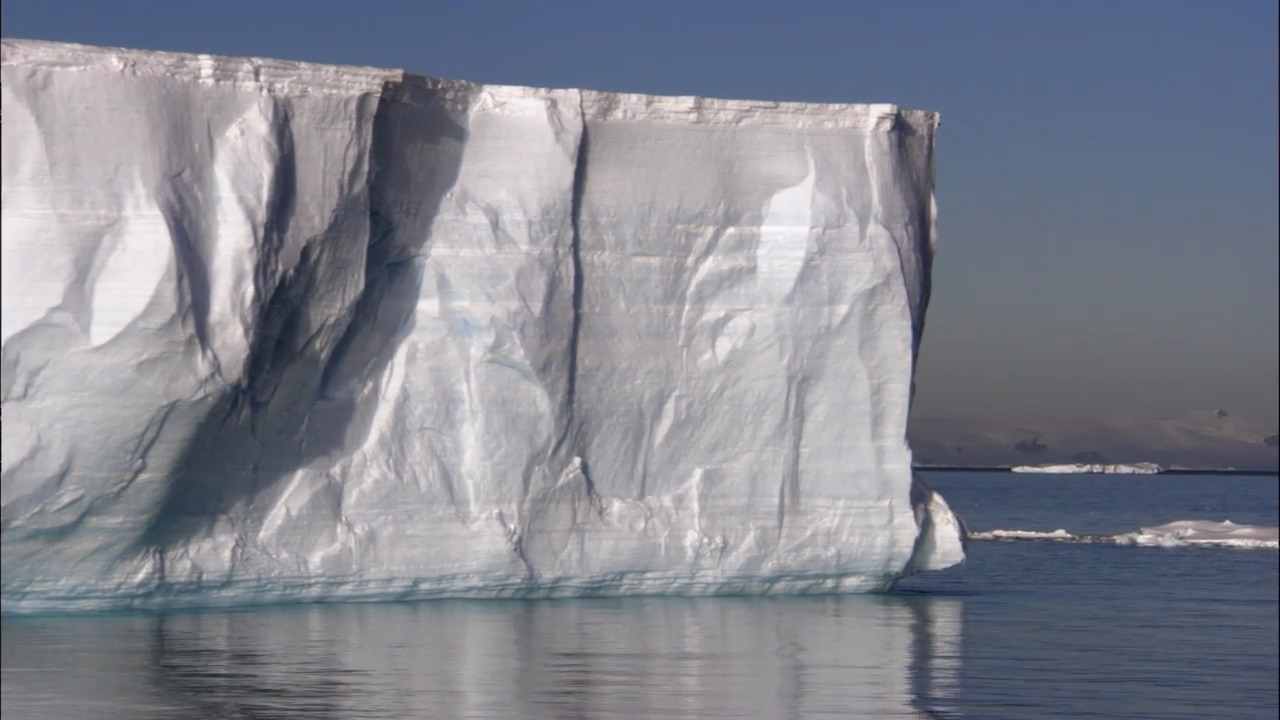
In How Ice Provides a Reflective Shield on Earth, geologist Iain Stewart explains that ice is a unique substance. Because it floats and is reflective, it provides a reflective shield for the Earth and impacts how much energy is absorbed, which impacts the climate. The changing amounts of ice on the planet also impact how modern man has adapted. This video is excerpted from BBC’s Earth: The Power of the Planet, a documentary series in which Dr. Iain Stewart discovers how Earth's forces can shape nature, species, and even the climate.
Your phone goes in a pouch the moment you walk in. If it's seen or heard, it's gone — for 4 weeks. That's the policy at Astrea Academy, one of the strictest phone bans in the UK, and yes, those 4 weeks can run straight through school holidays.
Harsh? Maybe. But teachers say it's working. Focus is up, behavior has improved, and students' overall wellbeing has shifted noticeably since the policy took hold.
Student reactions are split. Some think the rules go too far. Others — perhaps surprisingly — admit they don't really need their phones during the school day anyway. Both groups are probably right about something.
Parents are largely on board, and for reasons that go beyond test scores. They're noticing their kids coming home and actually talking — asking questions, making eye contact, and reconnecting in small ways that are easy to dismiss until they're gone. One thing the ban has surfaced that nobody quite expected: parents realizing they have a phone problem too. Several reflected that if they want their kids to put the devices down, they probably need to do the same. Role modeling, it turns out, works both ways.
Phone-free schools aren't going away. The UK is already moving toward national guidelines pushing schools in this direction, alongside measures to encourage more moderate social media use. The experiment at Astrea Academy may be ahead of its time — or just ahead of the curve.
There’s a shark in the water! No, no, it’s good — we promise! The WasteShark is not actually a shark, but an autonomous robot that was built to tackle a big problem: plastic pollution in the water. Some estimates put the amount of plastic waste in the hundreds of millions of metric tons. Between canals, rivers, and oceans, waterways around the world are affected.
To make things worse, marine plastic is a relatively new problem, so the solutions haven’t caught up to the issue. The old methods of putting people in boats to fish out plastic isn’t enough, so Richard Hardiman, CEO of RanMarine Technology, took to the drawing board and built a robot.
The WasteShark is basically a vacuum that cruises around the water and sucks up trash, without needing a person to sit and drive it. It can be controlled remotely or put in autonomous mode, because of its sophisticated addition: software that helps it identify and avoid sucking up items that are not trash. The ducks and fish are very grateful. Despite its sophistication, there are still challenges with developing the robot, since scientists have to figure out how to program it to recognize and act on reflections, currents, and wind.
The shark can gather up to a ton of trash over a 24 hour period, which is just the beginning of what needs to be done to reverse the pollution issue. Luckily, the next step is already in the works: the MegaShark.
In Julia Gillard, Education Advocate, listen as the former Australian Prime Minister reflects on her leadership and her work to expand education opportunities for girls worldwide. Drawing from her family’s experience with poverty and limited schooling, she advocates for equal access to education while facing criticism and gender bias during her political career. This video is excerpted from BBC's Her Story: The Female Revolution, which explores the history and impact of women’s rights movements and achievements of women.
In Margot Wallström, Foreign Minister of Sweden, Wallström, who served from 2014 to 2019, talks about her decision to run a feminist foreign policy. She explains how this policy looks at the world’s problems from a gender perspective, asking whether women have the same rights, representation, and resources as men. Wallström shares how growing up in Sweden, one of Europe’s most equal societies, shaped her beliefs in unrestricted hope for the future. She also reflects on the extra scrutiny women face, such as having their appearance commented on, rather than focusing on their work. This video is excerpted from BBC’s Her Story: The Female Revolution, which explores the history and impact of women’s rights movements and achievements of women.
Discover the story behind the Taj Mahal, one of the world’s most famous and recognizable monuments. Students will explore how this magnificent structure was built, why it became a lasting symbol of love and remembrance, and what it reveals about history, architecture, and culture in India.
This Kahoot examines the origins of the Taj Mahal, including the grief of Mughal emperor Shah Jahan after the death of his wife Mumtaz Mahal, the incredible craftsmanship behind the monument, and the artistic features that make it one of the most admired buildings in the world. Students will also discover how architecture can reflect emotion, power, memory, and cultural identity.
Ideal for lessons on history, world cultures, architecture, and geography, this Kahoot encourages students to explore the lasting legacy of one of the world’s most iconic landmarks.
This set of Martin Luther King Jr. worksheets contains two versions, so you can use the version that's closest to the grade level you teach or use both based on the individual reading levels of the students in your class. Here's what you'll find:
- Reading Passage: "Martin Luther King Jr.: A Man With a Dream," covering that life and legacy of MLK.
- Version A: Grades 3-5, Lexile Level 700-900L
- Version B: Grades 6-8, Lexile Level 850-1000L
- Glossary: Grade-level appropriate vocabulary and definitions to help students better understand the passage.
- Worksheets: KWL, timeline, and reflection (Version A); important events chart, Venn diagram, "Iconic Influences" response (Version B).
These activities pair with the following videos:
The article "9/11: Two Decades Later" from BBC's HistoryExtra is a reflection on the lasting impacts of the September 11 attacks. It explores whether 9/11 genuinely altered the course of global history, shaping U.S. foreign policy, the "war on terror," and global security. Despite its undeniable effect on U.S. politics, the article questions whether 9/11 was a defining moment in the broader context of geopolitical changes, particularly in relation to China and the Middle East.
This Women’s History Month, invite your students to step into the role of historian, storyteller, and researcher as they create profiles of extraordinary women in history. Our Women’s History Biography Template is designed for ages 8–14 and helps students organize key facts, explore challenges and accomplishments, and reflect on why these figures still matter today. With guided sections for important life events, obstacles overcome, and lasting impact, this ready-to-use template supports research skills, critical thinking, and strong writing.
To get started, visit our Figures in Women’s History microsite and explore a rich video library featuring trailblazing leaders, artists, scientists, and activists. Learn about Jane Goodall and her pioneering work in conservation and animal behavior, or dive into the groundbreaking research and storytelling of Zora Neale Hurston, who preserved and celebrated African American folklore and culture. Students can also discover figures who fought for women's suffrage, advanced medicine, and transformed sports. This is a great jumping off point for students to begin further research on their chosen icon.
In Nelson Mandela Walks Free, journalist Trevor McDonald reflects on the moment Mandela was released from prison after 27 years and returned to his home in Soweto for the first time in three decades. As the first journalist to interview Mandela upon his release, McDonald discusses this monumental meeting and describes Mandela’s focus on forgiveness, optimism, and the future rather than past suffering. This video is excerpted from BBC’s Icons: The Greatest Person of the 20th Century, a documentary series celebrating the achievements of the most influential figures of the era.
To help your students dive deeper into the video content, we created this bundle of video response worksheets. We designed these worksheets to be used with any video and to keep students focused as they watch and enhance comprehension and retention. (Please note that some worksheet types are better fits for certain content and grade levels). Assign students the same one, mix them up, or let them choose!
In How Ice Provides a Reflective Shield on Earth, geologist Iain Stewart explains that ice is a unique substance. Because it floats and is reflective, it provides a reflective shield for the Earth and impacts how much energy is absorbed, which impacts the climate. The changing amounts of ice on the planet also impact how modern man has adapted. This video is excerpted from BBC’s Earth: The Power of the Planet, a documentary series in which Dr. Iain Stewart discovers how Earth's forces can shape nature, species, and even the climate.
Your phone goes in a pouch the moment you walk in. If it's seen or heard, it's gone — for 4 weeks. That's the policy at Astrea Academy, one of the strictest phone bans in the UK, and yes, those 4 weeks can run straight through school holidays.
Harsh? Maybe. But teachers say it's working. Focus is up, behavior has improved, and students' overall wellbeing has shifted noticeably since the policy took hold.
Student reactions are split. Some think the rules go too far. Others — perhaps surprisingly — admit they don't really need their phones during the school day anyway. Both groups are probably right about something.
Parents are largely on board, and for reasons that go beyond test scores. They're noticing their kids coming home and actually talking — asking questions, making eye contact, and reconnecting in small ways that are easy to dismiss until they're gone. One thing the ban has surfaced that nobody quite expected: parents realizing they have a phone problem too. Several reflected that if they want their kids to put the devices down, they probably need to do the same. Role modeling, it turns out, works both ways.
Phone-free schools aren't going away. The UK is already moving toward national guidelines pushing schools in this direction, alongside measures to encourage more moderate social media use. The experiment at Astrea Academy may be ahead of its time — or just ahead of the curve.
There’s a shark in the water! No, no, it’s good — we promise! The WasteShark is not actually a shark, but an autonomous robot that was built to tackle a big problem: plastic pollution in the water. Some estimates put the amount of plastic waste in the hundreds of millions of metric tons. Between canals, rivers, and oceans, waterways around the world are affected.
To make things worse, marine plastic is a relatively new problem, so the solutions haven’t caught up to the issue. The old methods of putting people in boats to fish out plastic isn’t enough, so Richard Hardiman, CEO of RanMarine Technology, took to the drawing board and built a robot.
The WasteShark is basically a vacuum that cruises around the water and sucks up trash, without needing a person to sit and drive it. It can be controlled remotely or put in autonomous mode, because of its sophisticated addition: software that helps it identify and avoid sucking up items that are not trash. The ducks and fish are very grateful. Despite its sophistication, there are still challenges with developing the robot, since scientists have to figure out how to program it to recognize and act on reflections, currents, and wind.
The shark can gather up to a ton of trash over a 24 hour period, which is just the beginning of what needs to be done to reverse the pollution issue. Luckily, the next step is already in the works: the MegaShark.
In Julia Gillard, Education Advocate, listen as the former Australian Prime Minister reflects on her leadership and her work to expand education opportunities for girls worldwide. Drawing from her family’s experience with poverty and limited schooling, she advocates for equal access to education while facing criticism and gender bias during her political career. This video is excerpted from BBC's Her Story: The Female Revolution, which explores the history and impact of women’s rights movements and achievements of women.
In Margot Wallström, Foreign Minister of Sweden, Wallström, who served from 2014 to 2019, talks about her decision to run a feminist foreign policy. She explains how this policy looks at the world’s problems from a gender perspective, asking whether women have the same rights, representation, and resources as men. Wallström shares how growing up in Sweden, one of Europe’s most equal societies, shaped her beliefs in unrestricted hope for the future. She also reflects on the extra scrutiny women face, such as having their appearance commented on, rather than focusing on their work. This video is excerpted from BBC’s Her Story: The Female Revolution, which explores the history and impact of women’s rights movements and achievements of women.
Discover the story behind the Taj Mahal, one of the world’s most famous and recognizable monuments. Students will explore how this magnificent structure was built, why it became a lasting symbol of love and remembrance, and what it reveals about history, architecture, and culture in India.
This Kahoot examines the origins of the Taj Mahal, including the grief of Mughal emperor Shah Jahan after the death of his wife Mumtaz Mahal, the incredible craftsmanship behind the monument, and the artistic features that make it one of the most admired buildings in the world. Students will also discover how architecture can reflect emotion, power, memory, and cultural identity.
Ideal for lessons on history, world cultures, architecture, and geography, this Kahoot encourages students to explore the lasting legacy of one of the world’s most iconic landmarks.
This set of Martin Luther King Jr. worksheets contains two versions, so you can use the version that's closest to the grade level you teach or use both based on the individual reading levels of the students in your class. Here's what you'll find:
- Reading Passage: "Martin Luther King Jr.: A Man With a Dream," covering that life and legacy of MLK.
- Version A: Grades 3-5, Lexile Level 700-900L
- Version B: Grades 6-8, Lexile Level 850-1000L
- Glossary: Grade-level appropriate vocabulary and definitions to help students better understand the passage.
- Worksheets: KWL, timeline, and reflection (Version A); important events chart, Venn diagram, "Iconic Influences" response (Version B).
These activities pair with the following videos:
The article "9/11: Two Decades Later" from BBC's HistoryExtra is a reflection on the lasting impacts of the September 11 attacks. It explores whether 9/11 genuinely altered the course of global history, shaping U.S. foreign policy, the "war on terror," and global security. Despite its undeniable effect on U.S. politics, the article questions whether 9/11 was a defining moment in the broader context of geopolitical changes, particularly in relation to China and the Middle East.
This Women’s History Month, invite your students to step into the role of historian, storyteller, and researcher as they create profiles of extraordinary women in history. Our Women’s History Biography Template is designed for ages 8–14 and helps students organize key facts, explore challenges and accomplishments, and reflect on why these figures still matter today. With guided sections for important life events, obstacles overcome, and lasting impact, this ready-to-use template supports research skills, critical thinking, and strong writing.
To get started, visit our Figures in Women’s History microsite and explore a rich video library featuring trailblazing leaders, artists, scientists, and activists. Learn about Jane Goodall and her pioneering work in conservation and animal behavior, or dive into the groundbreaking research and storytelling of Zora Neale Hurston, who preserved and celebrated African American folklore and culture. Students can also discover figures who fought for women's suffrage, advanced medicine, and transformed sports. This is a great jumping off point for students to begin further research on their chosen icon.
In Nelson Mandela Walks Free, journalist Trevor McDonald reflects on the moment Mandela was released from prison after 27 years and returned to his home in Soweto for the first time in three decades. As the first journalist to interview Mandela upon his release, McDonald discusses this monumental meeting and describes Mandela’s focus on forgiveness, optimism, and the future rather than past suffering. This video is excerpted from BBC’s Icons: The Greatest Person of the 20th Century, a documentary series celebrating the achievements of the most influential figures of the era.