
Let’s take a virtual trip to the Lamu Archipelago in Kenya, a coastline that’s both prosperous and fragile at the same time. The specific environment is a crucial part of life: the ocean provides fish to feed the islands’ inhabitants, and the forests are populated with mangrove trees that protect the coastline from erosion. So, what happens when fish stocks have declined, mangrove forests have been badly damaged, coral reefs are bleaching, and plastic washes ashore with every tide? Local environmental heroes step up.
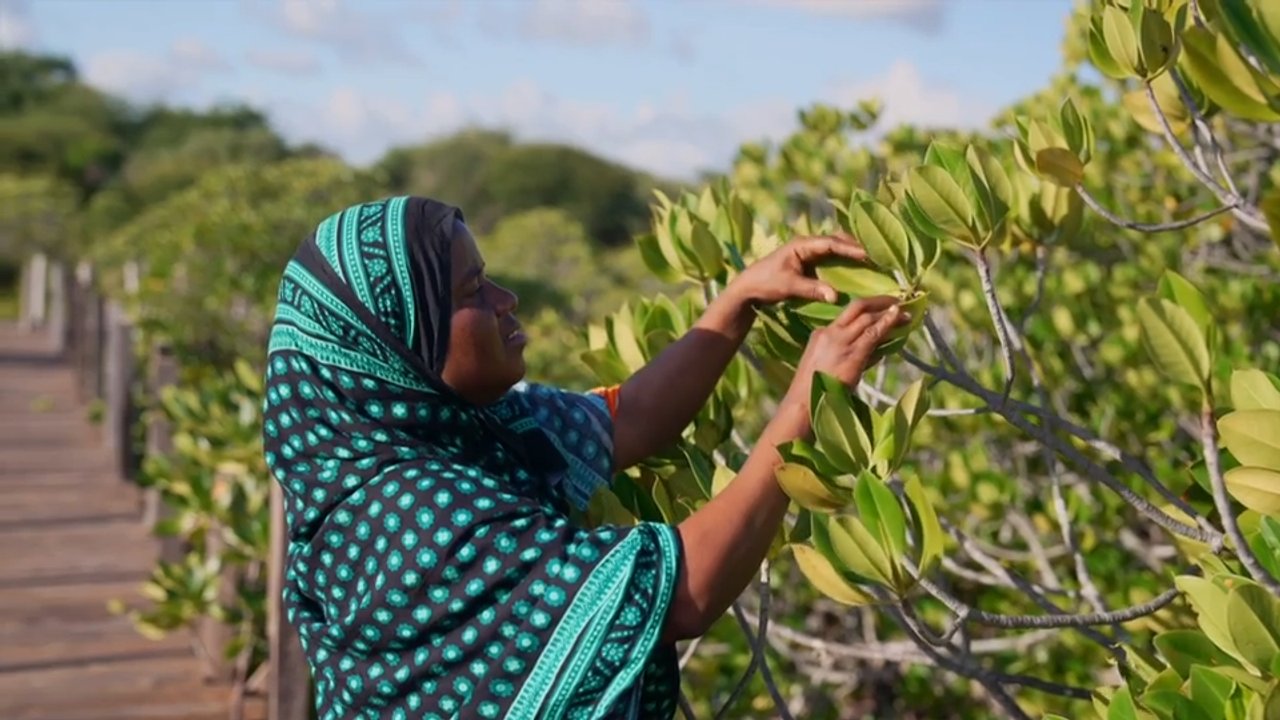
Meet “Mama Mikoko,” AKA The Mother of Mangroves, who earned the name through her efforts to restore coastal forests. These mangrove trees not only shield villages from erosion but provide breeding grounds for marine life, and their roots hold the shoreline together. Since 2018, her team has planted more than 200,000 mangrove trees and restored over 20 hectares (about 50 acres) of coastline. That means they’ve restored about 75 percent of the mangrove forest! But not all the action’s on land.
A short boat ride away, primary school teacher Monasha Mbona is helping rebuild coral reefs by attaching living coral fragments to cement structures and returning them to the ocean so they can grow.
As important as the environment is in itself (you know, doing little things like feeding the population and helping the islands not wash away), the projects go beyond helping the environment. Conservation income has also helped fund a desalination machine to turn seawater into freshwater, create jobs for young people, support women’s financial independence, and start microfinance groups.
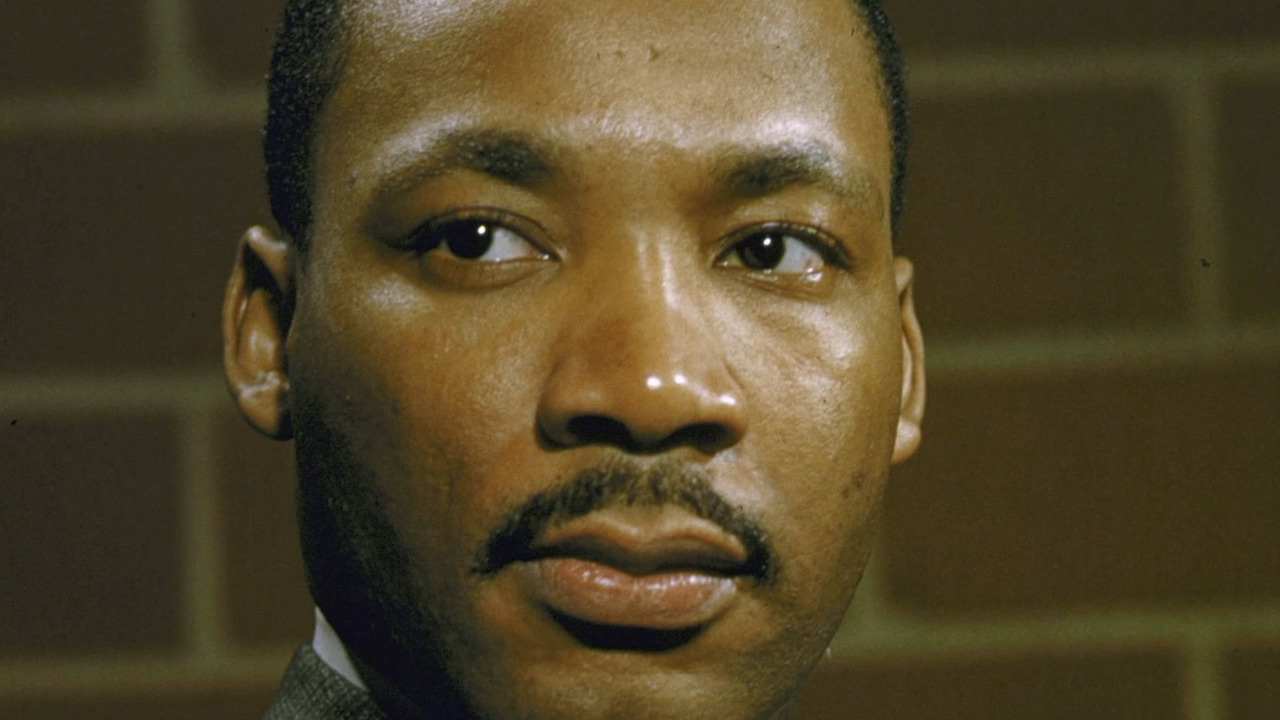
In Martin Luther King Jr. and Nonviolence, a historian explains why Martin Luther King Jr. and the people who worked with him chose nonviolence as their primary strategy during the Civil Rights Movement.
Excerpted from BBC’s Icons: The Greatest Person of the 20th Century, this documentary clip helps students understand what made Dr. King an icon — not just for his words, but for his leadership, courage, and lasting influence. Using historical footage and clear storytelling, it introduces key ideas of the Civil Rights Movement in a way that is accessible and engaging.
This short video works well as an introduction to Martin Luther King Jr., a foundation for learning about the Civil Rights Movement, or a discussion starter about leadership, activism, and democracy. Teachers can easily use it to support lessons around Martin Luther King Jr. Day and non-violent protest.
When you join your school band, you probably expect to perform in your school auditorium for friends and family. No shade to Gramps, but imagine the excitement when a group of kids learned that they were going to be performing at the massive Anfield Stadium, home of Liverpool Football Club. Multiply that by 10,000,000, and that’s a fraction of what they may have felt when they learned they would be performing a Foo Fighters song there FOR the Foo Fighters!
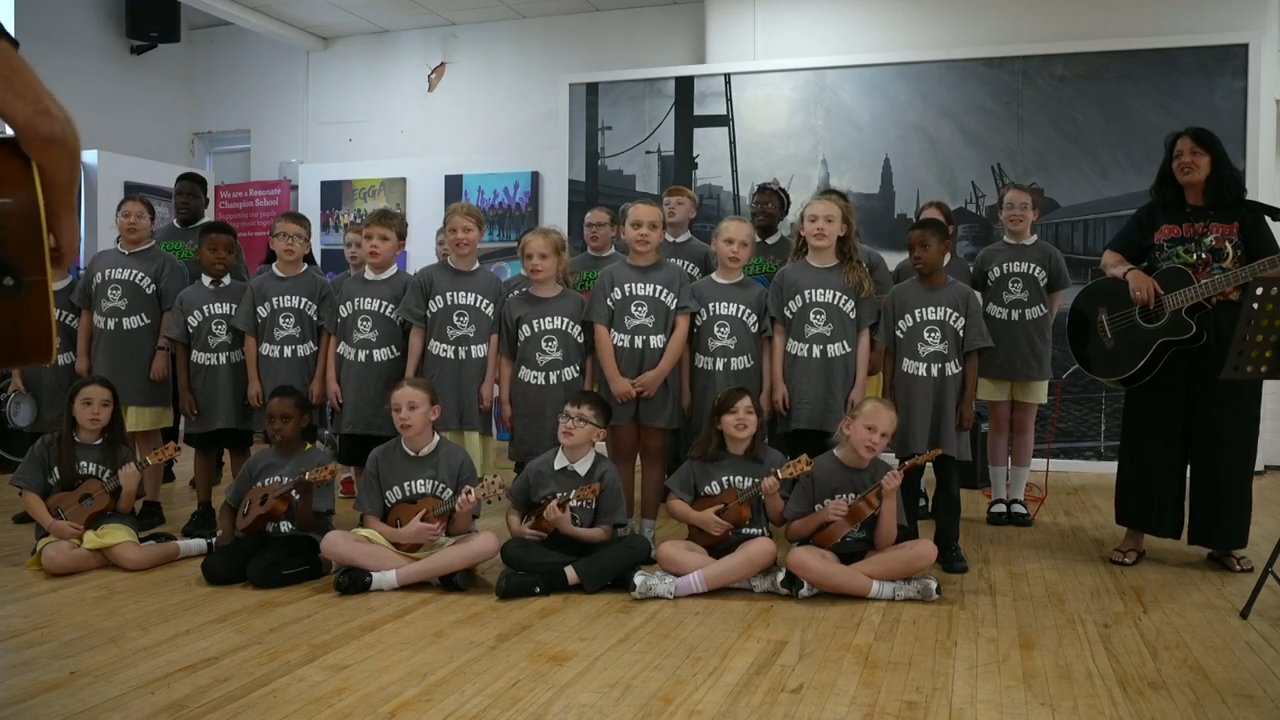
The Bell Tower Beats is a band from Anfield Road Primary School, who had the pleasure (and pressure) of playing "Times Like These" by the Foo Fighters for the actual members of the Foo Fighters. The performance was organized by a year three teacher, and has gone viral on news and media sources. Not only was the performance fun, but it helped bring attention to the opportunity to join the school band.
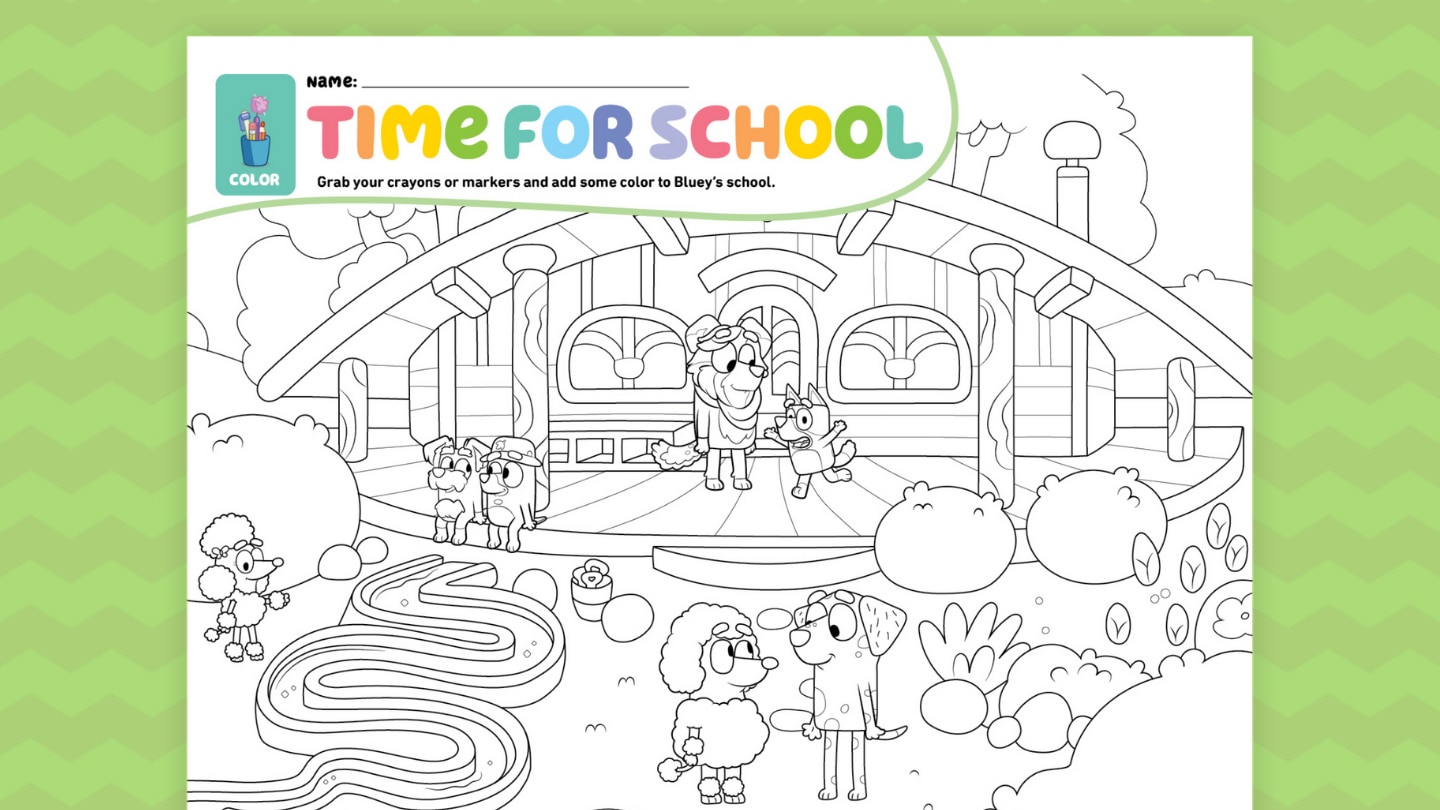
Grab your crayons or markers and add some color to Bluey's school. What are the kids playing? Bluey's school, Glass House Primary, is a Steiner (or Waldorf) school, known for its focus on play-based learning and a connection with nature. Bluey's teacher, Calypso, encourages children to explore their own imaginative scenarios rather than directing them to specific tasks.
Let’s take a virtual trip to the Lamu Archipelago in Kenya, a coastline that’s both prosperous and fragile at the same time. The specific environment is a crucial part of life: the ocean provides fish to feed the islands’ inhabitants, and the forests are populated with mangrove trees that protect the coastline from erosion. So, what happens when fish stocks have declined, mangrove forests have been badly damaged, coral reefs are bleaching, and plastic washes ashore with every tide? Local environmental heroes step up.
Meet “Mama Mikoko,” AKA The Mother of Mangroves, who earned the name through her efforts to restore coastal forests. These mangrove trees not only shield villages from erosion but provide breeding grounds for marine life, and their roots hold the shoreline together. Since 2018, her team has planted more than 200,000 mangrove trees and restored over 20 hectares (about 50 acres) of coastline. That means they’ve restored about 75 percent of the mangrove forest! But not all the action’s on land.
A short boat ride away, primary school teacher Monasha Mbona is helping rebuild coral reefs by attaching living coral fragments to cement structures and returning them to the ocean so they can grow.
As important as the environment is in itself (you know, doing little things like feeding the population and helping the islands not wash away), the projects go beyond helping the environment. Conservation income has also helped fund a desalination machine to turn seawater into freshwater, create jobs for young people, support women’s financial independence, and start microfinance groups.
In Martin Luther King Jr. and Nonviolence, a historian explains why Martin Luther King Jr. and the people who worked with him chose nonviolence as their primary strategy during the Civil Rights Movement.
Excerpted from BBC’s Icons: The Greatest Person of the 20th Century, this documentary clip helps students understand what made Dr. King an icon — not just for his words, but for his leadership, courage, and lasting influence. Using historical footage and clear storytelling, it introduces key ideas of the Civil Rights Movement in a way that is accessible and engaging.
This short video works well as an introduction to Martin Luther King Jr., a foundation for learning about the Civil Rights Movement, or a discussion starter about leadership, activism, and democracy. Teachers can easily use it to support lessons around Martin Luther King Jr. Day and non-violent protest.
When you join your school band, you probably expect to perform in your school auditorium for friends and family. No shade to Gramps, but imagine the excitement when a group of kids learned that they were going to be performing at the massive Anfield Stadium, home of Liverpool Football Club. Multiply that by 10,000,000, and that’s a fraction of what they may have felt when they learned they would be performing a Foo Fighters song there FOR the Foo Fighters!
The Bell Tower Beats is a band from Anfield Road Primary School, who had the pleasure (and pressure) of playing "Times Like These" by the Foo Fighters for the actual members of the Foo Fighters. The performance was organized by a year three teacher, and has gone viral on news and media sources. Not only was the performance fun, but it helped bring attention to the opportunity to join the school band.
Grab your crayons or markers and add some color to Bluey's school. What are the kids playing? Bluey's school, Glass House Primary, is a Steiner (or Waldorf) school, known for its focus on play-based learning and a connection with nature. Bluey's teacher, Calypso, encourages children to explore their own imaginative scenarios rather than directing them to specific tasks.