
You’re a word builder! Sound out and blend the letters. Then write or use your tiles to make the words. Check if you made each of the consonant-vowel-consonant words: t-i-p, p-a-t, p-i-t, s-a-t.
Watch full episodes of Alphablocks on their official YouTube channel!
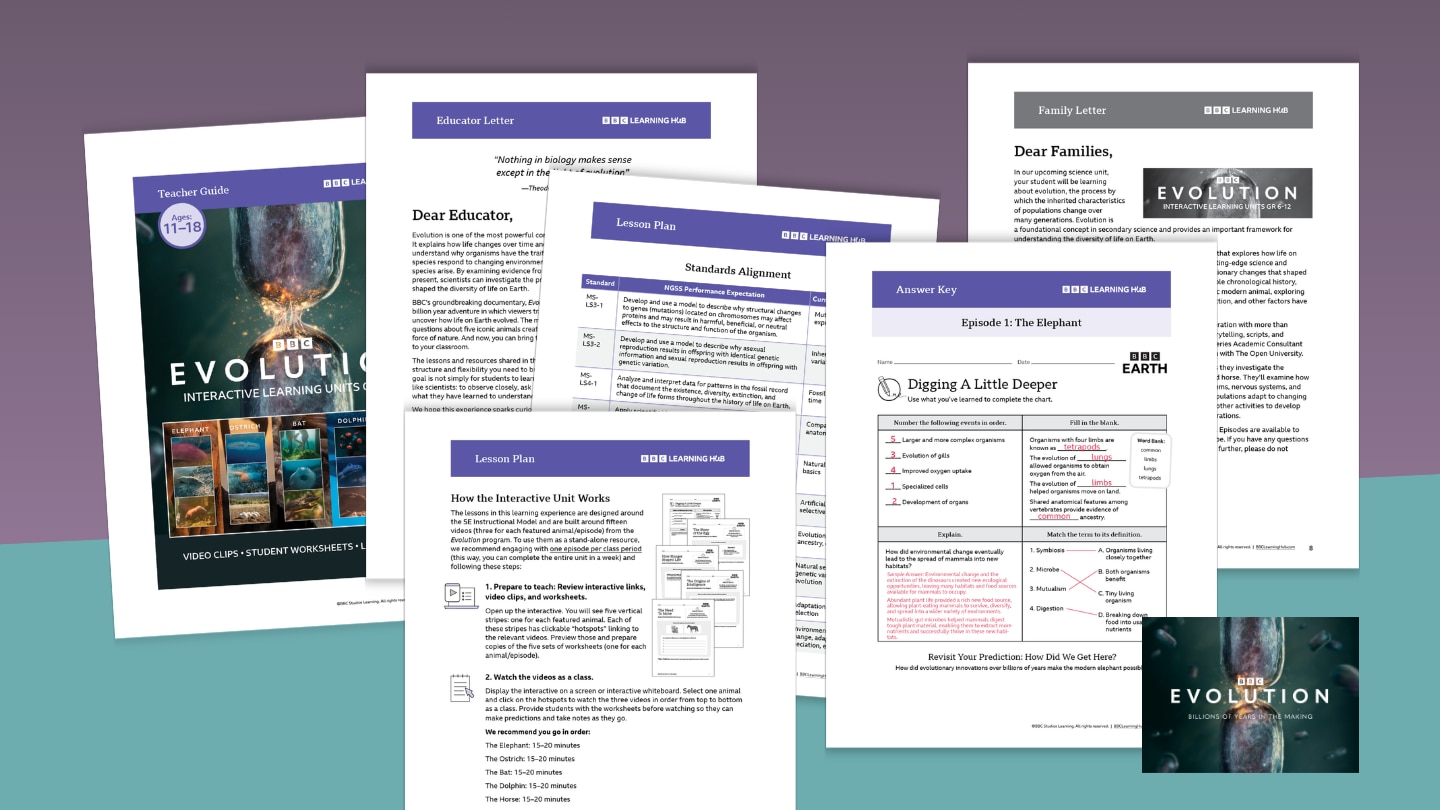
Bring BBC’s Evolution into your classroom with a flexible teaching guide designed to help students investigate how life changes over time. Built around five episodes featuring the elephant, ostrich, bat, dolphin, and horse, the interactive unit combines engaging BBC footage with student worksheets, evidence-based activities, teaching strategies, and extension ideas.
The lessons are structured around the 5E Instructional Model and can be used as a complete five-day learning experience or adapted to support an existing evolution unit. Students make predictions, analyze evidence from video clips, identify patterns, and develop explanations about natural selection, adaptation, genetic variation, and other mechanisms of evolutionary change.
The guide includes:
Background information and vocabulary for the topic
How to access and navigate the interactive unit (including videos and worksheets)
Teacher tips and implementation guidance for using the materials in whole-class, small-group, pair, or individual settings
Extension activities including an evolution timeline, animal comparisons, and adaptation research.
NGSS alignment covering middle and high school standards related to genetic variation, natural selection, adaptation, common ancestry, environmental change, and selective breeding
Family letter to introduce parents and caregivers to the unit and explain what students will be learning and why (as well as how to watch the full episodes at home)
Answer keys for each set of worksheets
Whether you're introducing evolution for the first time, reinforcing a concept you're already teaching, or looking for a multimedia station or jigsaw activity, this guide gives you the tools to make Evolution part of your science classroom.
For more information on Evolution and to find out where you can watch in your area, click here.

Draw lines to join two letters and lead them to their pair. Find the matching letter tiles and say each sound too. Can you connect C to K?
Watch full episodes of Alphablocks on their official YouTube channel!
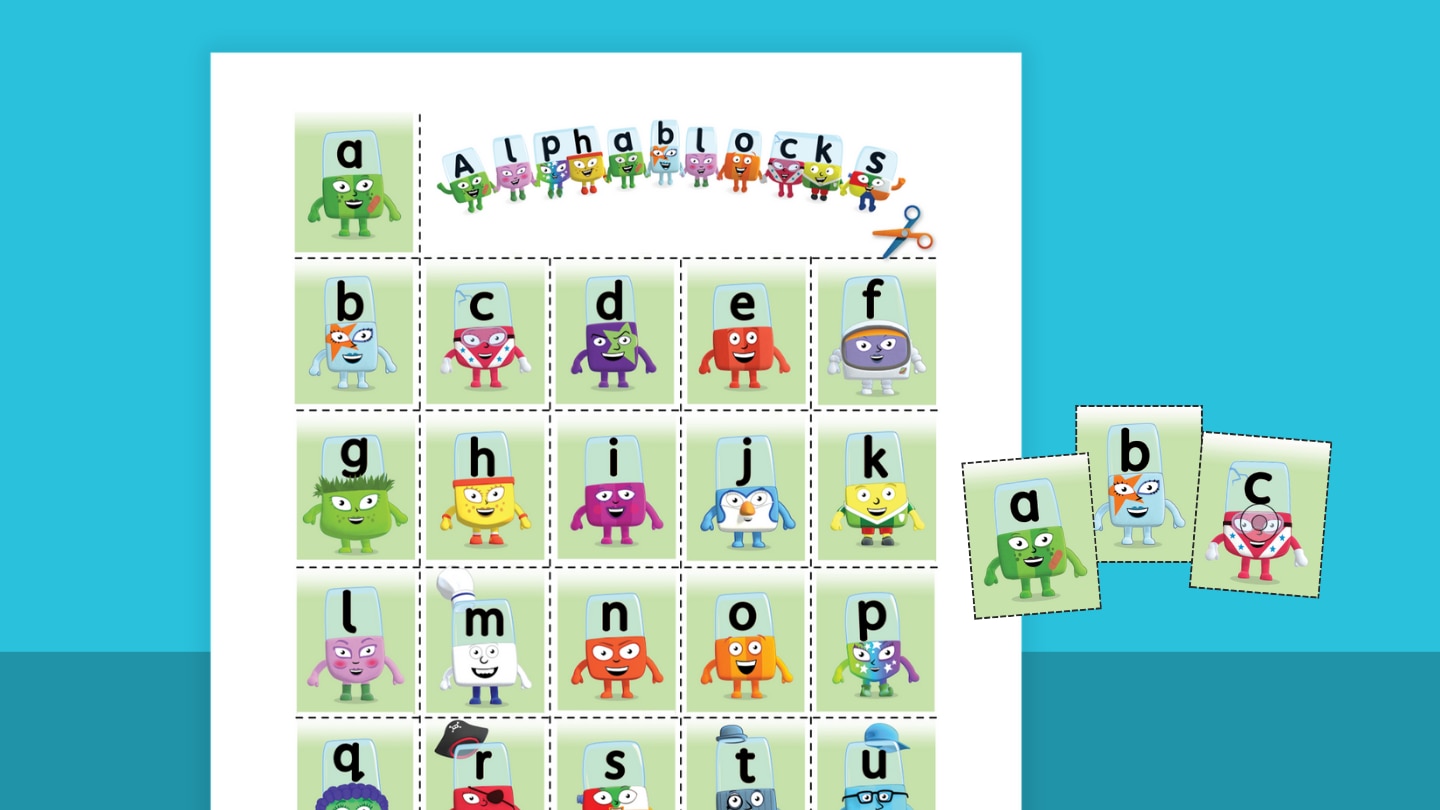
These alphabet tiles are a colorful way to reinforce letter-sound connections. Make a set for each of our students, who can use them to build and sound out words. Using our other Alphablocks printables? These tiles are the perfect companion.
Watch full episodes of Alphablocks on their official YouTube channel!
You’re a word builder! Sound out and blend the letters. Then write or use your tiles to make the words. Check if you made each of the consonant-vowel-consonant words: t-i-p, p-a-t, p-i-t, s-a-t.
Watch full episodes of Alphablocks on their official YouTube channel!
Bring BBC’s Evolution into your classroom with a flexible teaching guide designed to help students investigate how life changes over time. Built around five episodes featuring the elephant, ostrich, bat, dolphin, and horse, the interactive unit combines engaging BBC footage with student worksheets, evidence-based activities, teaching strategies, and extension ideas.
The lessons are structured around the 5E Instructional Model and can be used as a complete five-day learning experience or adapted to support an existing evolution unit. Students make predictions, analyze evidence from video clips, identify patterns, and develop explanations about natural selection, adaptation, genetic variation, and other mechanisms of evolutionary change.
The guide includes:
Background information and vocabulary for the topic
How to access and navigate the interactive unit (including videos and worksheets)
Teacher tips and implementation guidance for using the materials in whole-class, small-group, pair, or individual settings
Extension activities including an evolution timeline, animal comparisons, and adaptation research.
NGSS alignment covering middle and high school standards related to genetic variation, natural selection, adaptation, common ancestry, environmental change, and selective breeding
Family letter to introduce parents and caregivers to the unit and explain what students will be learning and why (as well as how to watch the full episodes at home)
Answer keys for each set of worksheets
Whether you're introducing evolution for the first time, reinforcing a concept you're already teaching, or looking for a multimedia station or jigsaw activity, this guide gives you the tools to make Evolution part of your science classroom.
For more information on Evolution and to find out where you can watch in your area, click here.
Draw lines to join two letters and lead them to their pair. Find the matching letter tiles and say each sound too. Can you connect C to K?
Watch full episodes of Alphablocks on their official YouTube channel!
These alphabet tiles are a colorful way to reinforce letter-sound connections. Make a set for each of our students, who can use them to build and sound out words. Using our other Alphablocks printables? These tiles are the perfect companion.
Watch full episodes of Alphablocks on their official YouTube channel!