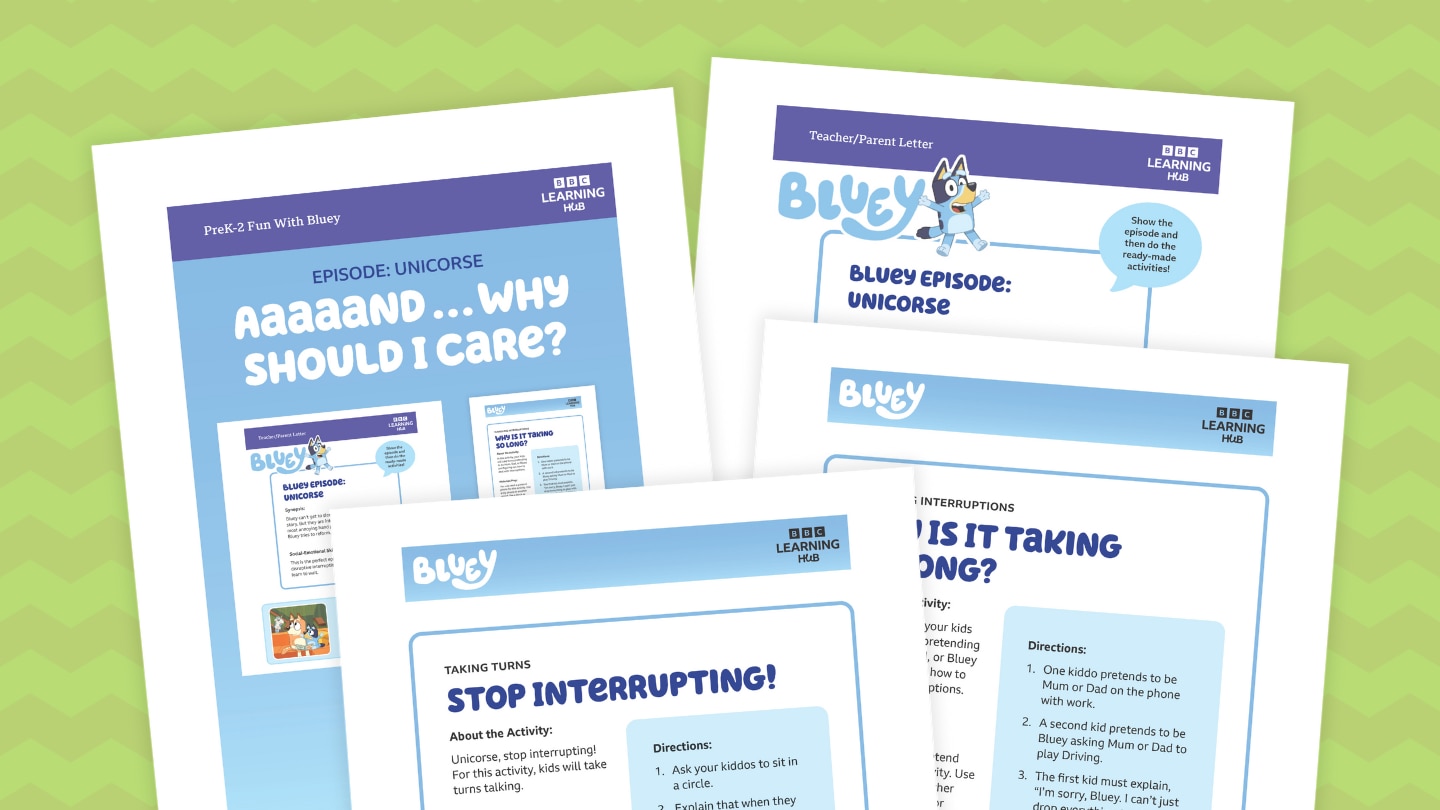
Unicorse, stop interrupting! Watch the Bluey episode "Unicorse" before you teach this lesson about taking turns. The lesson includes printables for three activities in which kids take turns talking, make their own Unicorse puppet, and practice dealing with interruptions (Mum is on the phone and Bluey wants to play Driving!).
Unicorse Episode Summary: Bluey can’t get to sleep, so Mum reads her one last story. But they are interrupted by Unicorse, the most annoying hand puppet in the world, whom Bluey tries to reform.
Watch the episode here! (Click here to watch in Australia.)

In Wolves Prowling in the Alps, narrator Sir David Attenborough reveals how thermal imaging cameras are used to track a pack of wolves searching for prey around the mountain village of Abruzzo in Italy. They spot red deer, but their hunt is interrupted by human activity. This video is excerpted from BBC’s Seven Worlds, One Planet, a series featuring remarkable animal behavior from all seven continents.
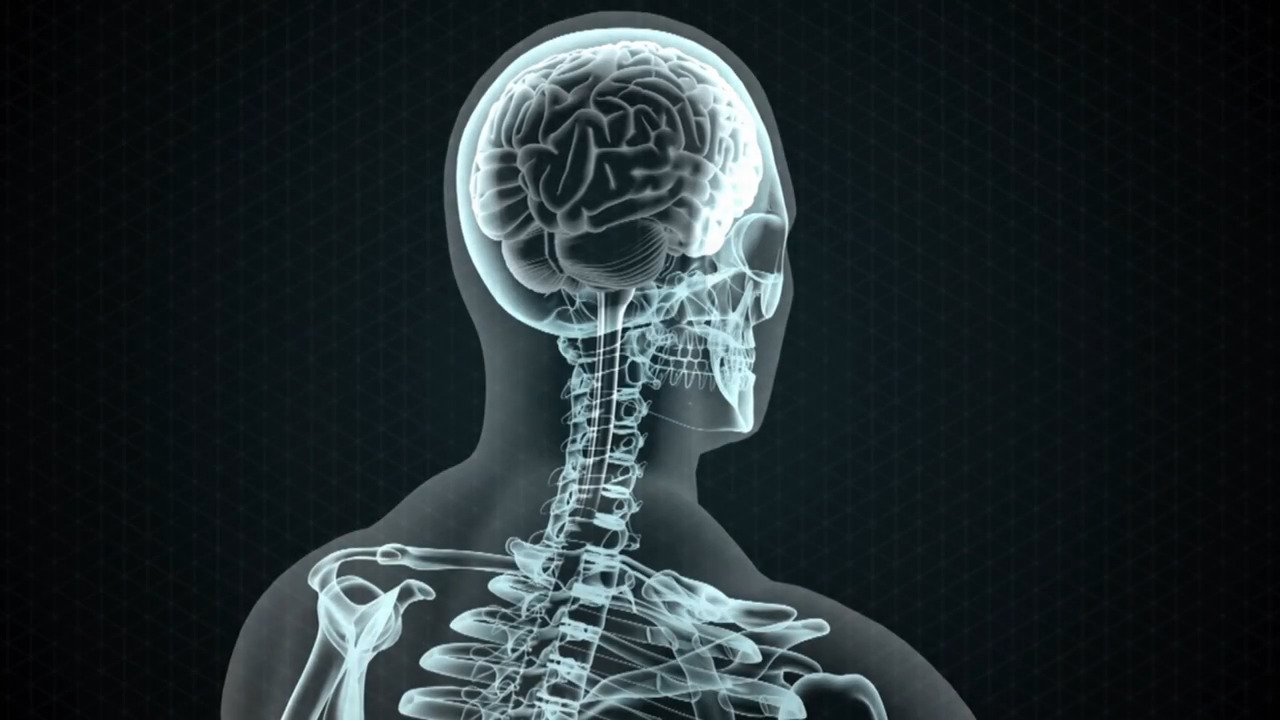
In Treating Spinal Cord Injuries, learn how one engineer created an innovative way to help treat spinal cord injuries. Meet Ian, who suffered a spinal cord injury and explore how his injury interrupted the connection between his brain and body. An engineer developed a groundbreaking solution that has helped people with spinal cord injuries regain movement. This video is excerpted from BBC’s The World’s Most Extraordinary People, a documentary series revealing how rare medical conditions inspire groundbreaking scientific discoveries.
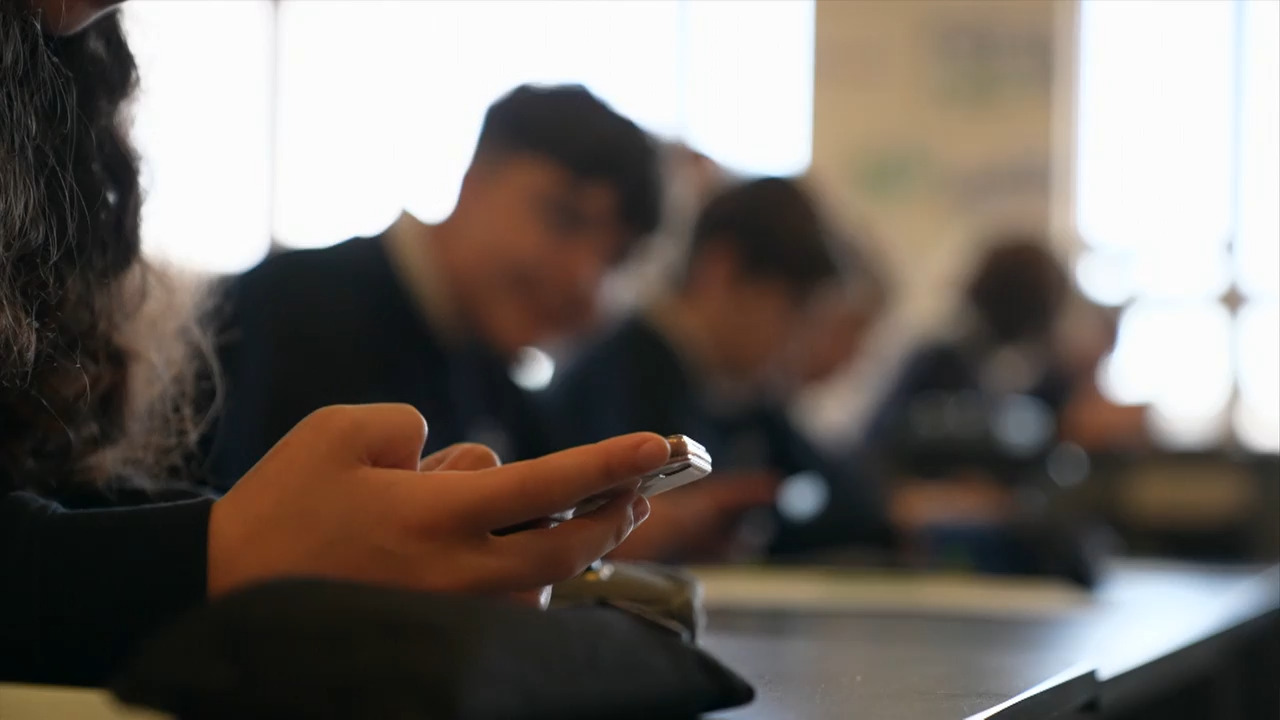
More schools are asking students to put smartphones away during the school day—and while many teens were not happy about it at first, some are now seeing the benefits. Without constant messages, notifications, and social media updates, students say school feels calmer and less stressful. Many are talking more face-to-face, making stronger friendships, and feeling less pressure to keep checking their phones. Teachers also report fewer interruptions in class and less bullying. The phones may be out of sight at school, but many students still spend hours on them at home, keeping the screen-time debate going.
Unicorse, stop interrupting! Watch the Bluey episode "Unicorse" before you teach this lesson about taking turns. The lesson includes printables for three activities in which kids take turns talking, make their own Unicorse puppet, and practice dealing with interruptions (Mum is on the phone and Bluey wants to play Driving!).
Unicorse Episode Summary: Bluey can’t get to sleep, so Mum reads her one last story. But they are interrupted by Unicorse, the most annoying hand puppet in the world, whom Bluey tries to reform.
Watch the episode here! (Click here to watch in Australia.)
In Wolves Prowling in the Alps, narrator Sir David Attenborough reveals how thermal imaging cameras are used to track a pack of wolves searching for prey around the mountain village of Abruzzo in Italy. They spot red deer, but their hunt is interrupted by human activity. This video is excerpted from BBC’s Seven Worlds, One Planet, a series featuring remarkable animal behavior from all seven continents.
In Treating Spinal Cord Injuries, learn how one engineer created an innovative way to help treat spinal cord injuries. Meet Ian, who suffered a spinal cord injury and explore how his injury interrupted the connection between his brain and body. An engineer developed a groundbreaking solution that has helped people with spinal cord injuries regain movement. This video is excerpted from BBC’s The World’s Most Extraordinary People, a documentary series revealing how rare medical conditions inspire groundbreaking scientific discoveries.
More schools are asking students to put smartphones away during the school day—and while many teens were not happy about it at first, some are now seeing the benefits. Without constant messages, notifications, and social media updates, students say school feels calmer and less stressful. Many are talking more face-to-face, making stronger friendships, and feeling less pressure to keep checking their phones. Teachers also report fewer interruptions in class and less bullying. The phones may be out of sight at school, but many students still spend hours on them at home, keeping the screen-time debate going.