
This Hispanic Heritage Month, explore five Latin American countries through BBC videos and country fact files. Then complete your own country report!

Discover five Asian countries through short, engaging videos from the BBC + country fact files
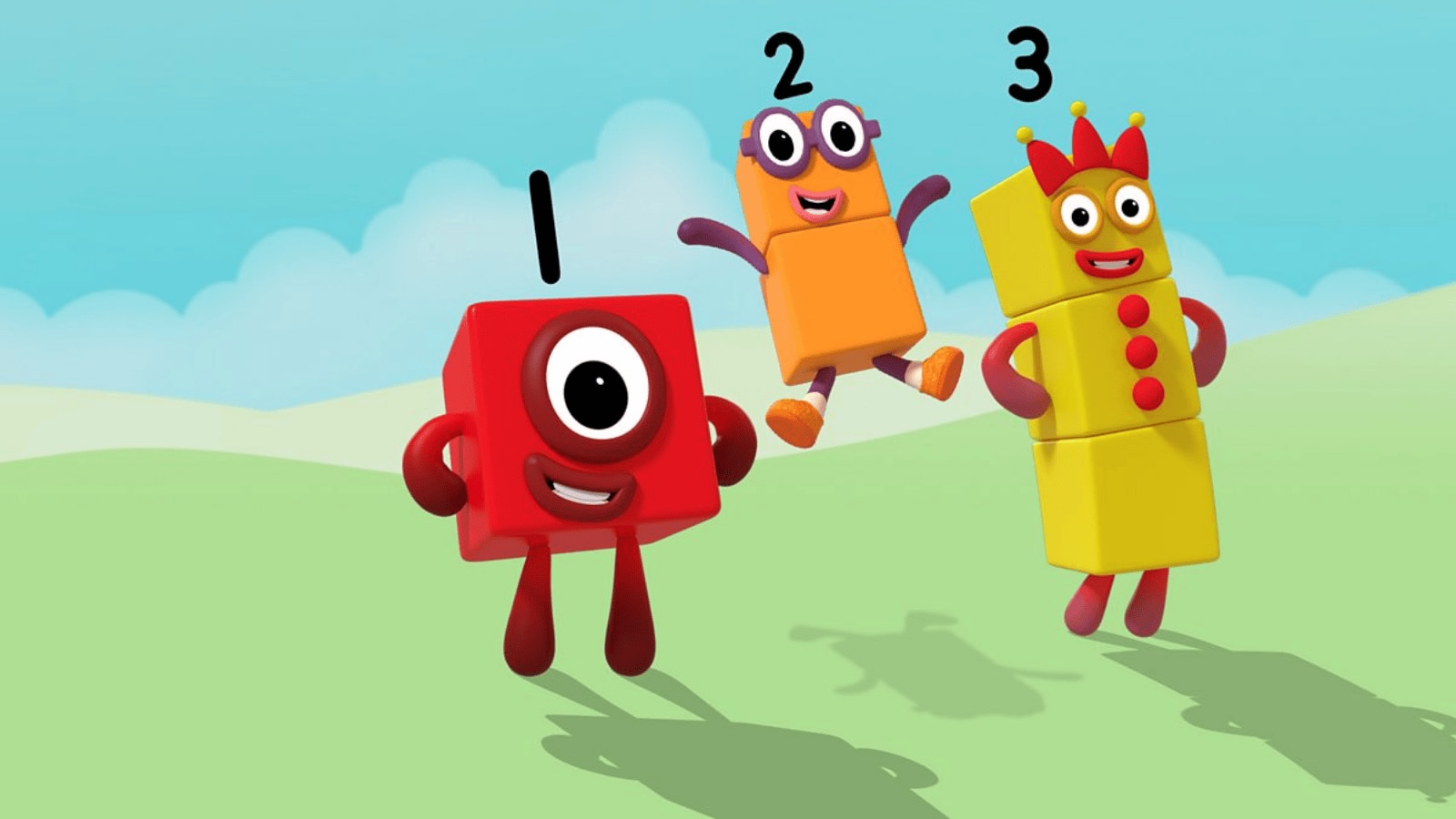
Meet the Numberblocks — little blocks with big ideas who make learning numbers fun and exciting for young children ages 3–7. Numberblocks helps kids build number sense as the characters come together, break apart, and explore how numbers really work. This free collection of printable games and colorful worksheets games give little learners hands-on practice with counting, odd and even numbers, and simple addition and subtraction. Perfect for use at home or in the classroom, these ready-to-use activities turn math practice into joyful play.
Plus, watch full episodes on the official Numberblocks YouTube channel!
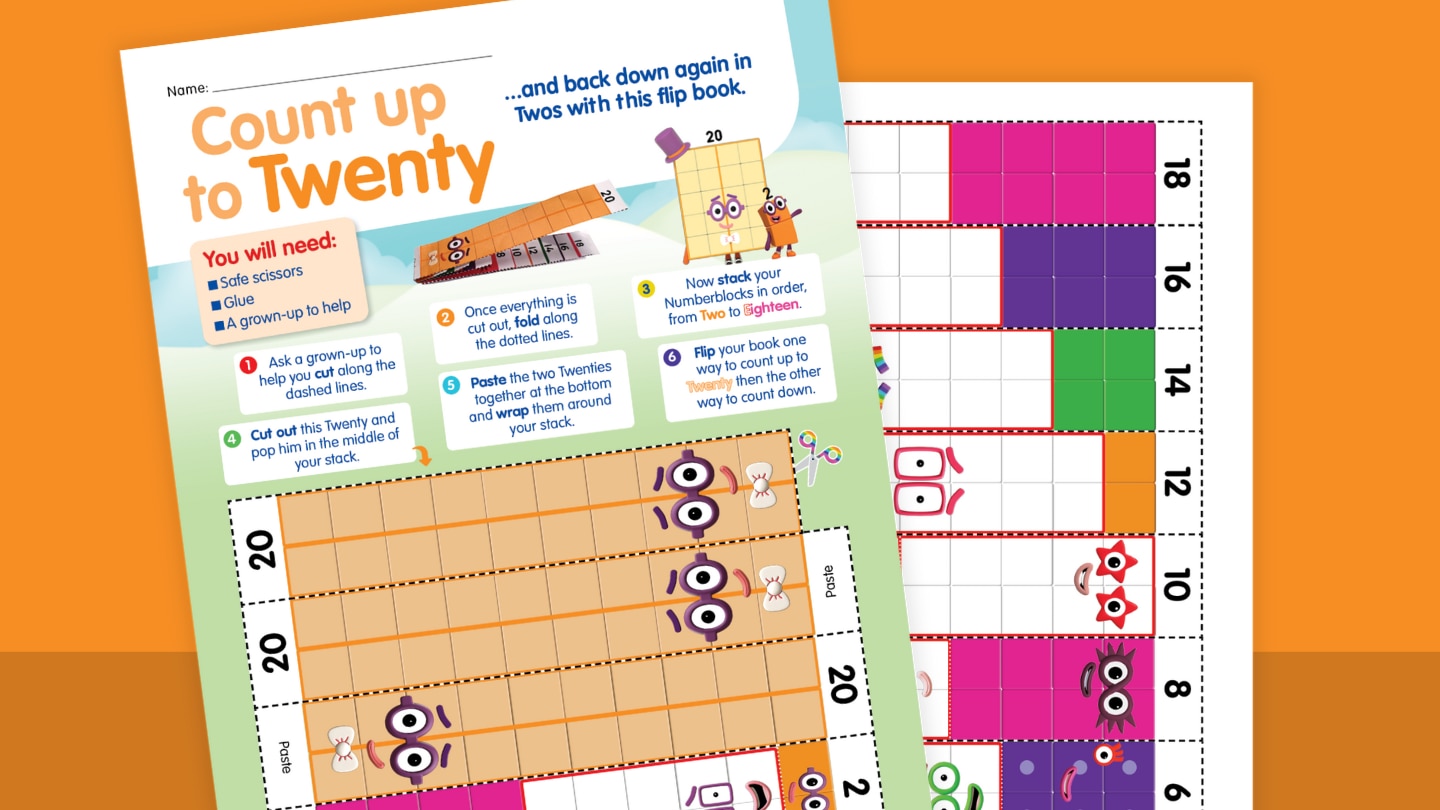
Count up to Twenty and back down again in Twos with this flip book. Here's how you'll make it:
- Ask a grown-up to help you cut along the dashed lines.
- Once everything is cut out, fold along the dotted lines.
- Now stack your Numberblocks in orders from Two to Eighteen.
- Cut out the Twenty and pop him in the middle of your stack.
- Paste the two Twenties together at the bottom and wrap them around your stack.
- Flip your book one way to count up to Twenty then the other way to count down.
Watch full episodes of Numberblocks on their official YouTube channel!
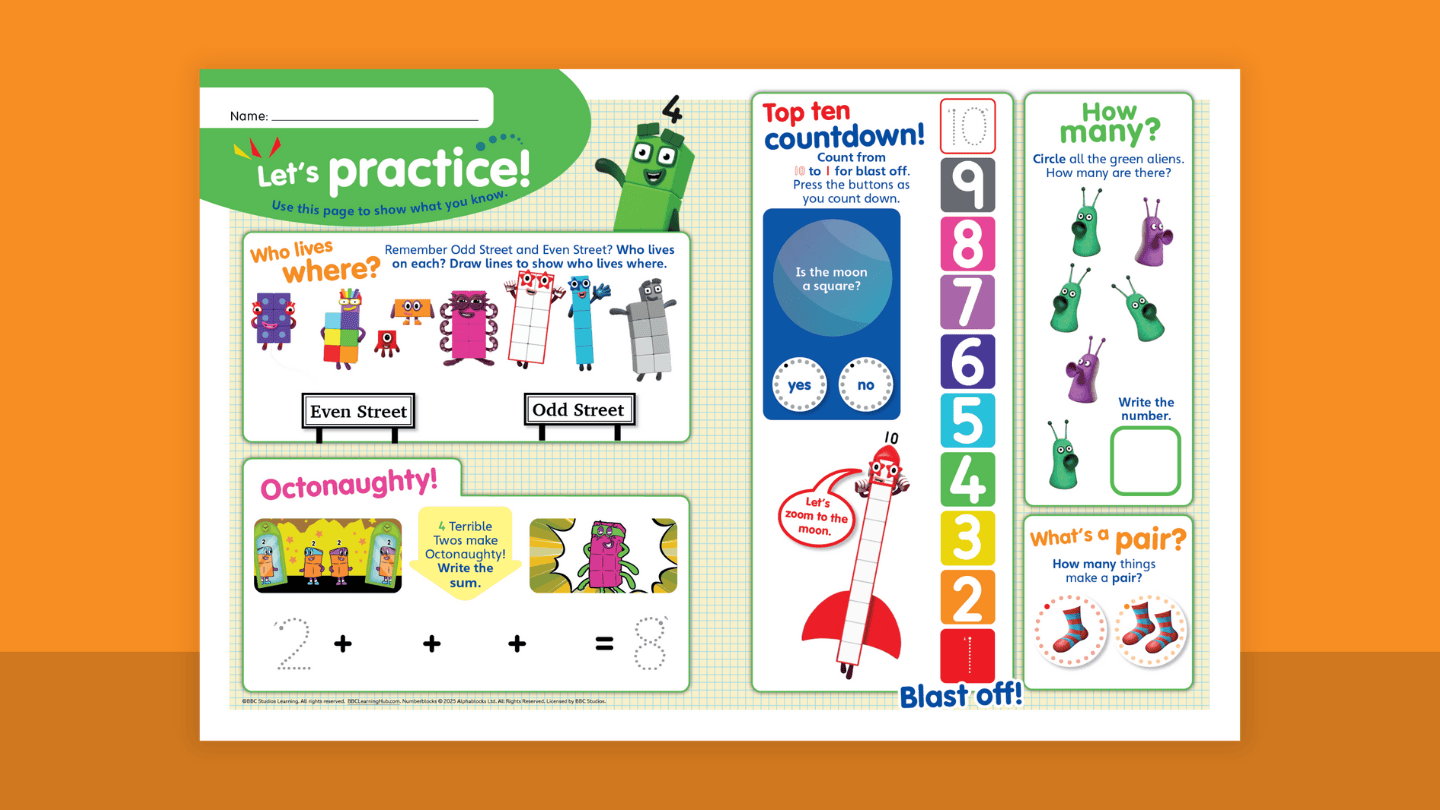
Use this page to show what you know. Who lives where? Remember Odd Street and Even Street? Who lives on each? Draw lines to show who lives where. Count down from 10 to one for blast off. Press the buttons as you count down. Circle all the green aliens. How many are there?
Watch full episodes of Numberblocks on their official YouTube channel!
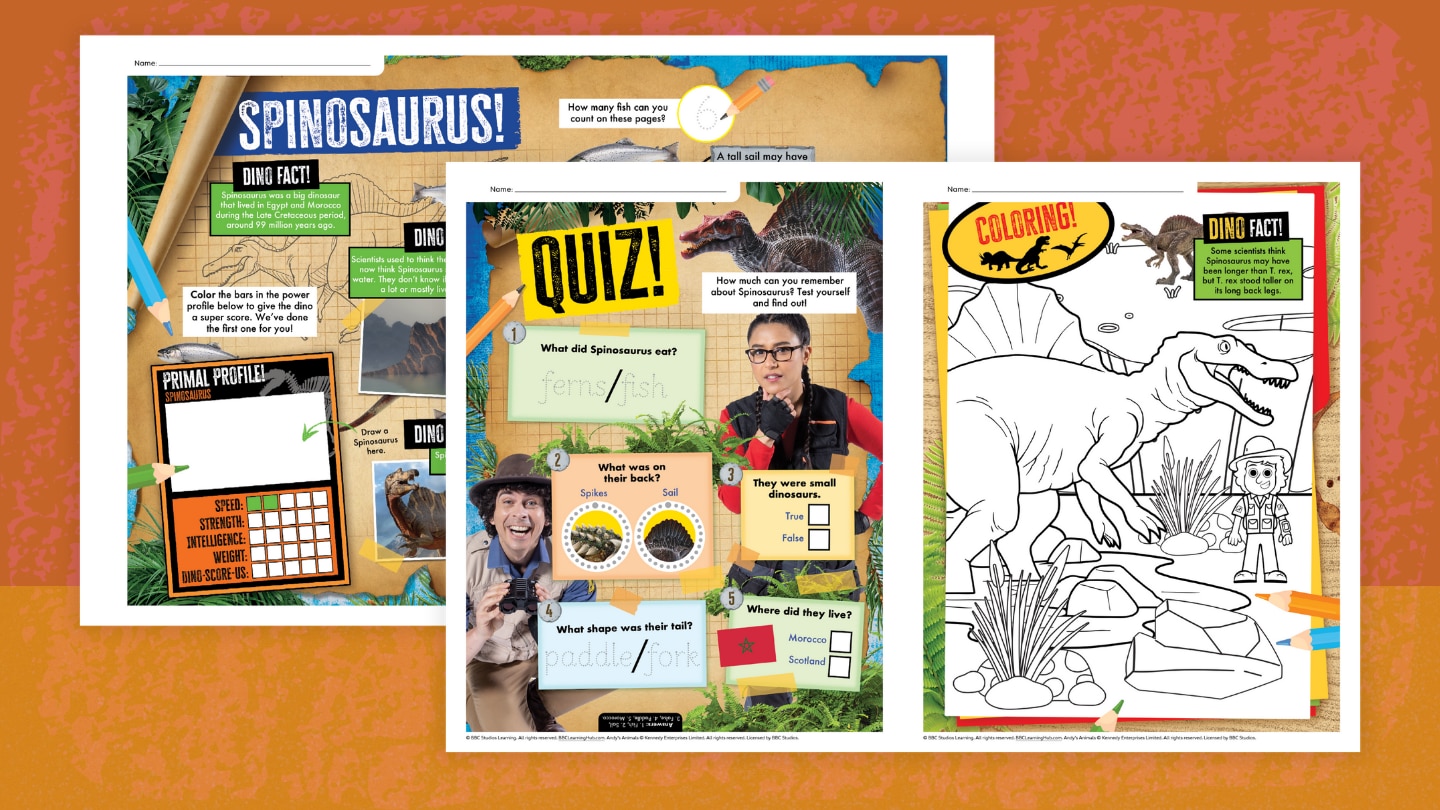
Dive into the world of Spinosaurus with Andy! In this set of fun Spinosaurus worksheets, you'll:
- Learn jaw-dropping facts about Spinosaurus, from its sail to its fish-catching snout.
- Practice counting with a hidden fish challenge.
- Test your memory with a fun dino quiz.
- Get creative by coloring your own Spinosaurus.
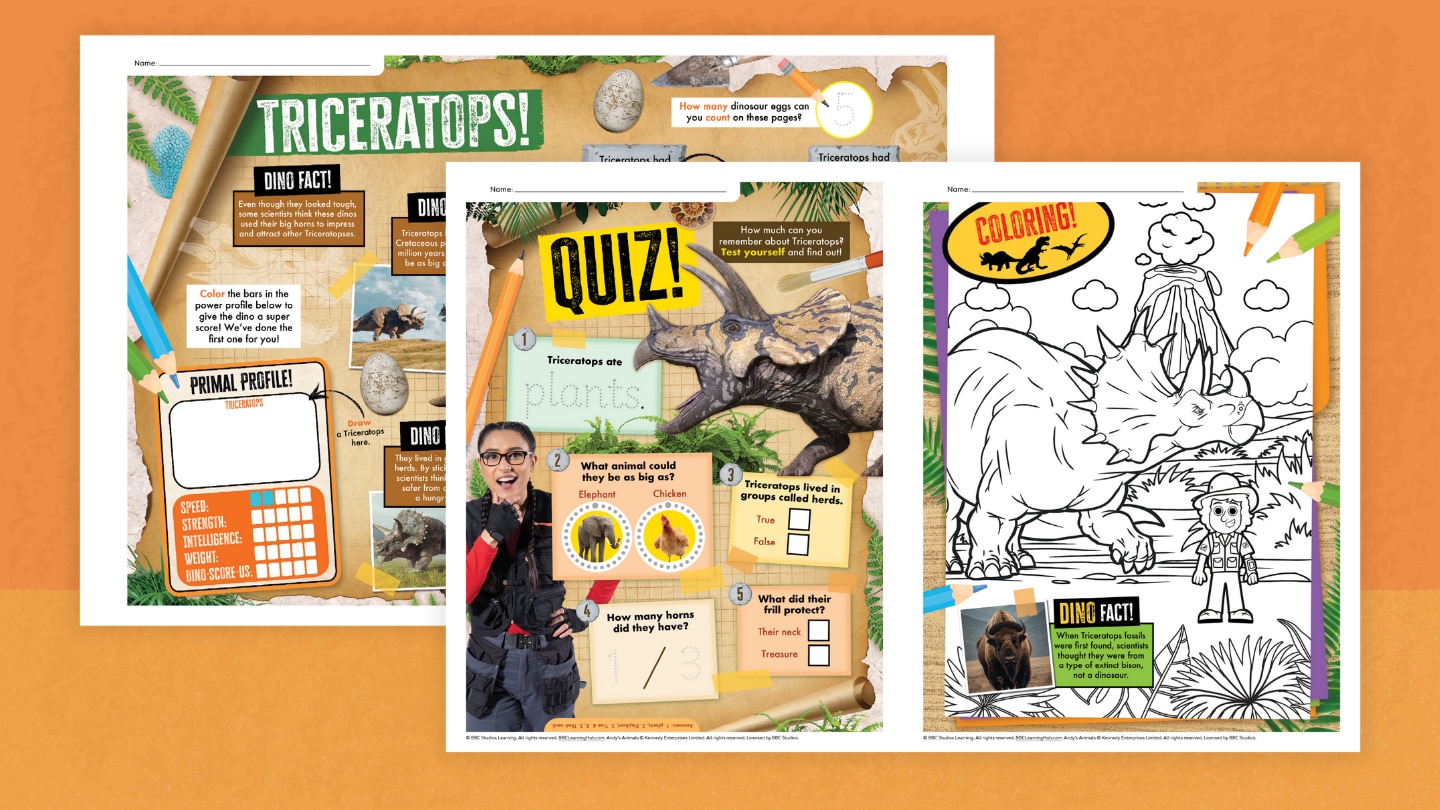
Go on a prehistoric quest with Andy! In this set of fun Triceratops worksheets, you'll:
- Discover incredible facts about their horns, frills, and herds.
- Practice counting with a hidden dinosaur egg challenge.
- Test your memory with a fun Triceratops quiz.
- Get creative by coloring your own Triceratops.
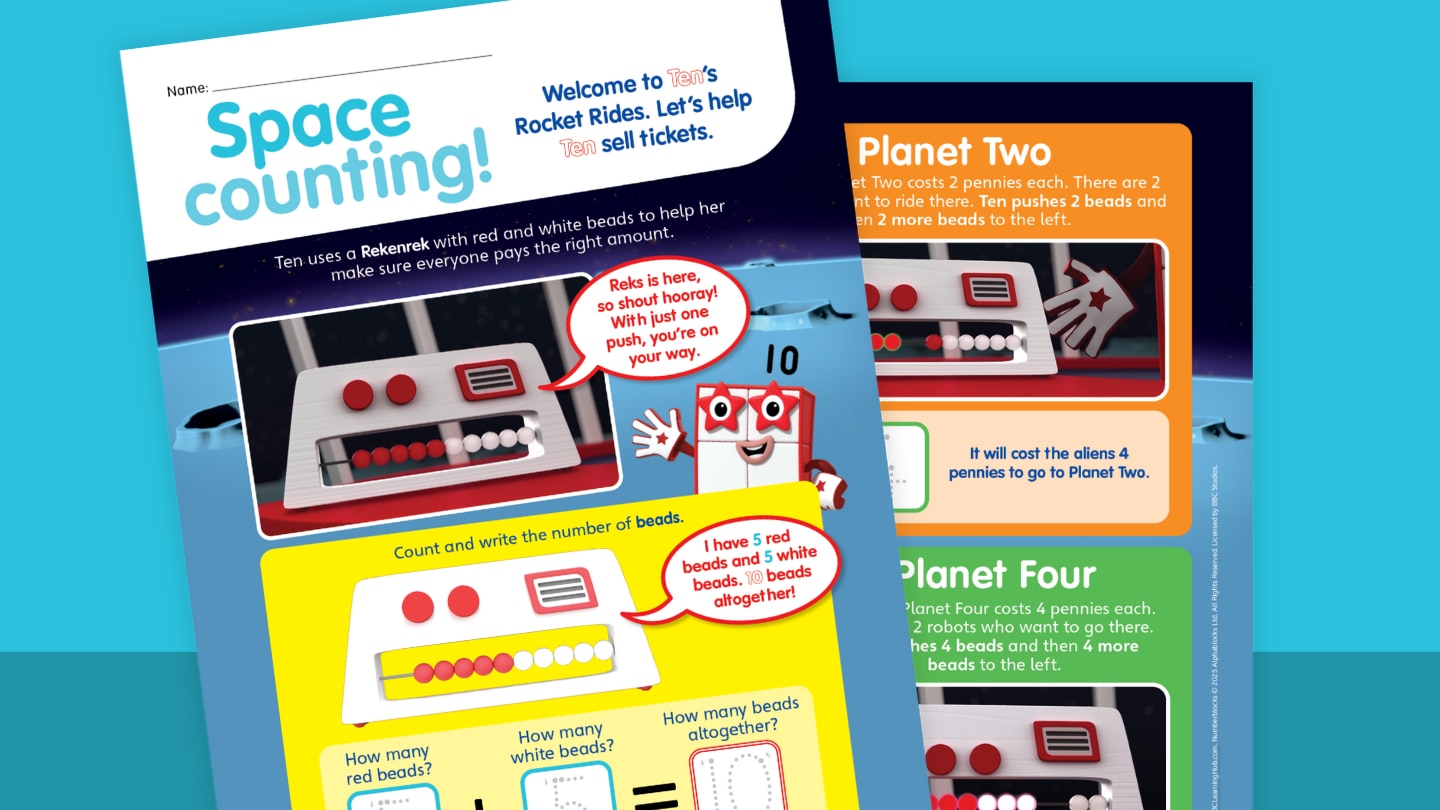
Welcome to Ten's Rocket Rides. Let's help Ten sell tickets. Ten uses a Rekenrek with red and white beads to help her make sure everyone pays the right amount.
A trip to Planet Two costs 2 pennies each. There are 2 aliens who want to ride there. Ten pushes 2 beads and
then 2 more beads to the left. How many beads did Ten push altogether?
A trip to Planet Four costs 4 pennies each. There are 2 robots who want to go there. Ten pushes 4 beads and then 4 more beads to the left. Rekenrek has 10 beads in total. How many are left behind?
Watch full episodes of Numberblocks on their official YouTube channel!
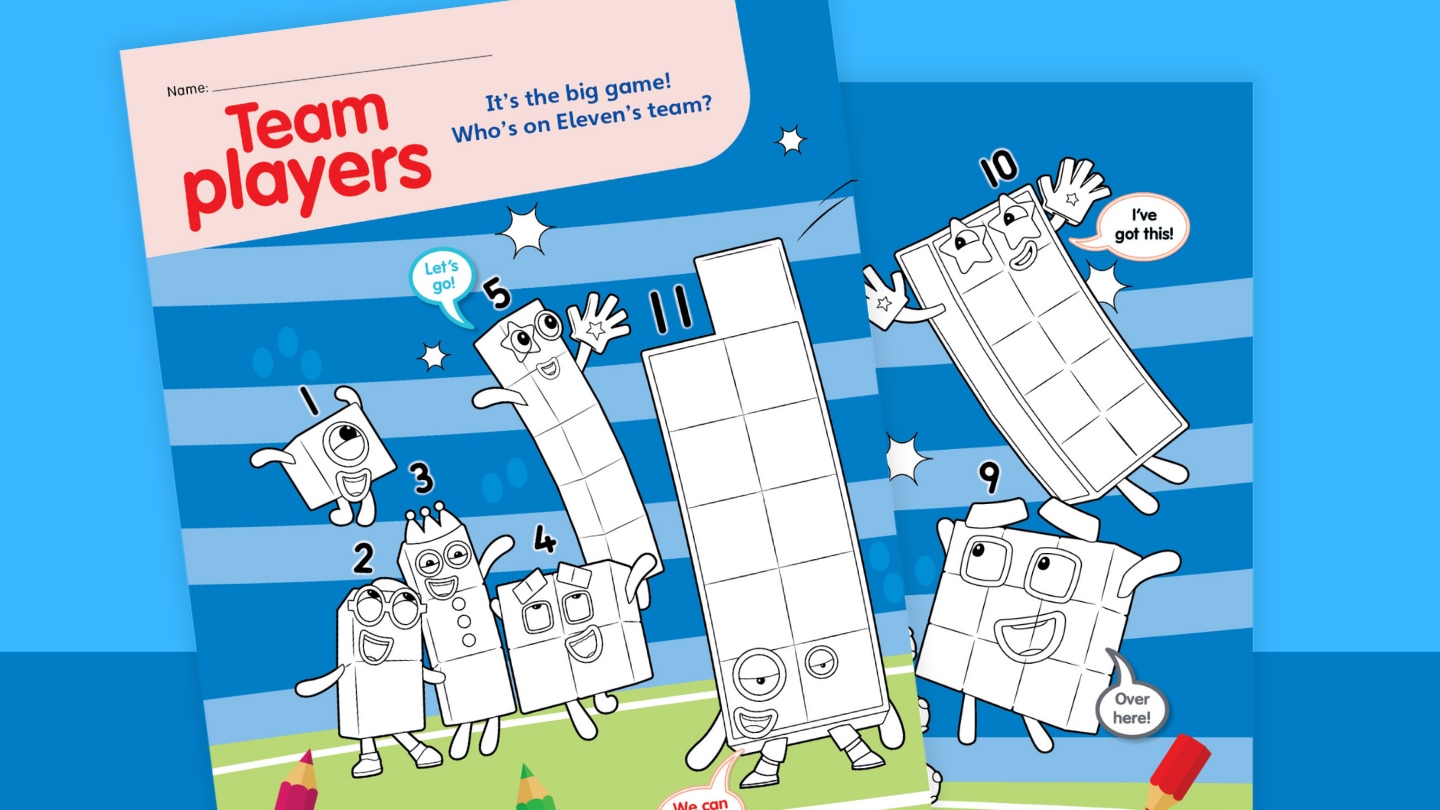
It's the big game! Who's on Eleven's team? Color him in along with in his teammates One, Two, Three, Four, Five, Six, Seven, Eight, Nine, and Ten. How many players are on the field. Count them!
Watch full episodes of Numberblocks on their official YouTube channel!
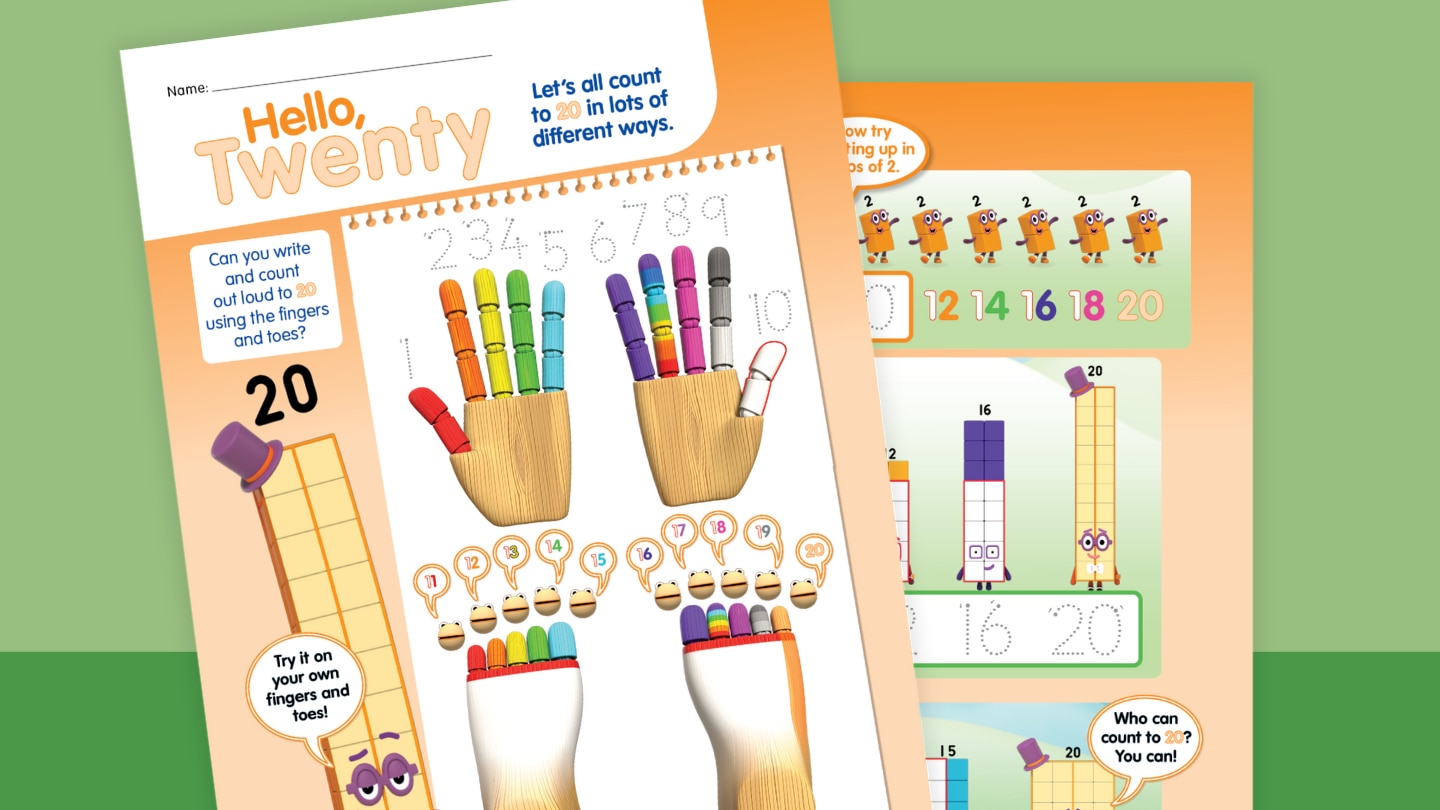
Let's all count to 20 in lots of different ways. Can you write and count out loud to 20 using the fingers and toes? Try it on your own fingers and toes! Next, can you count up to 20 in steps of two? How about four? Five?
Watch full episodes of Numberblocks on their official YouTube channel!
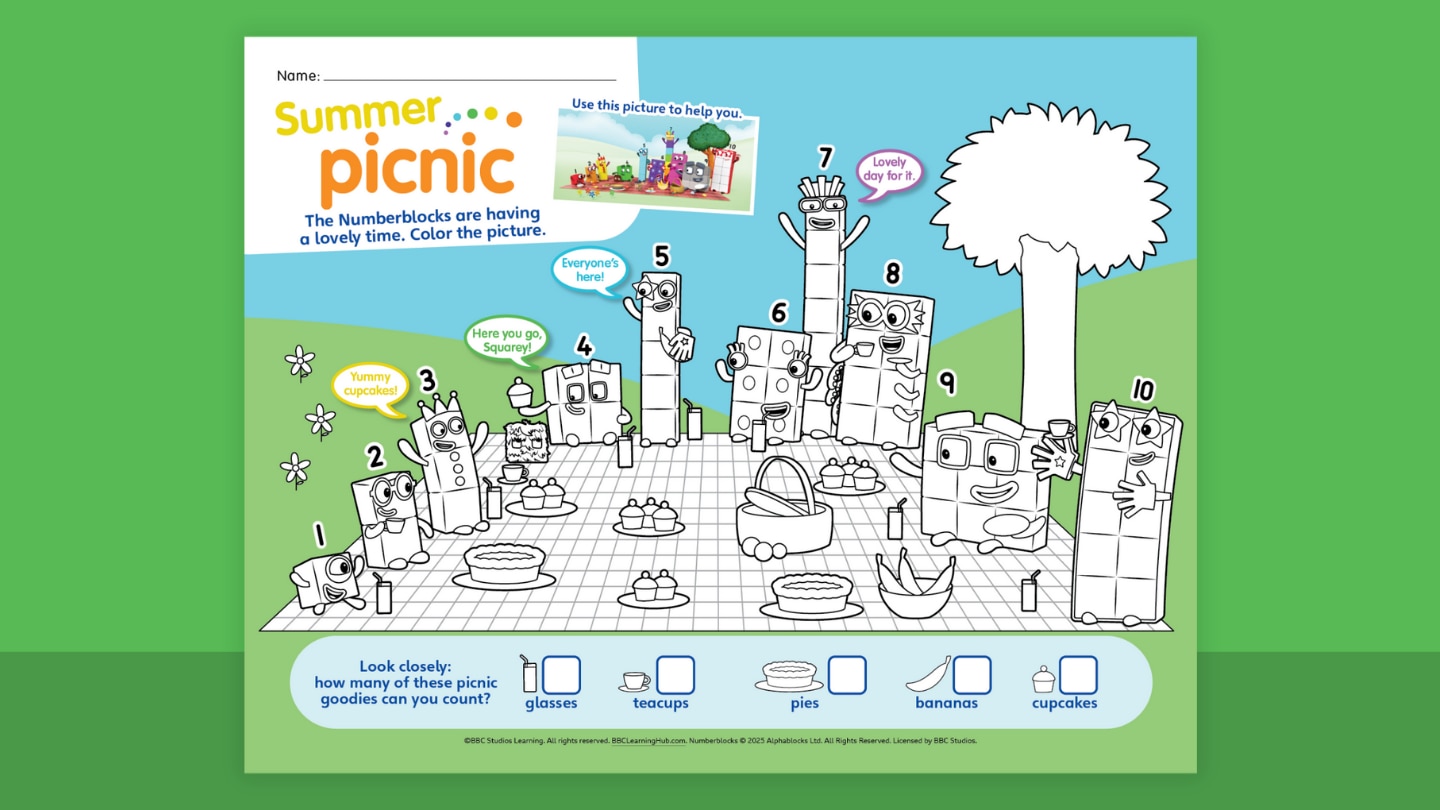
The Numberblocks are having a lovely time. Color the picture (you can use the colored in picture to help you). Look closely: how many of the picnic goodies (glasses, teacups, pies, bananas, and cupcakes) can you find?
Watch full episodes of Numberblocks on their official YouTube channel!
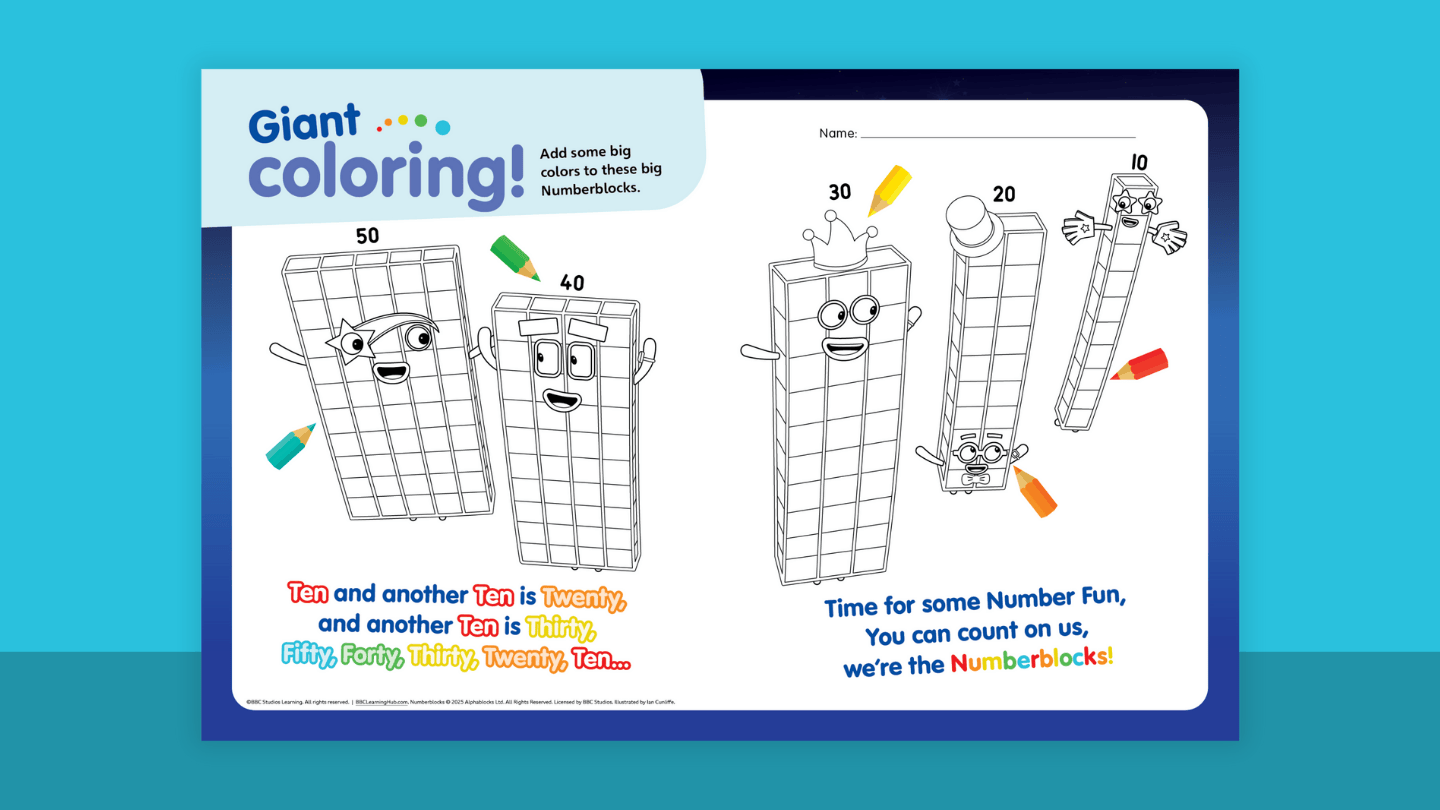
Add some big colors to these big Numberblocks. How many tens make twenty? Can you count by tens to fifty? How about backwards? Ten and another Ten is Twenty, and another Ten is Thirty. Fifty, Forty, Thirty, Twenty, Ten... Time for some Number Fun! You can count on us, we're the Numberblocks!
Watch full episodes of Numberblocks on their official YouTube channel!
This Hispanic Heritage Month, explore five Latin American countries through BBC videos and country fact files. Then complete your own country report!
Discover five Asian countries through short, engaging videos from the BBC + country fact files
Meet the Numberblocks — little blocks with big ideas who make learning numbers fun and exciting for young children ages 3–7. Numberblocks helps kids build number sense as the characters come together, break apart, and explore how numbers really work. This free collection of printable games and colorful worksheets games give little learners hands-on practice with counting, odd and even numbers, and simple addition and subtraction. Perfect for use at home or in the classroom, these ready-to-use activities turn math practice into joyful play.
Plus, watch full episodes on the official Numberblocks YouTube channel!
Count up to Twenty and back down again in Twos with this flip book. Here's how you'll make it:
- Ask a grown-up to help you cut along the dashed lines.
- Once everything is cut out, fold along the dotted lines.
- Now stack your Numberblocks in orders from Two to Eighteen.
- Cut out the Twenty and pop him in the middle of your stack.
- Paste the two Twenties together at the bottom and wrap them around your stack.
- Flip your book one way to count up to Twenty then the other way to count down.
Watch full episodes of Numberblocks on their official YouTube channel!
Use this page to show what you know. Who lives where? Remember Odd Street and Even Street? Who lives on each? Draw lines to show who lives where. Count down from 10 to one for blast off. Press the buttons as you count down. Circle all the green aliens. How many are there?
Watch full episodes of Numberblocks on their official YouTube channel!
Dive into the world of Spinosaurus with Andy! In this set of fun Spinosaurus worksheets, you'll:
- Learn jaw-dropping facts about Spinosaurus, from its sail to its fish-catching snout.
- Practice counting with a hidden fish challenge.
- Test your memory with a fun dino quiz.
- Get creative by coloring your own Spinosaurus.
Go on a prehistoric quest with Andy! In this set of fun Triceratops worksheets, you'll:
- Discover incredible facts about their horns, frills, and herds.
- Practice counting with a hidden dinosaur egg challenge.
- Test your memory with a fun Triceratops quiz.
- Get creative by coloring your own Triceratops.
Welcome to Ten's Rocket Rides. Let's help Ten sell tickets. Ten uses a Rekenrek with red and white beads to help her make sure everyone pays the right amount.
A trip to Planet Two costs 2 pennies each. There are 2 aliens who want to ride there. Ten pushes 2 beads and
then 2 more beads to the left. How many beads did Ten push altogether?
A trip to Planet Four costs 4 pennies each. There are 2 robots who want to go there. Ten pushes 4 beads and then 4 more beads to the left. Rekenrek has 10 beads in total. How many are left behind?
Watch full episodes of Numberblocks on their official YouTube channel!
It's the big game! Who's on Eleven's team? Color him in along with in his teammates One, Two, Three, Four, Five, Six, Seven, Eight, Nine, and Ten. How many players are on the field. Count them!
Watch full episodes of Numberblocks on their official YouTube channel!
Let's all count to 20 in lots of different ways. Can you write and count out loud to 20 using the fingers and toes? Try it on your own fingers and toes! Next, can you count up to 20 in steps of two? How about four? Five?
Watch full episodes of Numberblocks on their official YouTube channel!
The Numberblocks are having a lovely time. Color the picture (you can use the colored in picture to help you). Look closely: how many of the picnic goodies (glasses, teacups, pies, bananas, and cupcakes) can you find?
Watch full episodes of Numberblocks on their official YouTube channel!
Add some big colors to these big Numberblocks. How many tens make twenty? Can you count by tens to fifty? How about backwards? Ten and another Ten is Twenty, and another Ten is Thirty. Fifty, Forty, Thirty, Twenty, Ten... Time for some Number Fun! You can count on us, we're the Numberblocks!
Watch full episodes of Numberblocks on their official YouTube channel!