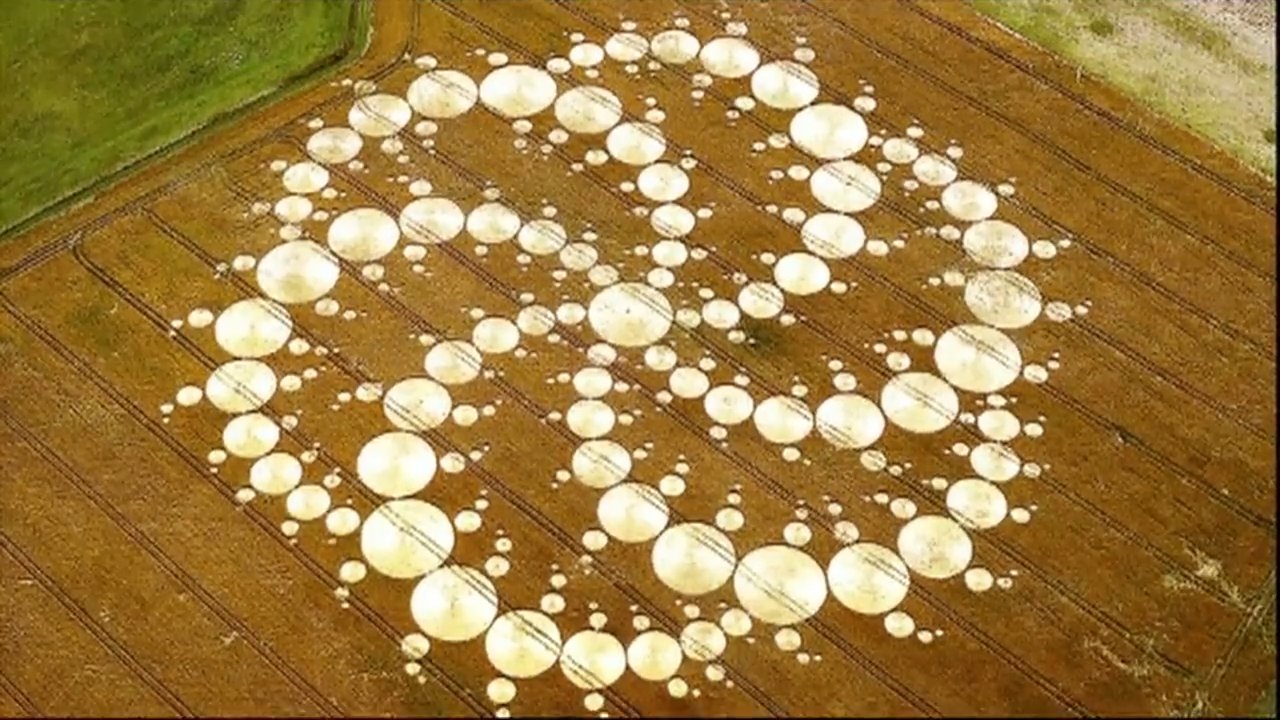
Crop circles have puzzled people for decades, and the Wiltshire countryside — a rural county in southwest England known for its rolling farmland — has had plenty to puzzle over this summer as new formations kept appearing in the fields.
These designs are often symmetrical, intricate, and hard to explain. One of the most famous examples, known as the Galaxy, contained more than 400 interlocking circles and stretched roughly 780 feet — about two and a half soccer fields laid end to end.
Some crop circles are confirmed to be human-made. Others are harder to pin down: witnesses have reported some appearing within a matter of seconds, though these claims haven't been independently verified.
Wiltshire's landscape makes it a particular hotspot — open countryside and high viewpoints make circles easy to spot and photograph. Drones and social media have also made it possible to document circles almost anywhere, not just in traditional hotspots.
As striking as they are to look at, crop circles can be costly for the farmers whose fields they appear in, since the process damages crops. That's also why making one without the landowner's permission counts as criminal damage in the UK — the British legal term for intentionally damaging someone else's property, similar to vandalism or property destruction charges in the US.