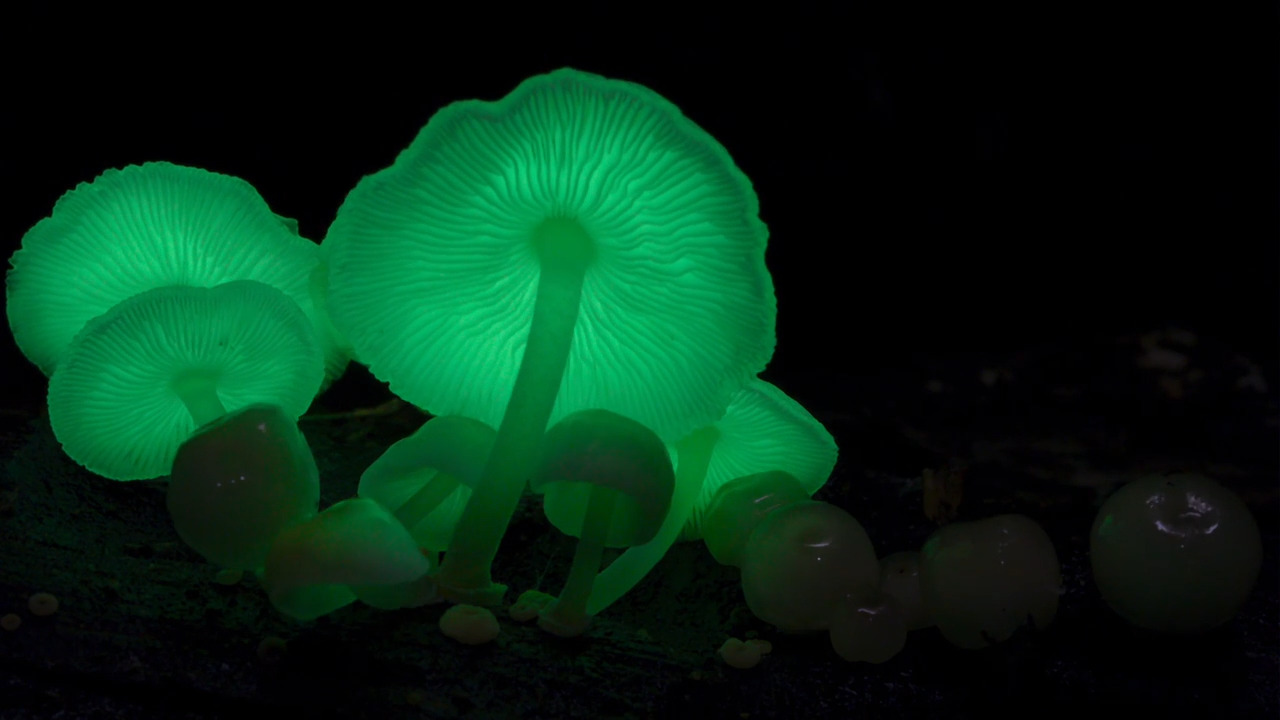
The article "Why Do Some Animals Glow? The Amazing Science of Bioluminescence" from BBC's Discover Wildlife explains how animals like glow-worms, squid, and fireflies produce light using special chemicals. It explores the role of luciferins and luciferase, the different colors of glow, and how creatures use this glow for communication, hunting, or self-defense.
In Bioluminescence and Jungle Predators, narrator Sir David Attenborough explores the fascinating world of bioluminescence in the jungle. The video showcases how glowing fungi lure insects and how the railroad worm uses its colorful glow to hunt in the dark. This video is excerpted from BBC’s Planet Earth II, a breathtaking documentary series that highlights the natural wonders of our planet.
In The Beauty of Stormy Seas, narrator Sir David Attenborough uncovers the extraordinary sight of bioluminescent plankton that light up dark waters as sea life thrives with the change of seasons. This video is excerpted from BBC’s Blue Planet II, a natural history series that explores the world's oceans, the animals that live in them, and the threats they face, using modern filming techniques and equipment to capture previously unseen areas of the ocean.
In Navigating the Dark Depths of the Ocean, narrator David Attenborough highlights the deep ocean, where no sunlight reaches, and animals have adapted to survive in total darkness with minimal food. The Dumbo octopus glides effortlessly through the water, conserving energy. The vampire squid uses bioluminescent bacteria to create light patterns that confuse predators. In this extreme environment, creatures must rely on special adaptations to detect food, avoid danger, and navigate the dark depths. This video is excerpted from BBC’s Planet Earth, a breathtaking documentary series that highlights the natural wonders of our planet.
Discover the amazing hunting techniques of cave glow worms, witness the transformation of lake fly midges, and delve into the mysteries of bioluminescence in the jungle night. Prepare for a close-up look at the miniature marvels all around us!
Discover the wild side of the underwater world in this video playlist! Meet the ocean's most unusual characters — from glowing anglerfish and toothy piranhas to spiky lionfish and balloon-like pufferfish. These 10 short clips from BBC favorites like Deadly 60 and Blue Planet reveal the surprising ways these strange fish hunt, hide, and survive. Packed with fun facts and jaw-dropping moments, it’s perfect for curious kids and adults alike!
Get swept up in the drama of Earth’s extreme weather! This BBC video clip collection — featuring clips from Blue Planet, Blue Planet II, and other acclaimed BBC series — takes you into the heart of hurricanes, tornadoes, blizzards, and more. Discover how these powerful forces shape our planet, challenge wildlife, and reveal the awe-inspiring power of nature.
In The Deep Sea Anglerfish, narrator Sir David Attenborough explains how the anglerfish captures prey. Watch how the anglerfish uses light and learn how that light is created. This video is excerpted from BBC’s Blue Planet, a definitive documentary series diving into the mysterious depths of the sea to discover the natural history of the world’s oceans and the rarely seen marine life that reside there.
In Lights in the Deep Sea, narrator Sir David Attenborough explores how animals in the deep sea use light. Watch animals use light to catch prey and escape predators. This video is excerpted from BBC’s Blue Planet, a definitive documentary series diving into the mysterious depths of the sea to discover the natural history of the world’s oceans and the rarely seen marine life that reside there.
In Strange Creatures at 500 Meters Below, narrator David Attenborough explains how plankton retreats into the ocean depths as the Sun rises. To follow it, we descend in a submarine where pressure increases, and temperatures drop. At 500 meters (1,640 feet) below, strange creatures emerge. Organic particles, known as marine snow, drift down, serving as food for many animals like the sea spider, which uses feathered leg-like appendages to capture it. Meanwhile, the sawtooth eel waits motionless, ready to strike at silhouetted prey swimming near the faint glow from the surface. This video is excerpted from BBC’s Planet Earth, a breathtaking documentary series that highlights the natural wonders of our planet.
The article "Why Do Some Animals Glow? The Amazing Science of Bioluminescence" from BBC's Discover Wildlife explains how animals like glow-worms, squid, and fireflies produce light using special chemicals. It explores the role of luciferins and luciferase, the different colors of glow, and how creatures use this glow for communication, hunting, or self-defense.
In Bioluminescence and Jungle Predators, narrator Sir David Attenborough explores the fascinating world of bioluminescence in the jungle. The video showcases how glowing fungi lure insects and how the railroad worm uses its colorful glow to hunt in the dark. This video is excerpted from BBC’s Planet Earth II, a breathtaking documentary series that highlights the natural wonders of our planet.
In The Beauty of Stormy Seas, narrator Sir David Attenborough uncovers the extraordinary sight of bioluminescent plankton that light up dark waters as sea life thrives with the change of seasons. This video is excerpted from BBC’s Blue Planet II, a natural history series that explores the world's oceans, the animals that live in them, and the threats they face, using modern filming techniques and equipment to capture previously unseen areas of the ocean.
In Navigating the Dark Depths of the Ocean, narrator David Attenborough highlights the deep ocean, where no sunlight reaches, and animals have adapted to survive in total darkness with minimal food. The Dumbo octopus glides effortlessly through the water, conserving energy. The vampire squid uses bioluminescent bacteria to create light patterns that confuse predators. In this extreme environment, creatures must rely on special adaptations to detect food, avoid danger, and navigate the dark depths. This video is excerpted from BBC’s Planet Earth, a breathtaking documentary series that highlights the natural wonders of our planet.
Discover the amazing hunting techniques of cave glow worms, witness the transformation of lake fly midges, and delve into the mysteries of bioluminescence in the jungle night. Prepare for a close-up look at the miniature marvels all around us!
Discover the wild side of the underwater world in this video playlist! Meet the ocean's most unusual characters — from glowing anglerfish and toothy piranhas to spiky lionfish and balloon-like pufferfish. These 10 short clips from BBC favorites like Deadly 60 and Blue Planet reveal the surprising ways these strange fish hunt, hide, and survive. Packed with fun facts and jaw-dropping moments, it’s perfect for curious kids and adults alike!
Get swept up in the drama of Earth’s extreme weather! This BBC video clip collection — featuring clips from Blue Planet, Blue Planet II, and other acclaimed BBC series — takes you into the heart of hurricanes, tornadoes, blizzards, and more. Discover how these powerful forces shape our planet, challenge wildlife, and reveal the awe-inspiring power of nature.
In The Deep Sea Anglerfish, narrator Sir David Attenborough explains how the anglerfish captures prey. Watch how the anglerfish uses light and learn how that light is created. This video is excerpted from BBC’s Blue Planet, a definitive documentary series diving into the mysterious depths of the sea to discover the natural history of the world’s oceans and the rarely seen marine life that reside there.
In Lights in the Deep Sea, narrator Sir David Attenborough explores how animals in the deep sea use light. Watch animals use light to catch prey and escape predators. This video is excerpted from BBC’s Blue Planet, a definitive documentary series diving into the mysterious depths of the sea to discover the natural history of the world’s oceans and the rarely seen marine life that reside there.
In Strange Creatures at 500 Meters Below, narrator David Attenborough explains how plankton retreats into the ocean depths as the Sun rises. To follow it, we descend in a submarine where pressure increases, and temperatures drop. At 500 meters (1,640 feet) below, strange creatures emerge. Organic particles, known as marine snow, drift down, serving as food for many animals like the sea spider, which uses feathered leg-like appendages to capture it. Meanwhile, the sawtooth eel waits motionless, ready to strike at silhouetted prey swimming near the faint glow from the surface. This video is excerpted from BBC’s Planet Earth, a breathtaking documentary series that highlights the natural wonders of our planet.