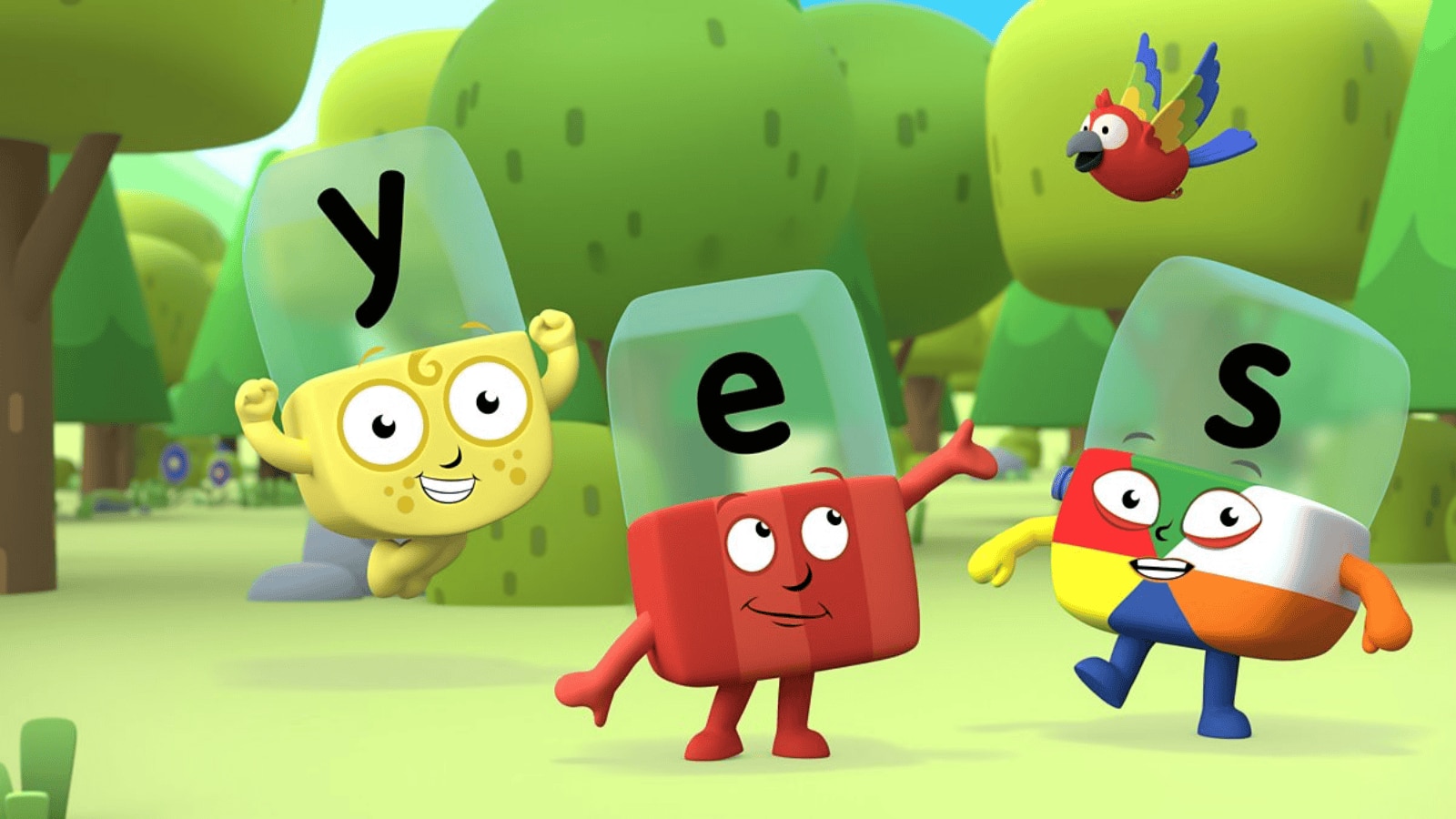
Meet the Alphablocks — 26 living letters who discover that when they hold hands to make a word, something magical happens. Celebrated for its innovative approach to teaching reading, Alphablocks makes learning joyful, active, and engaging for early learners. This free collection of Alphablocks worksheets brings that magic to life at home or in the classroom, with Alphablocks letter cards kids can use to build words, alphabet finger puppets, and playful worksheets that teach letter sounds.
Watch full episodes of the award-winning show for kids ages 3–6 on the official Alphablocks YouTube channel!
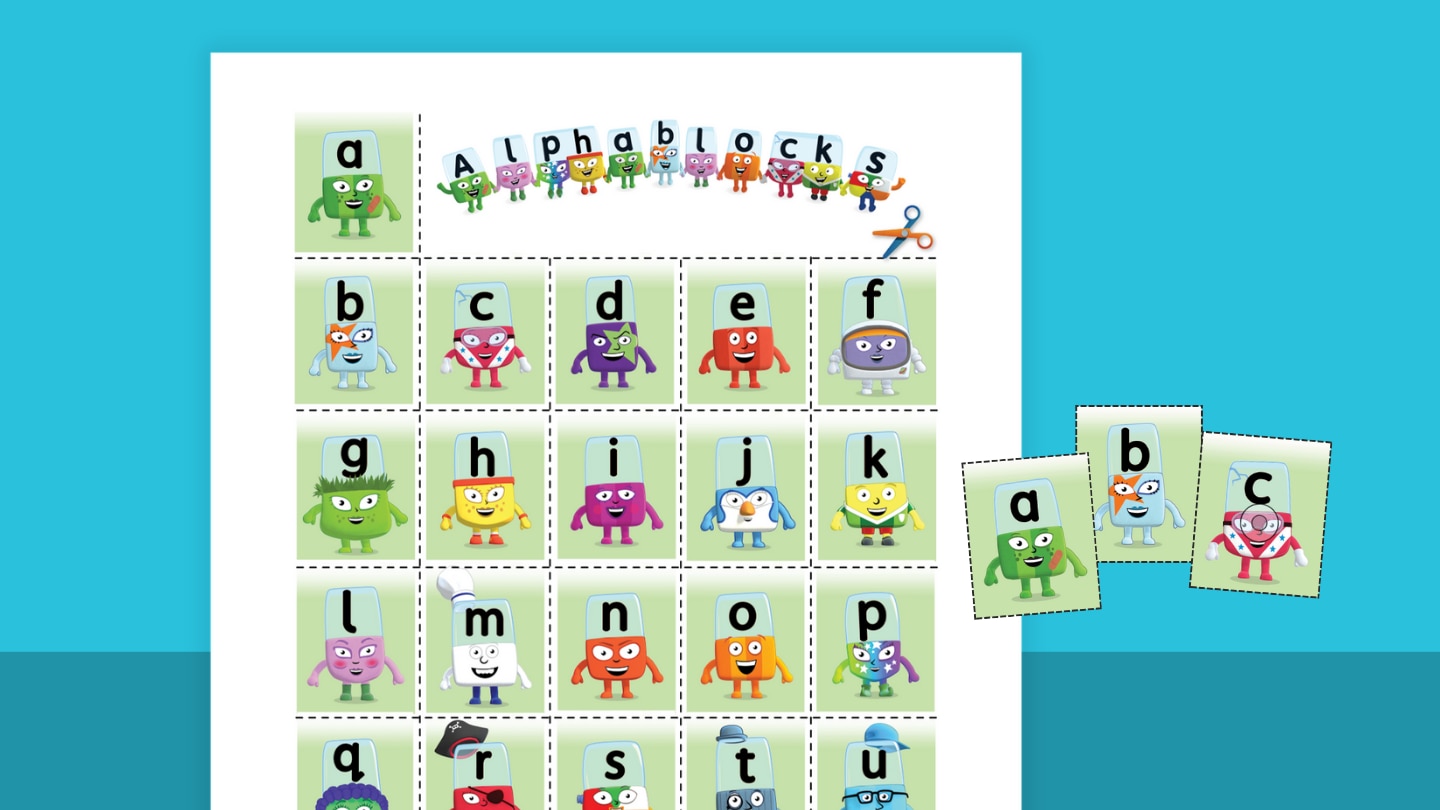
These alphabet tiles are a colorful way to reinforce letter-sound connections. Make a set for each of our students, who can use them to build and sound out words. Using our other Alphablocks printables? These tiles are the perfect companion.
Watch full episodes of Alphablocks on their official YouTube channel!
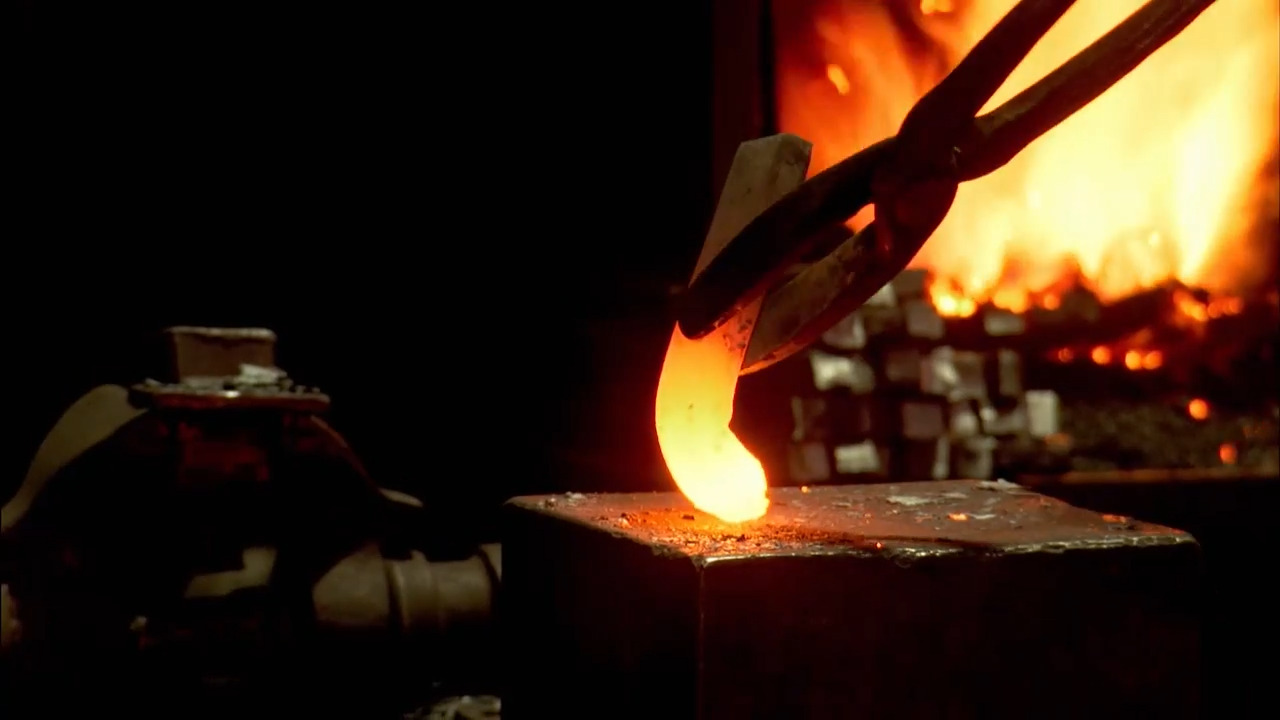
In The Dawn of the Iron Age, archaeologist and historian Richard Miles explains how the dawn of the Iron Age and the creation of the Phoenician alphabet revolutionized and democratized societies. Iron and the alphabet brought warfare, literacy, and trade to the masses. This video is excerpted from BBC’s Ancient Worlds, an epic series with archaeologist and historian Richard Miles as he explores the roots of civilization from Mesopotamia to the fall of the Roman Empire.
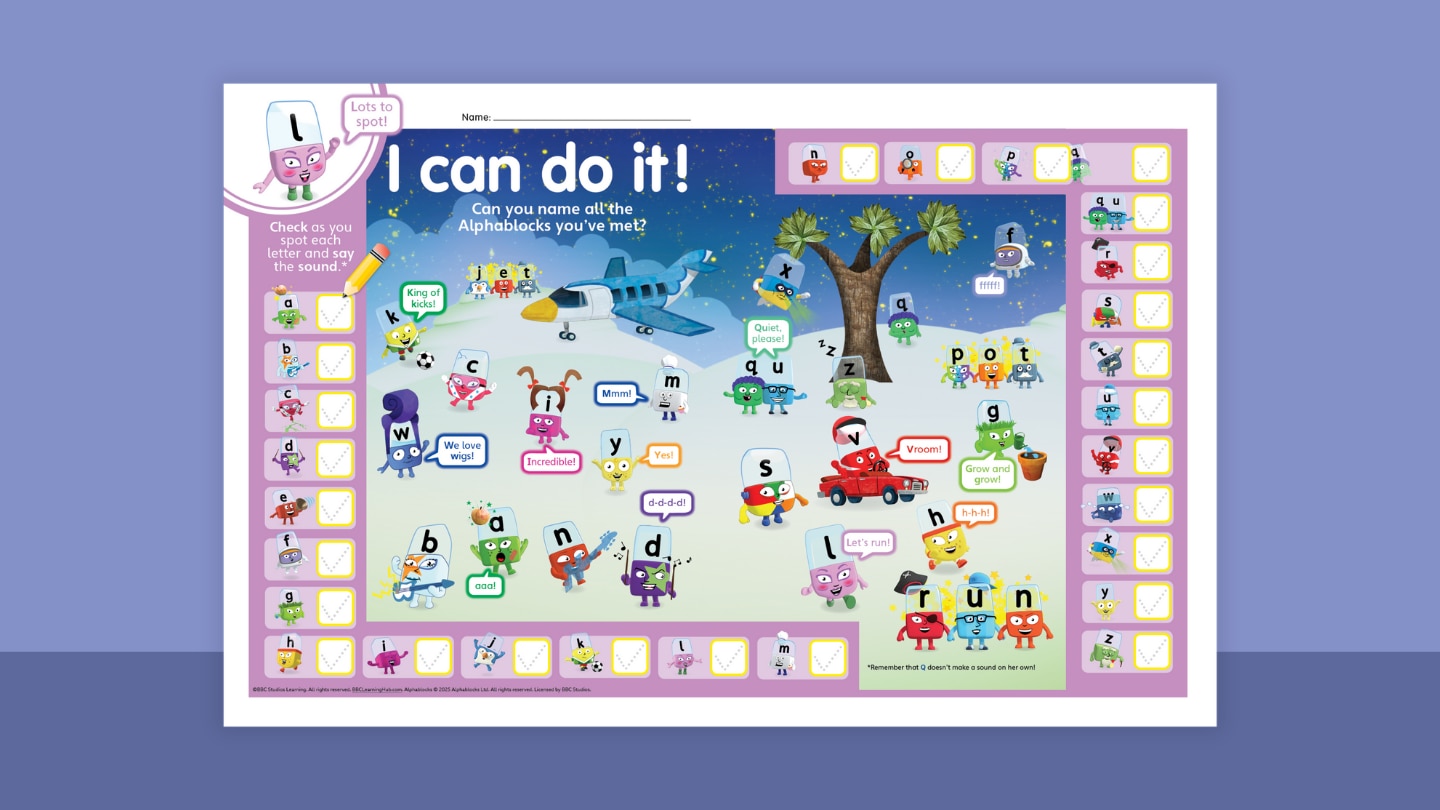
Can you name all the Alphablocks you’ve met? Check as you spot each letter and say the sound.*
King of kicks!
We love wigs!
Grow and grow!
*Remember that Q doesn't make a sound on her own!
Watch full episodes of Alphablocks on their official YouTube channel!
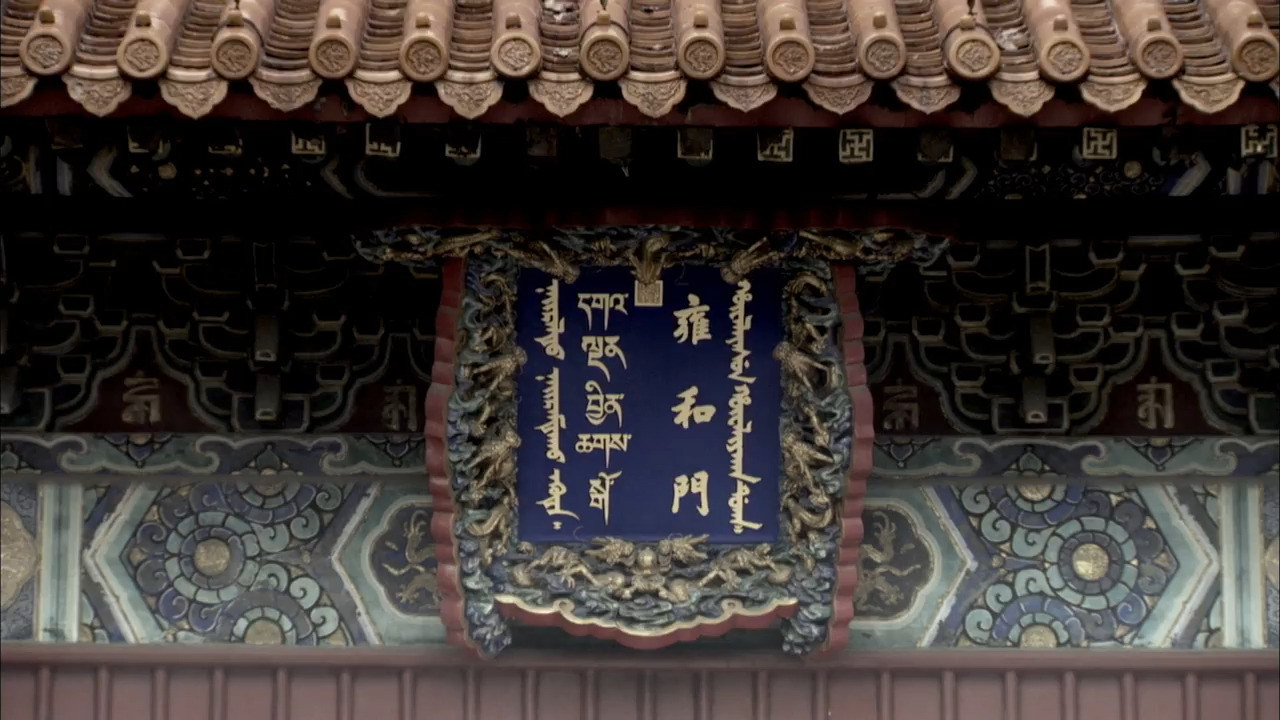
In Genghis Khan's Ruthless Army, host Andrew Marr takes us to the early 13th Century. Genghis Khan’s army is in the midst of its ruthless military campaign to conquer land across Europe and Asia. As it attacks and takes over city after city, it adopts ideas and technology, which contribute to the army’s success in ruling such a large territory. After having conquered all that he could, Khan ushers in a period of prosperity and peace. This video is excerpted from BBC’s Andrew Marr's History of the World, a story of human history that uses reenactments, modern footage, and storytelling to explain history’s greatest achievements.
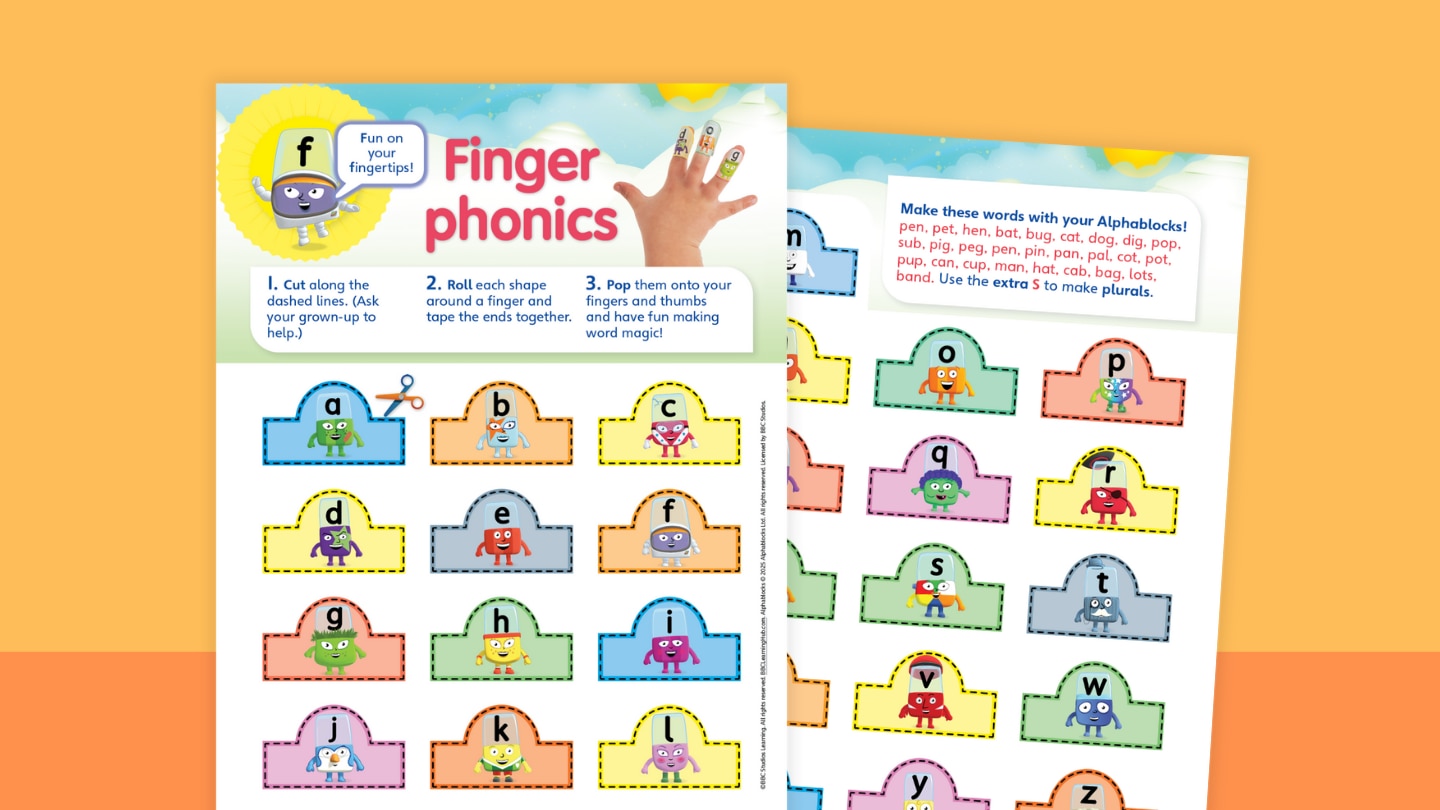
Phonics fun on your fingertips! Cut along the dashed lines. (Ask your grown-up to help.) Roll each shape
around a finger and tape the ends together. Pop them onto your fingers and thumbs and have fun making
word magic!
Make these words with your Alphablocks: pen, pet, hen, bat, bug, cat, dog, dig, pop, sub, pig, peg, pen, pin, pan, pal, cot, pot, pup, can, cup, man, hat, cab, bag, lots, band. Use the extra S to make plurals.
Watch full episodes of Alphablocks on their official YouTube channel!
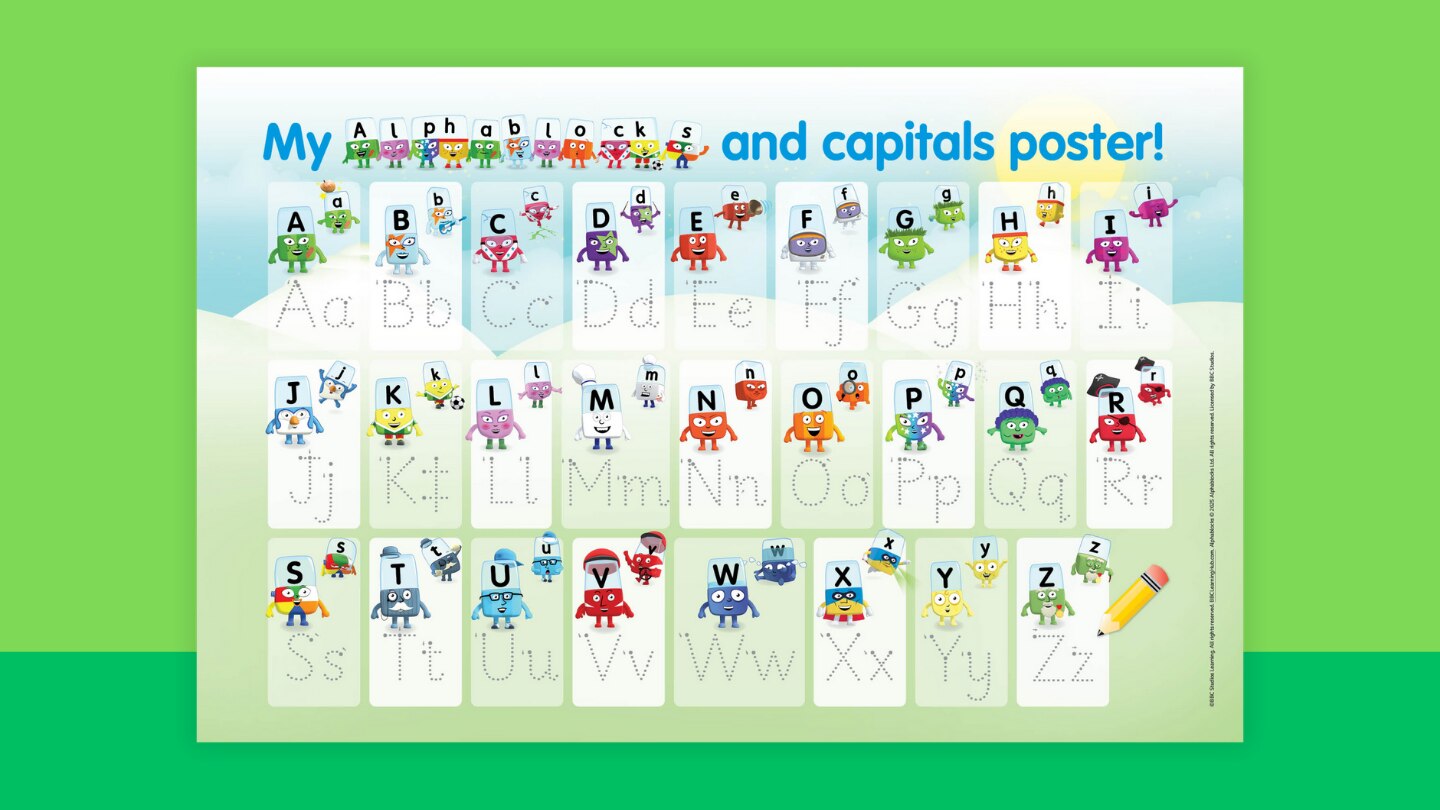
Put this poster up in your classroom to teach correct letter formation with your favorite Alphablocks! Here are some fun teaching ideas:
- Have students stand up and trace each letter in the air with their pointer finger while looking at the poster.
- Pick one letter each day. Examine how it’s formed on the poster (where to start, which direction to move). Have students trace it on a whiteboard or in a sand tray.
- Laminate a smaller version of the poster or display it on a table. Encourage students to trace letters with their fingers while saying the letter name and sound aloud.
Watch full episodes of Alphablocks on their official YouTube channel!
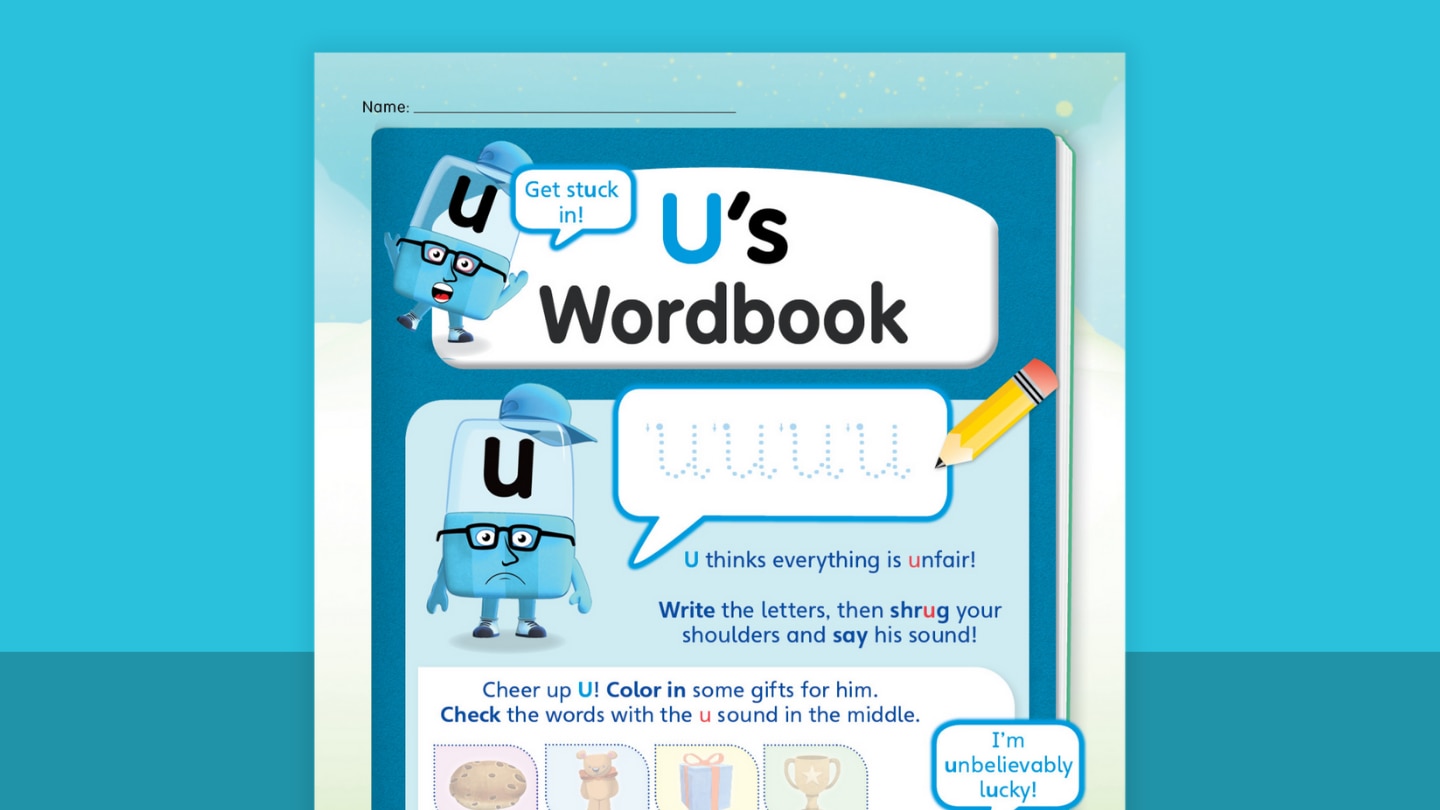
U thinks everything is unfair! Write the letters, then shrug your shoulders and say his sound! Cheer up U! Color in some gifts for him. Check the words with the u sound in the middle. Pretend to give U a big hug, then color him in to make him happy!
Watch full episodes of Alphablocks on their official YouTube channel!
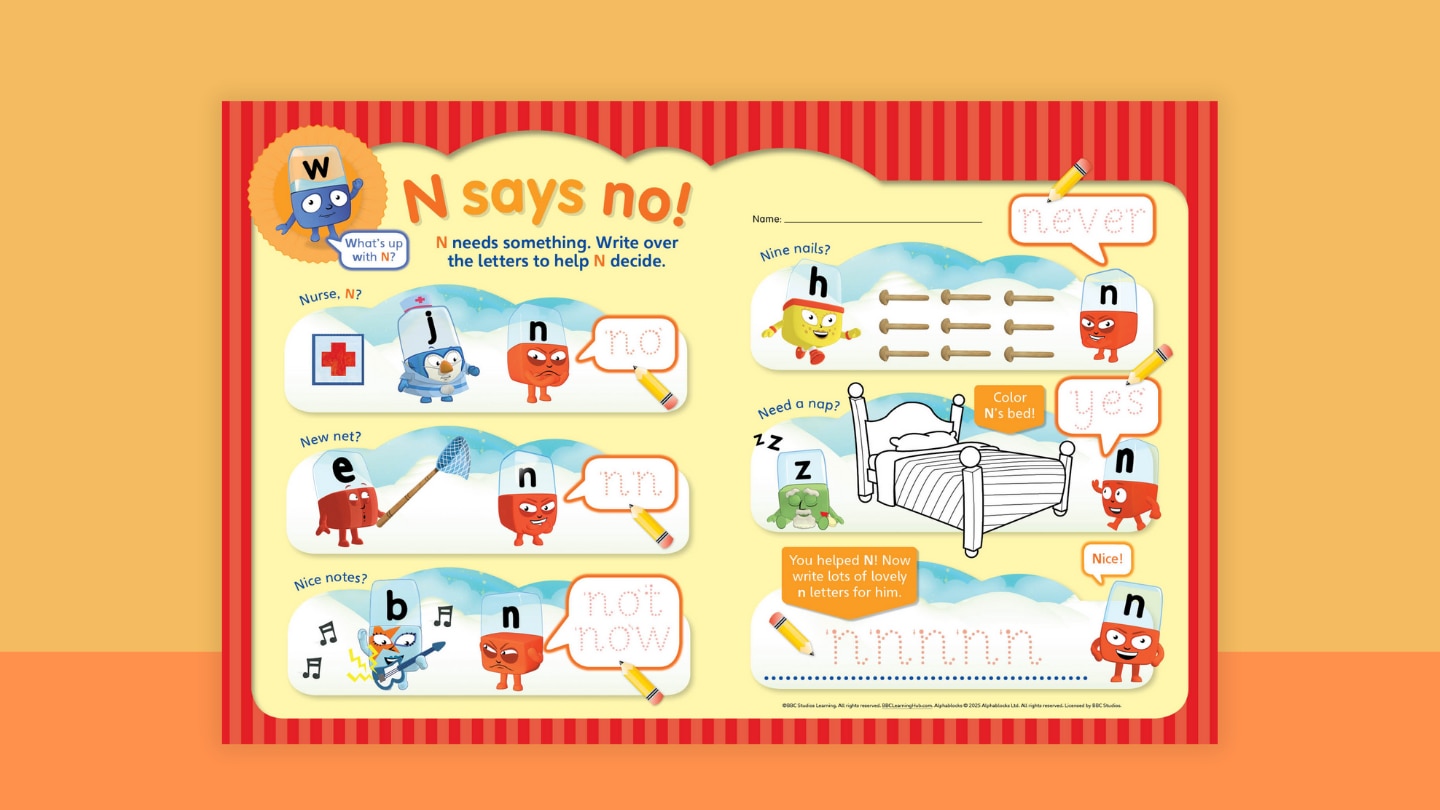
Meet Alphablock N, who loves to say “no!" N needs something. Is it a nurse? A new net? How about nice notes? Write over the letters to help N decide. Once you've helped N, write lots of lovely n letters for him.
Watch full episodes of Alphablocks on their official YouTube channel!
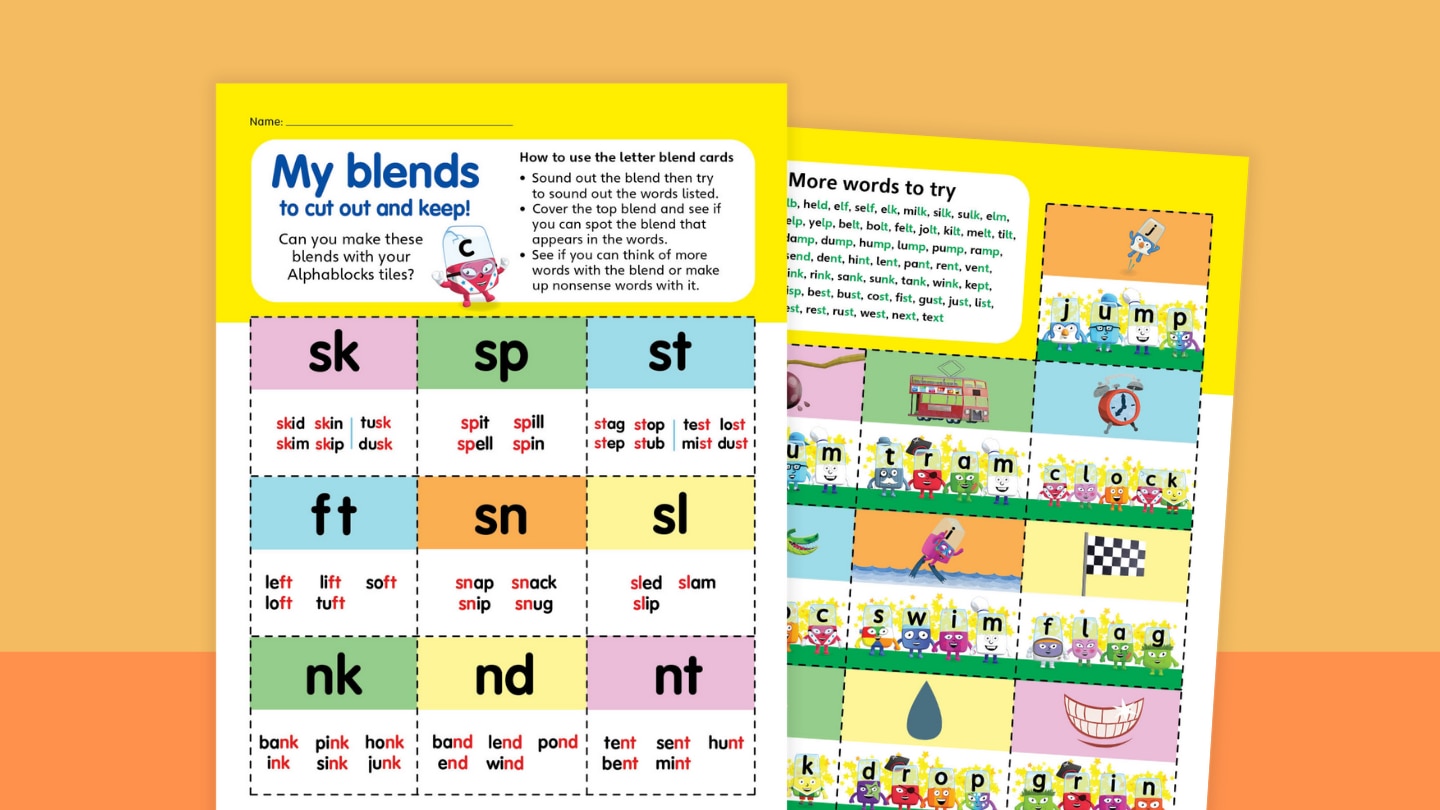
Meet these blends to cut out and keep! Can you make these blends with your Alphablocks tiles? Here's how to use the letter blend cards:
- Sound out the blend then try to sound out the words listed.
- Cover the top blend and see if you can spot the blend that appears in the words.
- See if you can think of more words with the blend or make up nonsense words with it.
Watch full episodes of Alphablocks on their official YouTube channel!
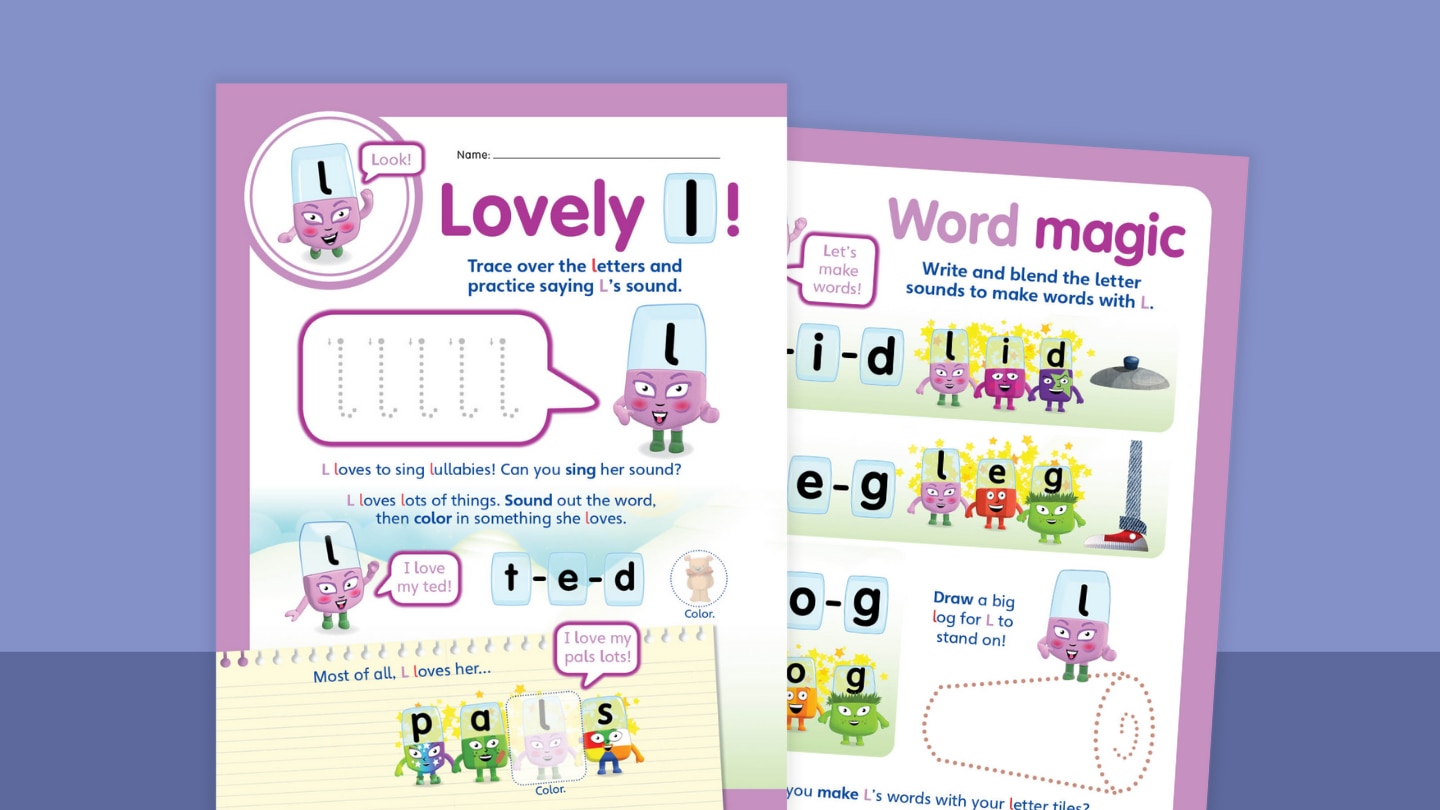
Meet the lovely Alphablock L! Say the sound, write the letter, and blend words with L. Practice tracing lowercase l, then build and read simple words like l-e-g, l-o-g, and l-i-d. Finish by coloring the things L loves and practice making more words with L using your letter tiles.
Watch full episodes of Alphablocks on their official YouTube channel!
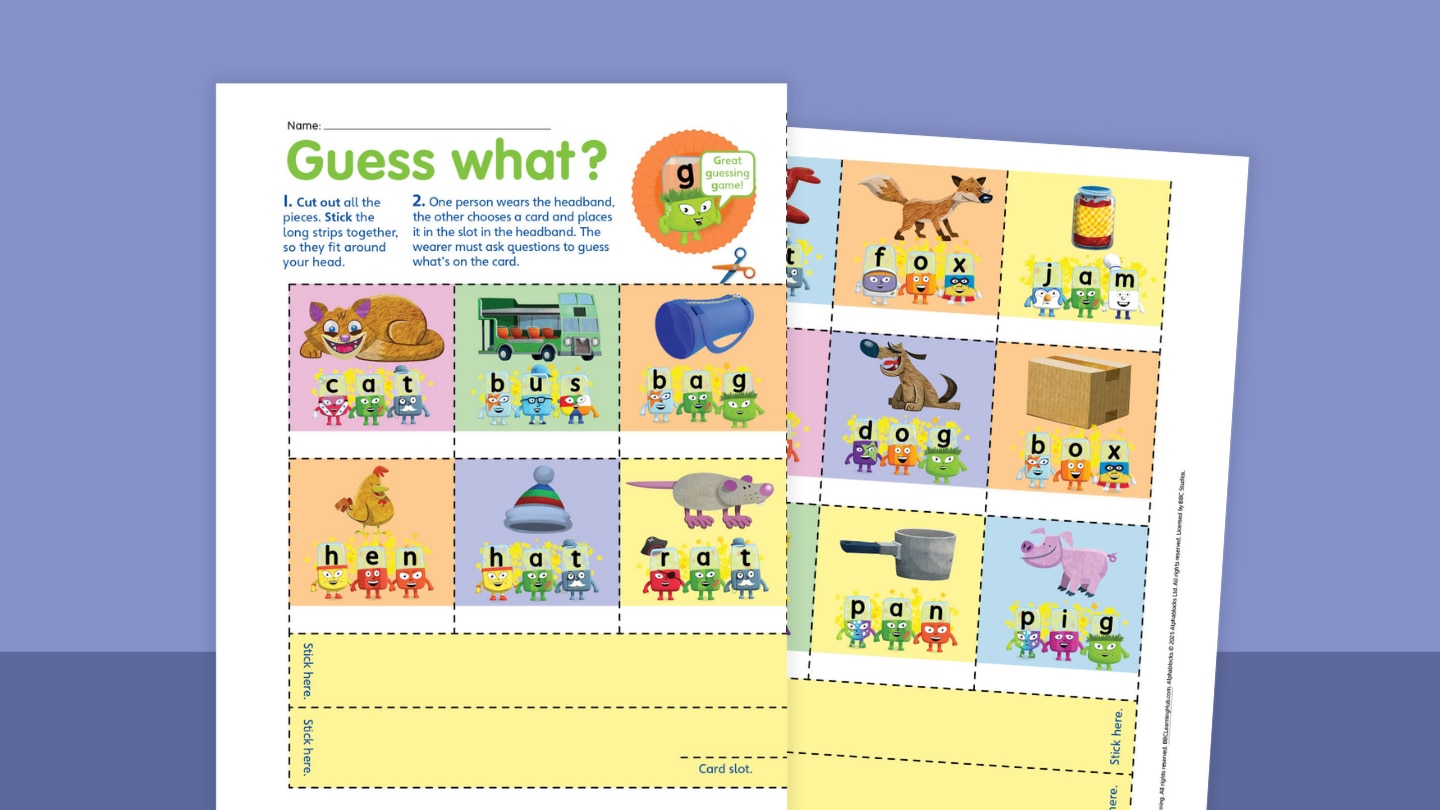
Great guessing game! Here's how to play:
- Cut out all the pieces. Stick the long strips together so they fit around your head.
- One person wears the headband; the other chooses a card and places it in the slot in the headband. The wearer must ask questions to guess what's on the card.
Watch full episodes of Alphablocks on their official YouTube channel!
Meet the Alphablocks — 26 living letters who discover that when they hold hands to make a word, something magical happens. Celebrated for its innovative approach to teaching reading, Alphablocks makes learning joyful, active, and engaging for early learners. This free collection of Alphablocks worksheets brings that magic to life at home or in the classroom, with Alphablocks letter cards kids can use to build words, alphabet finger puppets, and playful worksheets that teach letter sounds.
Watch full episodes of the award-winning show for kids ages 3–6 on the official Alphablocks YouTube channel!
These alphabet tiles are a colorful way to reinforce letter-sound connections. Make a set for each of our students, who can use them to build and sound out words. Using our other Alphablocks printables? These tiles are the perfect companion.
Watch full episodes of Alphablocks on their official YouTube channel!
In The Dawn of the Iron Age, archaeologist and historian Richard Miles explains how the dawn of the Iron Age and the creation of the Phoenician alphabet revolutionized and democratized societies. Iron and the alphabet brought warfare, literacy, and trade to the masses. This video is excerpted from BBC’s Ancient Worlds, an epic series with archaeologist and historian Richard Miles as he explores the roots of civilization from Mesopotamia to the fall of the Roman Empire.
Can you name all the Alphablocks you’ve met? Check as you spot each letter and say the sound.*
King of kicks!
We love wigs!
Grow and grow!
*Remember that Q doesn't make a sound on her own!
Watch full episodes of Alphablocks on their official YouTube channel!
In Genghis Khan's Ruthless Army, host Andrew Marr takes us to the early 13th Century. Genghis Khan’s army is in the midst of its ruthless military campaign to conquer land across Europe and Asia. As it attacks and takes over city after city, it adopts ideas and technology, which contribute to the army’s success in ruling such a large territory. After having conquered all that he could, Khan ushers in a period of prosperity and peace. This video is excerpted from BBC’s Andrew Marr's History of the World, a story of human history that uses reenactments, modern footage, and storytelling to explain history’s greatest achievements.
Phonics fun on your fingertips! Cut along the dashed lines. (Ask your grown-up to help.) Roll each shape
around a finger and tape the ends together. Pop them onto your fingers and thumbs and have fun making
word magic!
Make these words with your Alphablocks: pen, pet, hen, bat, bug, cat, dog, dig, pop, sub, pig, peg, pen, pin, pan, pal, cot, pot, pup, can, cup, man, hat, cab, bag, lots, band. Use the extra S to make plurals.
Watch full episodes of Alphablocks on their official YouTube channel!
Put this poster up in your classroom to teach correct letter formation with your favorite Alphablocks! Here are some fun teaching ideas:
- Have students stand up and trace each letter in the air with their pointer finger while looking at the poster.
- Pick one letter each day. Examine how it’s formed on the poster (where to start, which direction to move). Have students trace it on a whiteboard or in a sand tray.
- Laminate a smaller version of the poster or display it on a table. Encourage students to trace letters with their fingers while saying the letter name and sound aloud.
Watch full episodes of Alphablocks on their official YouTube channel!
U thinks everything is unfair! Write the letters, then shrug your shoulders and say his sound! Cheer up U! Color in some gifts for him. Check the words with the u sound in the middle. Pretend to give U a big hug, then color him in to make him happy!
Watch full episodes of Alphablocks on their official YouTube channel!
Meet Alphablock N, who loves to say “no!" N needs something. Is it a nurse? A new net? How about nice notes? Write over the letters to help N decide. Once you've helped N, write lots of lovely n letters for him.
Watch full episodes of Alphablocks on their official YouTube channel!
Meet these blends to cut out and keep! Can you make these blends with your Alphablocks tiles? Here's how to use the letter blend cards:
- Sound out the blend then try to sound out the words listed.
- Cover the top blend and see if you can spot the blend that appears in the words.
- See if you can think of more words with the blend or make up nonsense words with it.
Watch full episodes of Alphablocks on their official YouTube channel!
Meet the lovely Alphablock L! Say the sound, write the letter, and blend words with L. Practice tracing lowercase l, then build and read simple words like l-e-g, l-o-g, and l-i-d. Finish by coloring the things L loves and practice making more words with L using your letter tiles.
Watch full episodes of Alphablocks on their official YouTube channel!
Great guessing game! Here's how to play:
- Cut out all the pieces. Stick the long strips together so they fit around your head.
- One person wears the headband; the other chooses a card and places it in the slot in the headband. The wearer must ask questions to guess what's on the card.
Watch full episodes of Alphablocks on their official YouTube channel!