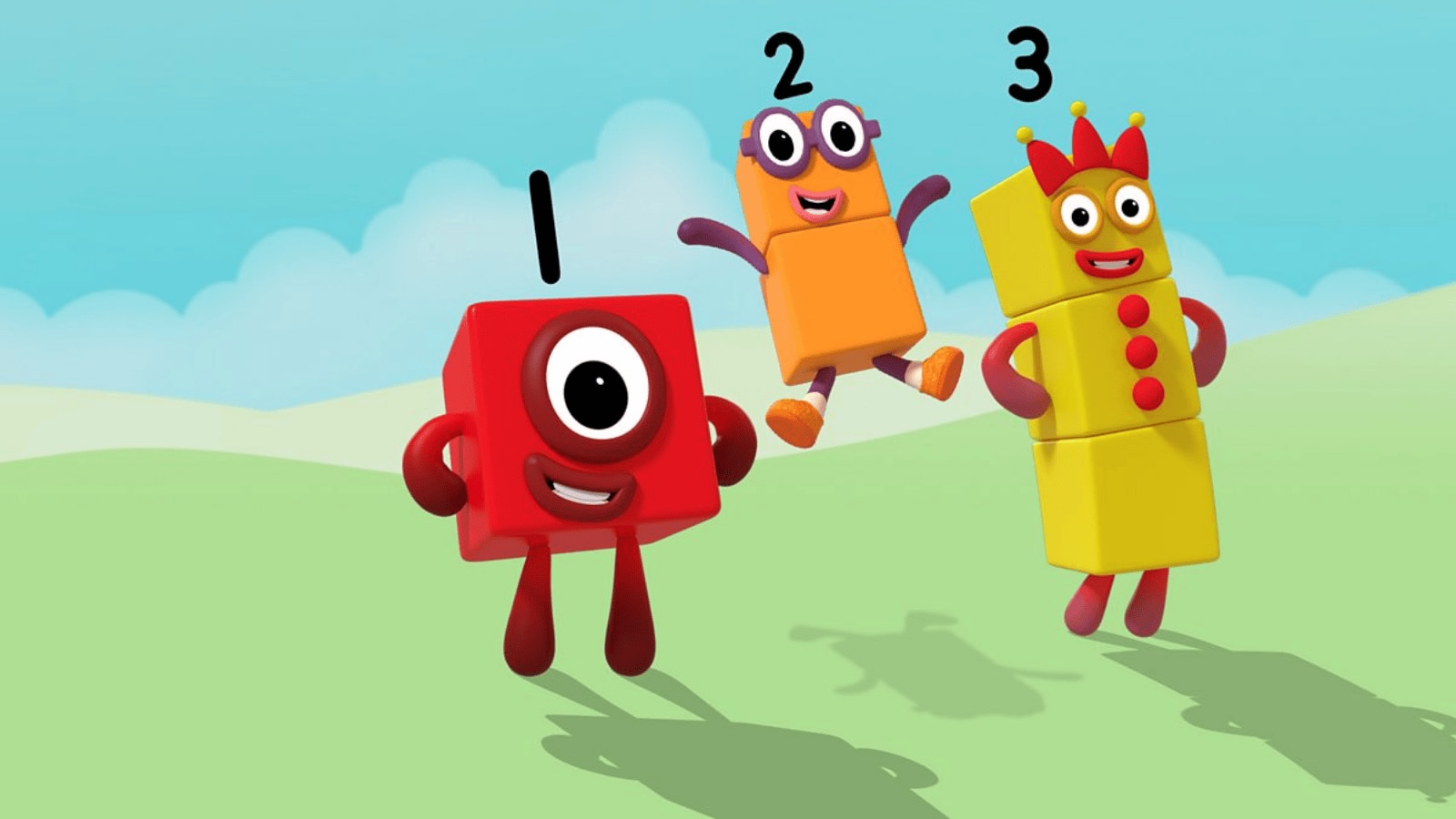
Meet the Numberblocks — little blocks with big ideas who make learning numbers fun and exciting for young children ages 3–7. Numberblocks helps kids build number sense as the characters come together, break apart, and explore how numbers really work. This free collection of printable games and colorful worksheets games give little learners hands-on practice with counting, odd and even numbers, and simple addition and subtraction. Perfect for use at home or in the classroom, these ready-to-use activities turn math practice into joyful play.
Plus, watch full episodes on the official Numberblocks YouTube channel!
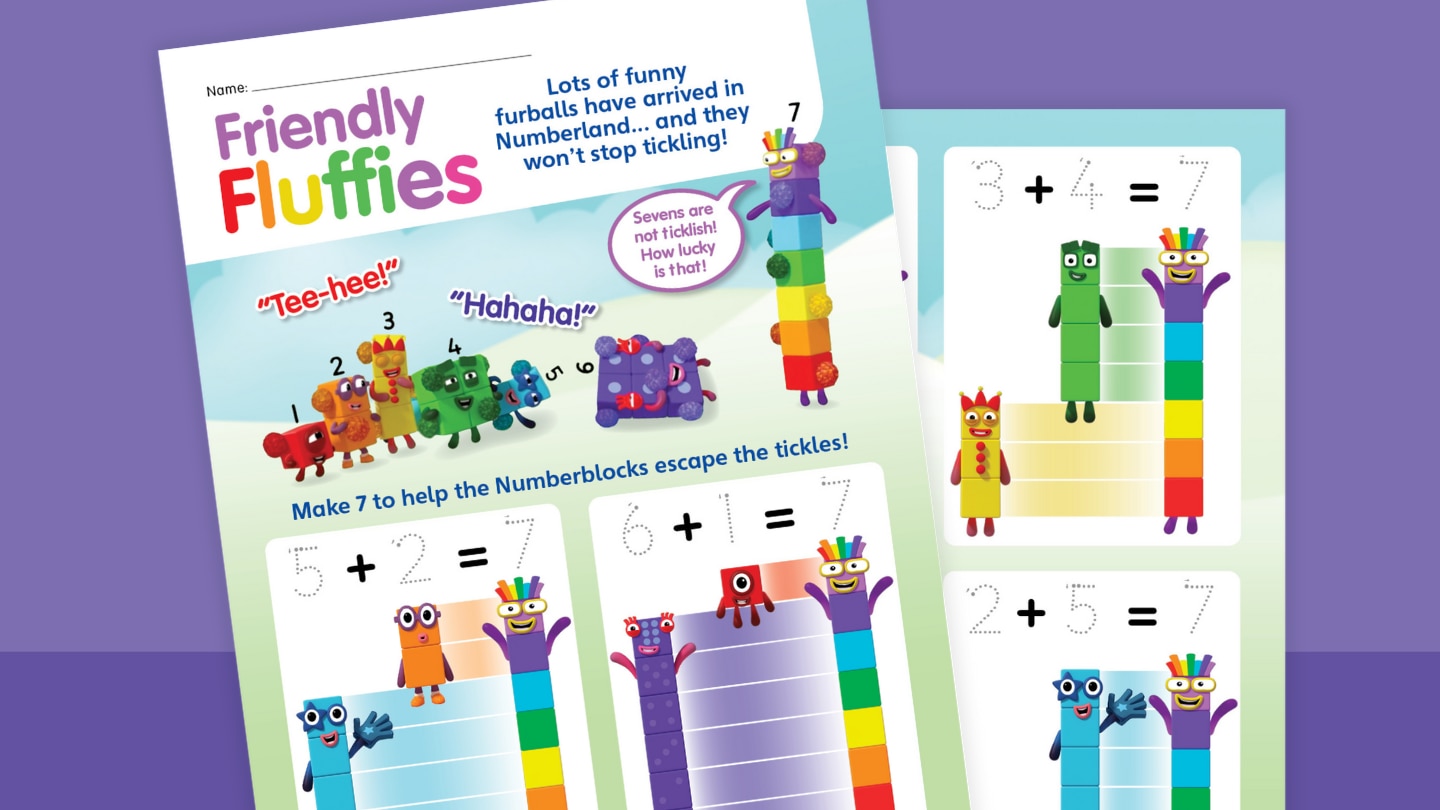
Lots of funny furballs have arrived in Numberland... and they won't stop tickling. Sevens are not ticklish! How lucky is that! Make 7 to help the Numberblocks escape the tickles. Tee-hee!
Watch full episodes of Numberblocks on their official YouTube channel!
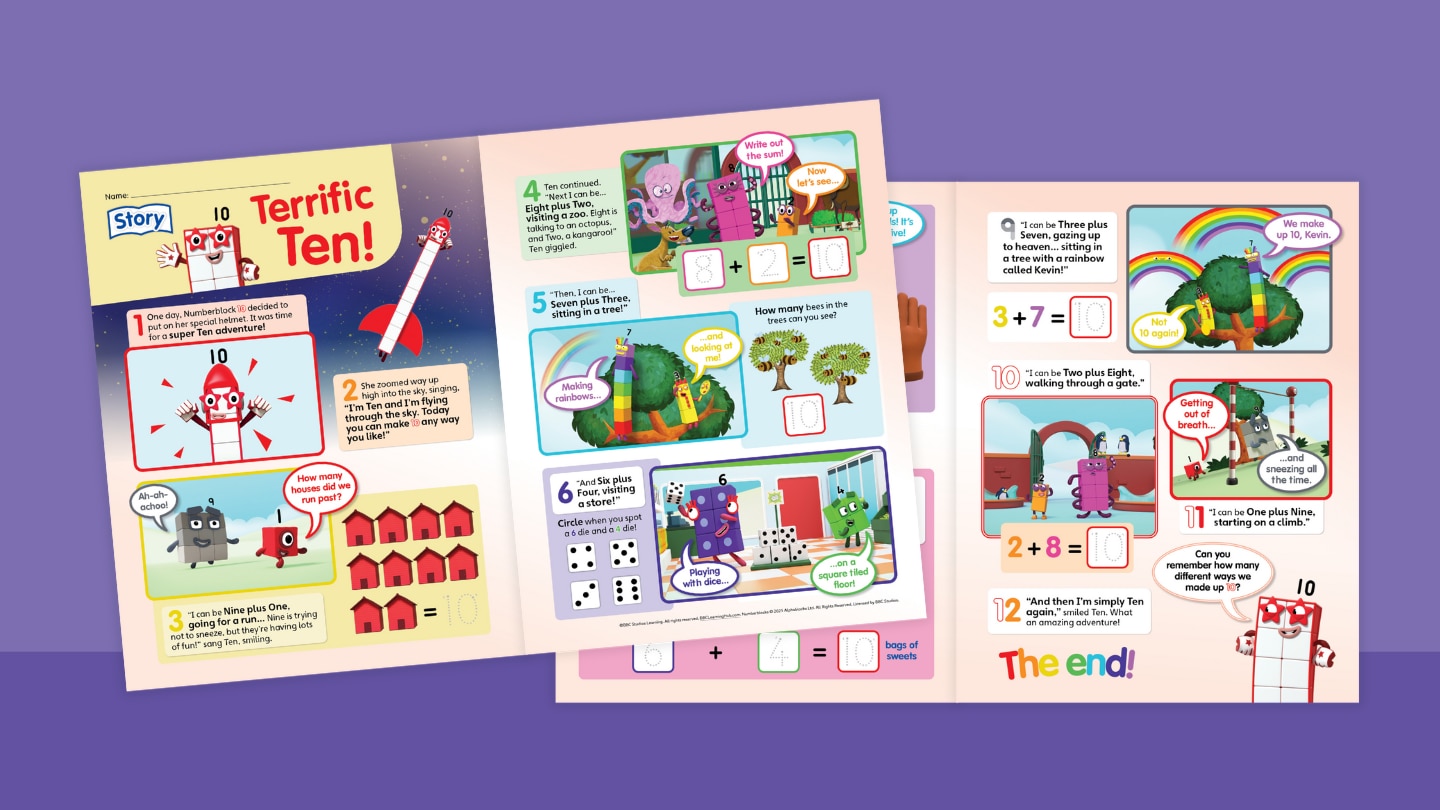
Tag along with Terrific Ten as you read her story! It goes like this:
One day, Numberblock 10 decided to put on her special helmet. It was time for a super Ten adventure She zoomed way up high into the sky, singing, “I’m Ten and I’m flying through the sky. Today you can make 10 any way you like!"
How will Ten's friends help her?
Watch full episodes of Numberblocks on their official YouTube channel!
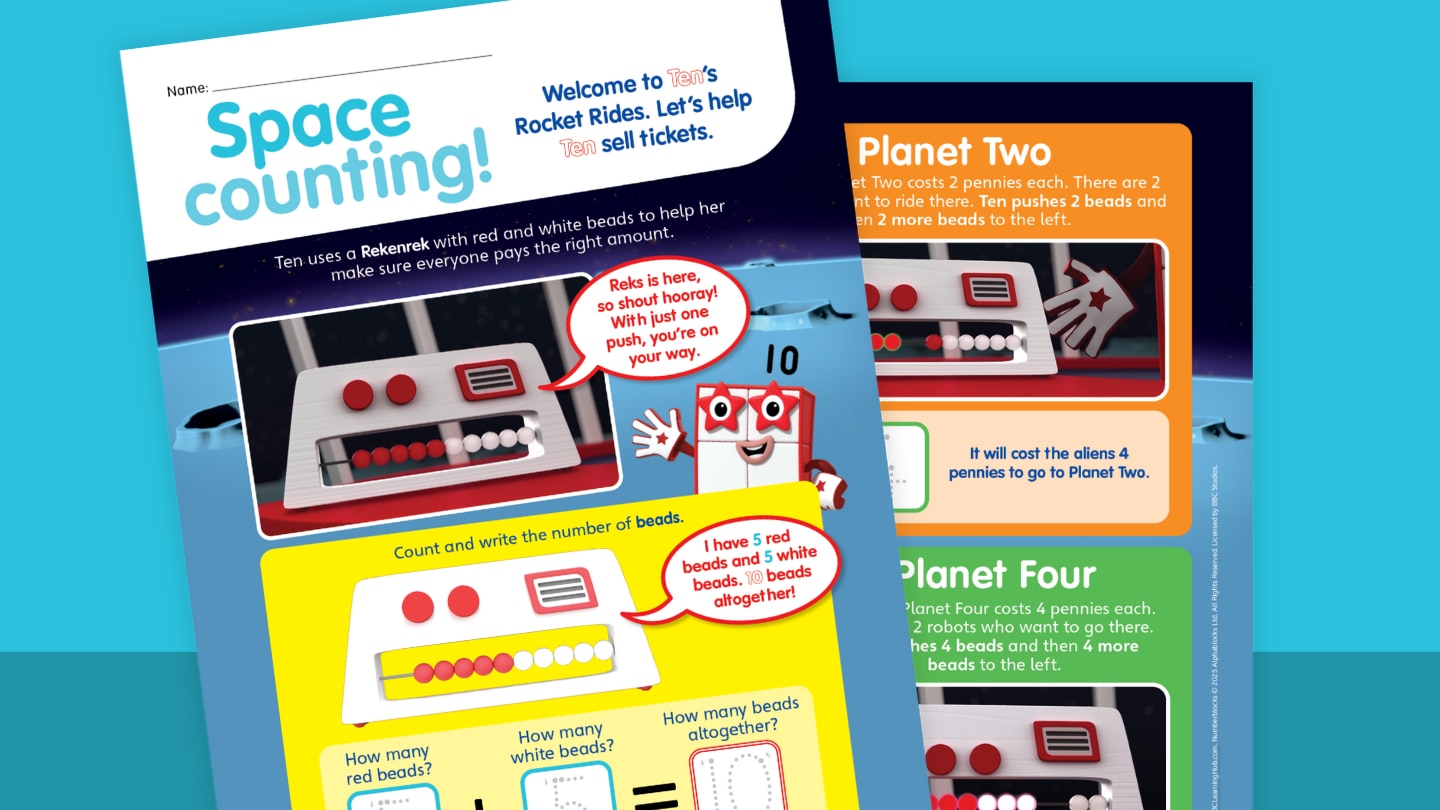
Welcome to Ten's Rocket Rides. Let's help Ten sell tickets. Ten uses a Rekenrek with red and white beads to help her make sure everyone pays the right amount.
A trip to Planet Two costs 2 pennies each. There are 2 aliens who want to ride there. Ten pushes 2 beads and
then 2 more beads to the left. How many beads did Ten push altogether?
A trip to Planet Four costs 4 pennies each. There are 2 robots who want to go there. Ten pushes 4 beads and then 4 more beads to the left. Rekenrek has 10 beads in total. How many are left behind?
Watch full episodes of Numberblocks on their official YouTube channel!
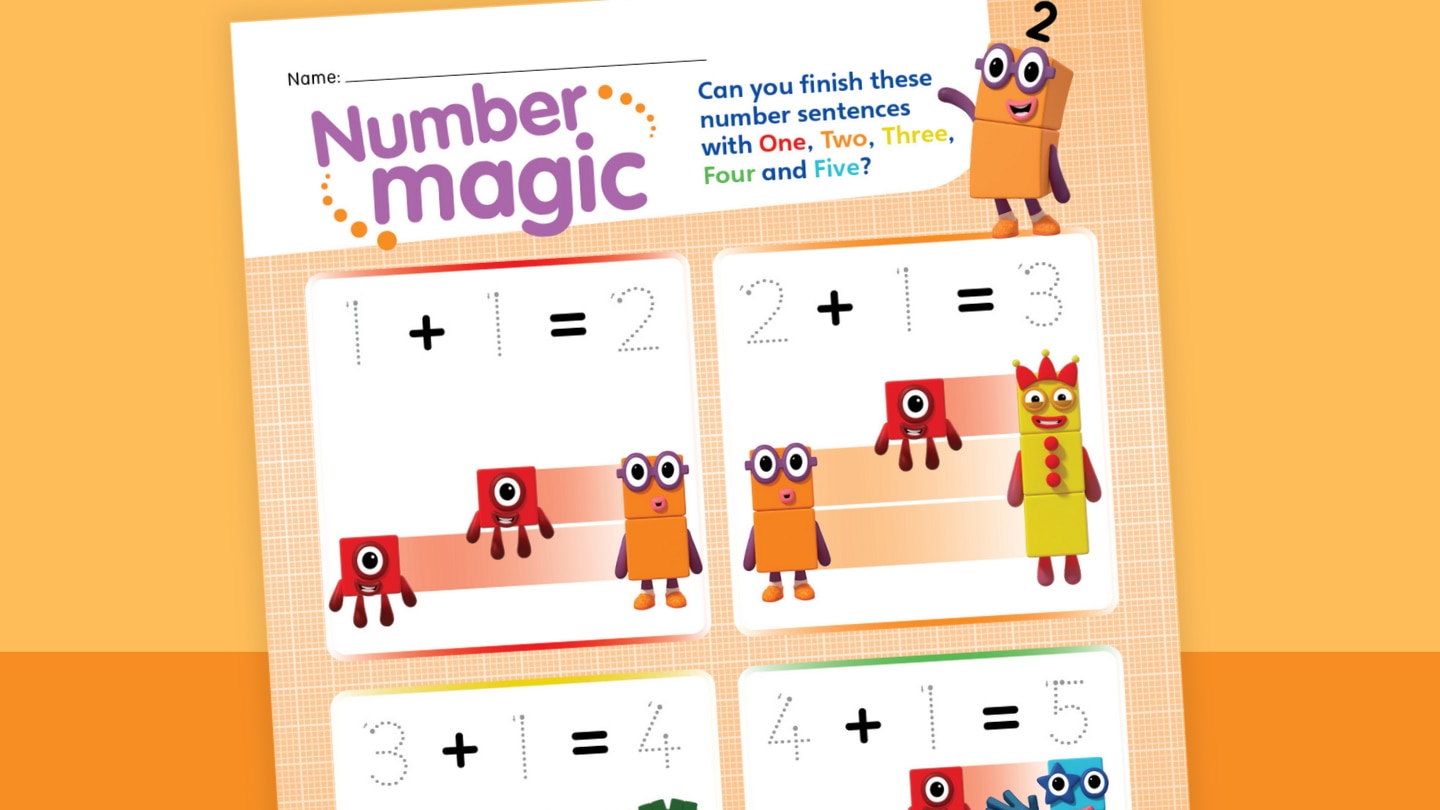
Can you finish these number sentences with One, Two, Three, Four, and Five?
1 + 1 = 2
2+1 = 3
3 + 1 = 4
4 + 1 = 5
Do you see a pattern?
Watch full episodes of Numberblocks on their official YouTube channel!
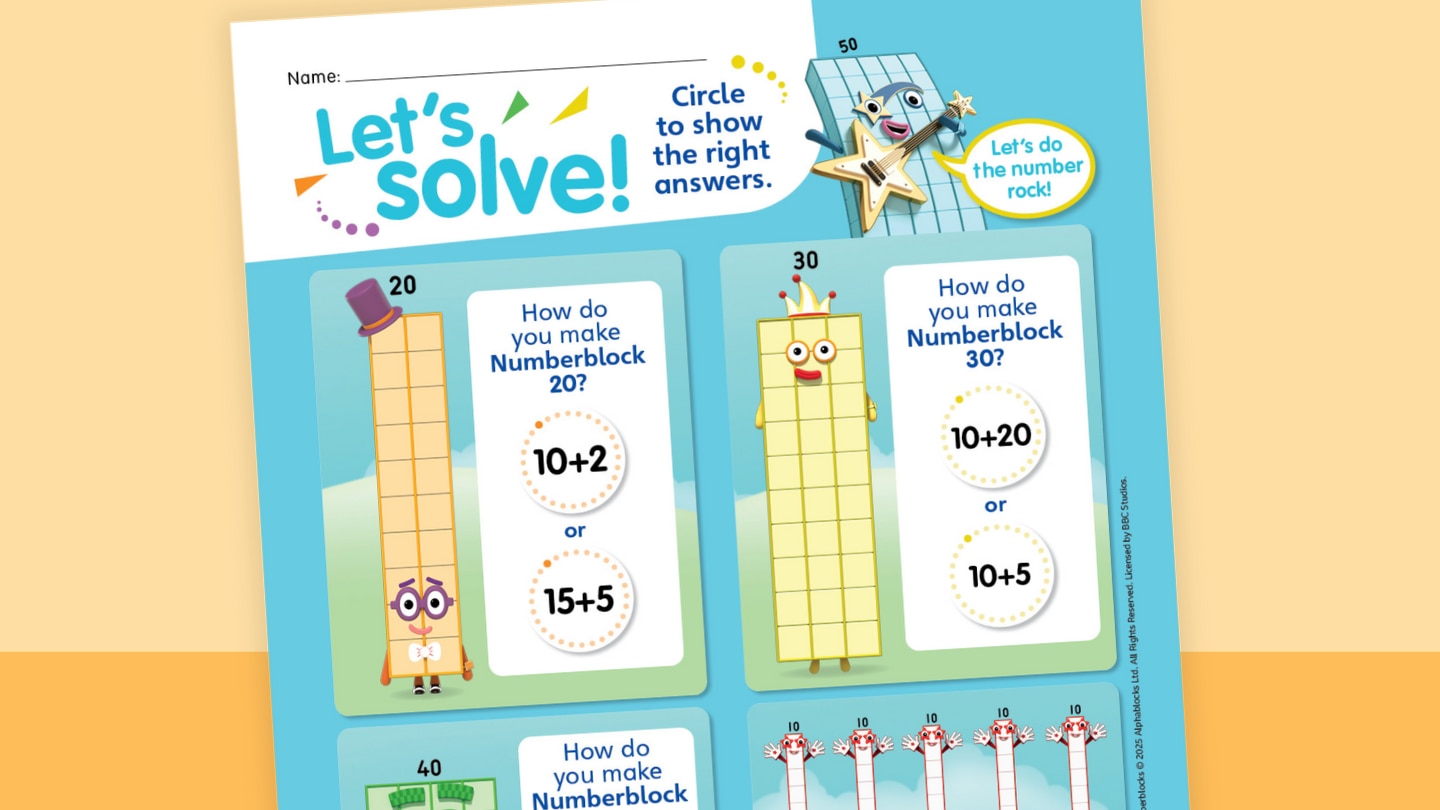
Let's solve! Circle to show the right answers:
- How do you make the Numberblock 20?
- How do you make the Numberblock 30?
- How do you make the Numberblock 40?
Let's do the number rock!
Watch full episodes of Numberblocks on their official YouTube channel!
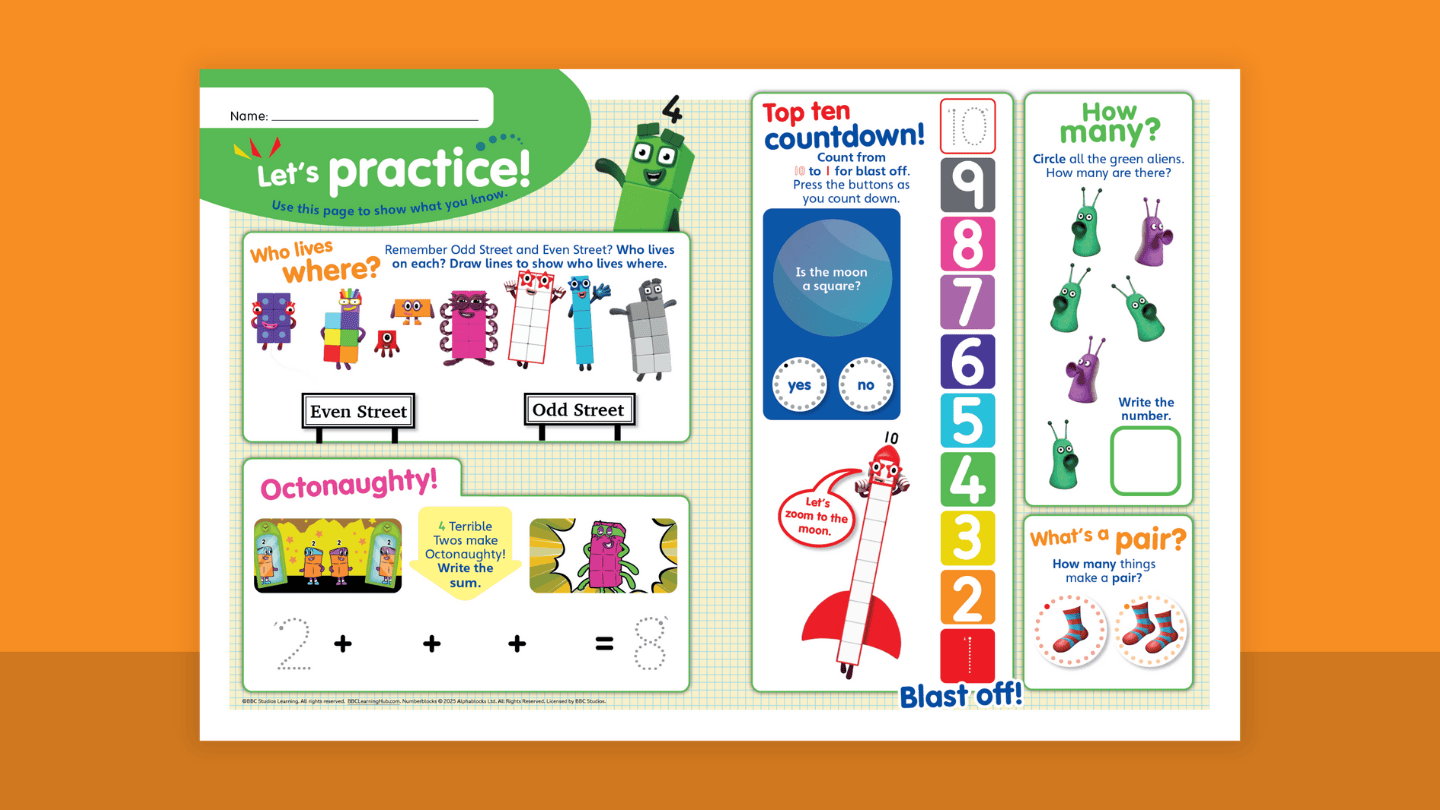
Use this page to show what you know. Who lives where? Remember Odd Street and Even Street? Who lives on each? Draw lines to show who lives where. Count down from 10 to one for blast off. Press the buttons as you count down. Circle all the green aliens. How many are there?
Watch full episodes of Numberblocks on their official YouTube channel!

In Did Toxic Gas Kill the Dinosaurs?, naturalist Steve Backshall explains how invisible, toxic gas came to be a killer of dinosaurs millions of years ago. In addition to causing lava flows and forest fires, volcanic eruptions also produced fumes that were extremely deadly to dinosaurs. This video is excerpted from BBC’s Deadly Dinosaurs, a documentary series in which host Steve Backshall is on the hunt for the deadliest animals to have walked the Earth — dinosaurs — exploring features of several species and putting their abilities to the test to reveal the raw power of these creatures.

In Exploring Current Research on HIV, learn about the groundbreaking moment when Dr. Hutter cured a patient, Timothy Ray Brown, of HIV for the first time. The video highlights how Timothy, who had developed leukemia in addition to HIV, became the first person cured of the virus through a stem cell transplant. The story explores the role of white blood cells and how some people are naturally resistant to HIV, providing an exciting look into modern medical advancements. This video is excerpted from BBC’s The World’s Most Extraordinary People, a documentary series revealing how rare medical conditions inspire groundbreaking scientific discoveries.
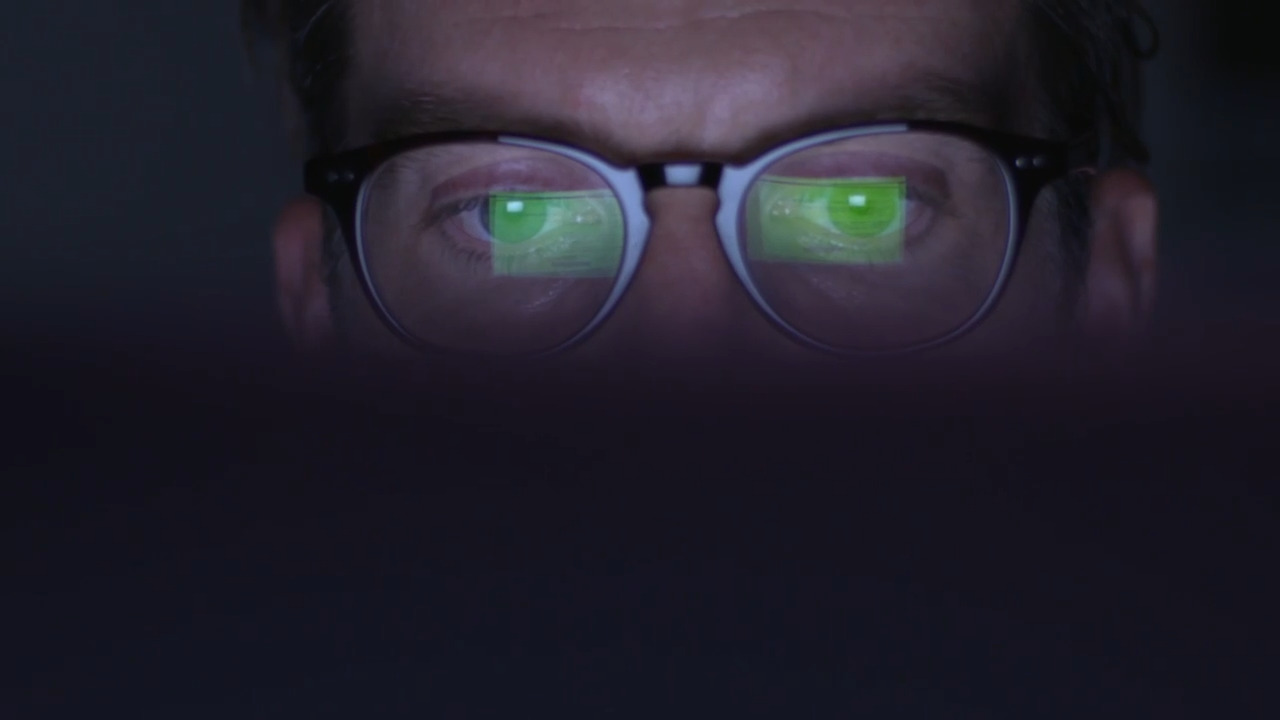
In The Impact of Screens on Our Vision and Memory, host Harith Iskander explores how smartphones and other screen devices are affecting our eyes and memory. When we hold our phones close to our faces, it strains our eyes and can cause them to become more elongated, leading to vision problems like myopia (nearsightedness). Additionally, overusing technology can also impact how the brain stores and processes information. This video is excerpted from BBC’s Got Science?, a science magazine series that explores and explains science in everyday life.
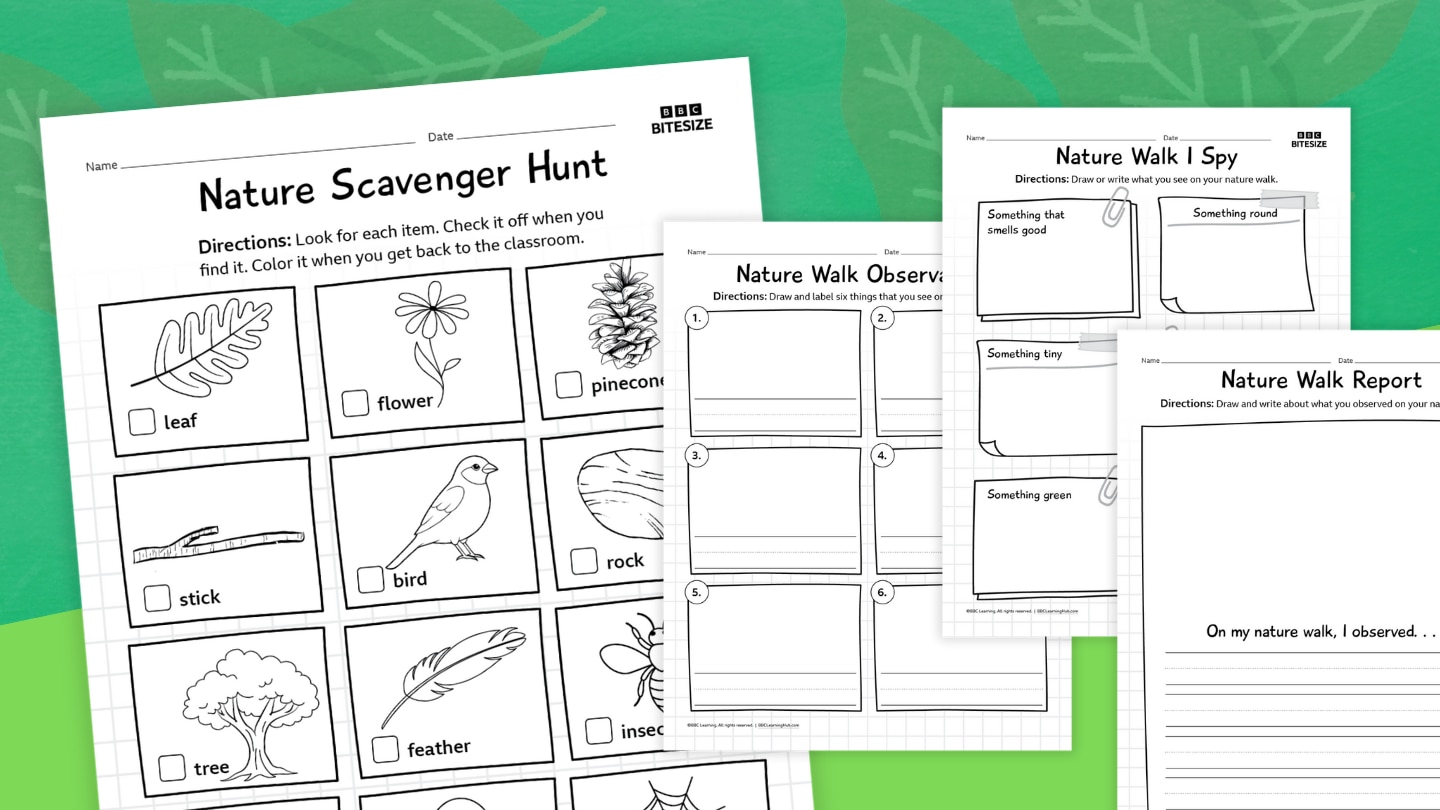
Everyone loves a nature walk! Take your PreK–Grade 2 students outside to observe the world around them. With these worksheets on a clipboard, you can make your nature walk more focused and a true learning experience (in addition to being loads of fun!).
- Nature Walk Scavenger Hunt: Students look for a leaf, flower, bird, and more. They can check off each item they find and then color them when they get back to the classroom.
- Nature Walk Observations: Encourage your kids to draw and write what they see on their nature walk.
- Nature Walk I Spy: Challenge your students to find something that smells good, something round, something tiny, something rough, something green, and something that flies.
- Nature Walk Report: When you get back to the room, have your kids draw and write about what they saw on their nature walk.
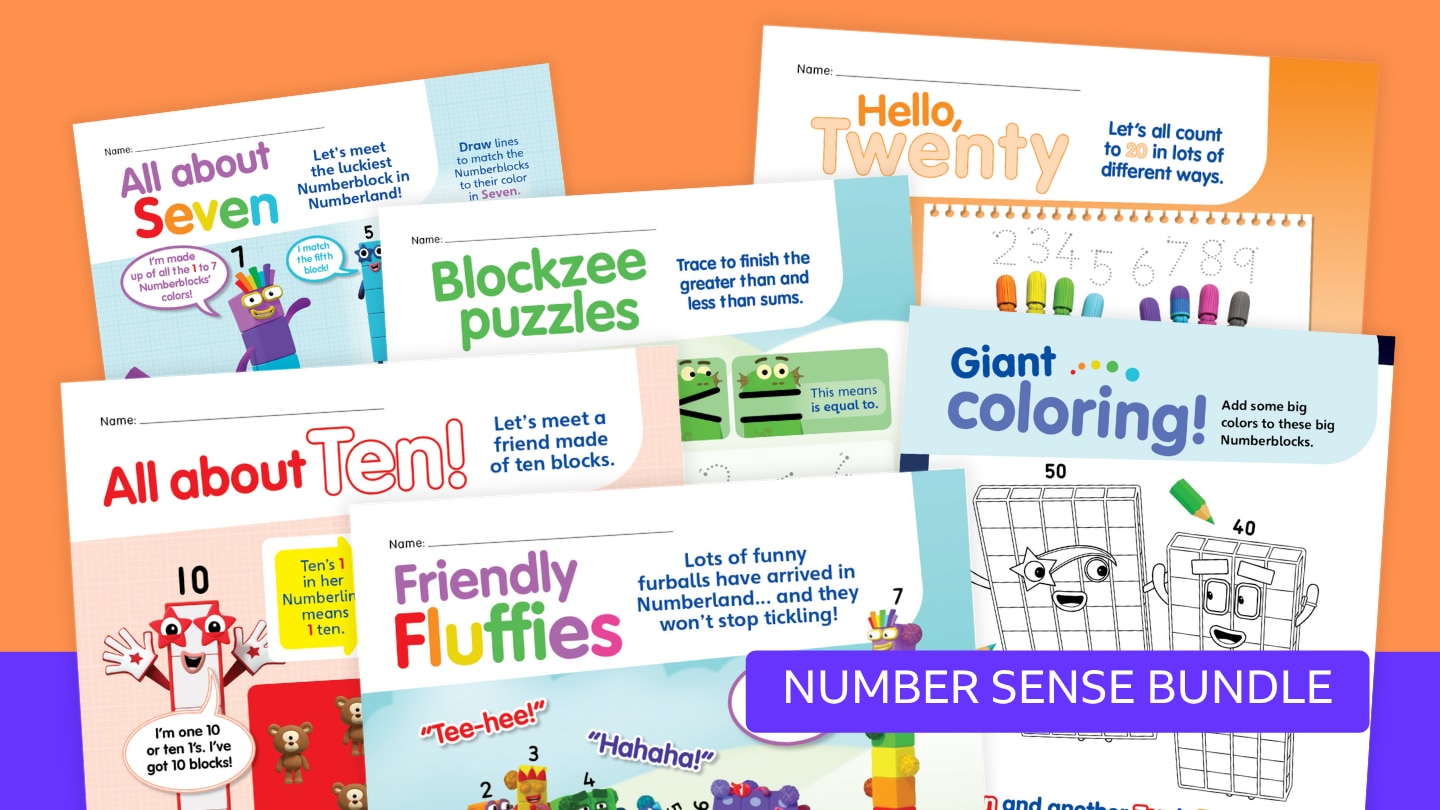
Bring the delightful Numberblocks characters into your math classroom with this engaging number sense printable bundle, perfect for PreK–Grade 2 learners! Packed with colorful worksheets, this bundle includes important number sense concepts like the number line, place value in tens, comparing numbers, simple addition and more! Here's some of what's included:
- Blockzee Puzzles: Trace to finish the greater than and less than sums.
- Friendly Fluffies: Add to make 7 and help the Numberblocks escape the tickles
- Hello, Twenty: Count to 20 in lots of different ways!
Want more? We have tons on the site. Just search "Numberblocks"!
Watch full episodes of Numberblocks on their official YouTube channel!
Meet the Numberblocks — little blocks with big ideas who make learning numbers fun and exciting for young children ages 3–7. Numberblocks helps kids build number sense as the characters come together, break apart, and explore how numbers really work. This free collection of printable games and colorful worksheets games give little learners hands-on practice with counting, odd and even numbers, and simple addition and subtraction. Perfect for use at home or in the classroom, these ready-to-use activities turn math practice into joyful play.
Plus, watch full episodes on the official Numberblocks YouTube channel!
Lots of funny furballs have arrived in Numberland... and they won't stop tickling. Sevens are not ticklish! How lucky is that! Make 7 to help the Numberblocks escape the tickles. Tee-hee!
Watch full episodes of Numberblocks on their official YouTube channel!
Tag along with Terrific Ten as you read her story! It goes like this:
One day, Numberblock 10 decided to put on her special helmet. It was time for a super Ten adventure She zoomed way up high into the sky, singing, “I’m Ten and I’m flying through the sky. Today you can make 10 any way you like!"
How will Ten's friends help her?
Watch full episodes of Numberblocks on their official YouTube channel!
Welcome to Ten's Rocket Rides. Let's help Ten sell tickets. Ten uses a Rekenrek with red and white beads to help her make sure everyone pays the right amount.
A trip to Planet Two costs 2 pennies each. There are 2 aliens who want to ride there. Ten pushes 2 beads and
then 2 more beads to the left. How many beads did Ten push altogether?
A trip to Planet Four costs 4 pennies each. There are 2 robots who want to go there. Ten pushes 4 beads and then 4 more beads to the left. Rekenrek has 10 beads in total. How many are left behind?
Watch full episodes of Numberblocks on their official YouTube channel!
Can you finish these number sentences with One, Two, Three, Four, and Five?
1 + 1 = 2
2+1 = 3
3 + 1 = 4
4 + 1 = 5
Do you see a pattern?
Watch full episodes of Numberblocks on their official YouTube channel!
Let's solve! Circle to show the right answers:
- How do you make the Numberblock 20?
- How do you make the Numberblock 30?
- How do you make the Numberblock 40?
Let's do the number rock!
Watch full episodes of Numberblocks on their official YouTube channel!
Use this page to show what you know. Who lives where? Remember Odd Street and Even Street? Who lives on each? Draw lines to show who lives where. Count down from 10 to one for blast off. Press the buttons as you count down. Circle all the green aliens. How many are there?
Watch full episodes of Numberblocks on their official YouTube channel!
In Did Toxic Gas Kill the Dinosaurs?, naturalist Steve Backshall explains how invisible, toxic gas came to be a killer of dinosaurs millions of years ago. In addition to causing lava flows and forest fires, volcanic eruptions also produced fumes that were extremely deadly to dinosaurs. This video is excerpted from BBC’s Deadly Dinosaurs, a documentary series in which host Steve Backshall is on the hunt for the deadliest animals to have walked the Earth — dinosaurs — exploring features of several species and putting their abilities to the test to reveal the raw power of these creatures.
In Exploring Current Research on HIV, learn about the groundbreaking moment when Dr. Hutter cured a patient, Timothy Ray Brown, of HIV for the first time. The video highlights how Timothy, who had developed leukemia in addition to HIV, became the first person cured of the virus through a stem cell transplant. The story explores the role of white blood cells and how some people are naturally resistant to HIV, providing an exciting look into modern medical advancements. This video is excerpted from BBC’s The World’s Most Extraordinary People, a documentary series revealing how rare medical conditions inspire groundbreaking scientific discoveries.
In The Impact of Screens on Our Vision and Memory, host Harith Iskander explores how smartphones and other screen devices are affecting our eyes and memory. When we hold our phones close to our faces, it strains our eyes and can cause them to become more elongated, leading to vision problems like myopia (nearsightedness). Additionally, overusing technology can also impact how the brain stores and processes information. This video is excerpted from BBC’s Got Science?, a science magazine series that explores and explains science in everyday life.
Everyone loves a nature walk! Take your PreK–Grade 2 students outside to observe the world around them. With these worksheets on a clipboard, you can make your nature walk more focused and a true learning experience (in addition to being loads of fun!).
- Nature Walk Scavenger Hunt: Students look for a leaf, flower, bird, and more. They can check off each item they find and then color them when they get back to the classroom.
- Nature Walk Observations: Encourage your kids to draw and write what they see on their nature walk.
- Nature Walk I Spy: Challenge your students to find something that smells good, something round, something tiny, something rough, something green, and something that flies.
- Nature Walk Report: When you get back to the room, have your kids draw and write about what they saw on their nature walk.
Bring the delightful Numberblocks characters into your math classroom with this engaging number sense printable bundle, perfect for PreK–Grade 2 learners! Packed with colorful worksheets, this bundle includes important number sense concepts like the number line, place value in tens, comparing numbers, simple addition and more! Here's some of what's included:
- Blockzee Puzzles: Trace to finish the greater than and less than sums.
- Friendly Fluffies: Add to make 7 and help the Numberblocks escape the tickles
- Hello, Twenty: Count to 20 in lots of different ways!
Want more? We have tons on the site. Just search "Numberblocks"!
Watch full episodes of Numberblocks on their official YouTube channel!